
Itinerary · 3 days · Casentino
3 Days in the Casentino
Castles, Forests, and Sacred Mountains
Last updated:
- Duration
- 3 days / 2 nights
- Best season
- October (foliage, chestnuts, perfect hiking temperatures) or May–June (wildflowers, longer days)
- Budget
- Mid-range (€80–120/night accommodation, €20–35/meal)
- Best for
- Couples, nature lovers, history enthusiasts, hikers, anyone seeking quiet Tuscany
- Driving required
- Yes — essential for monasteries and mountain sites
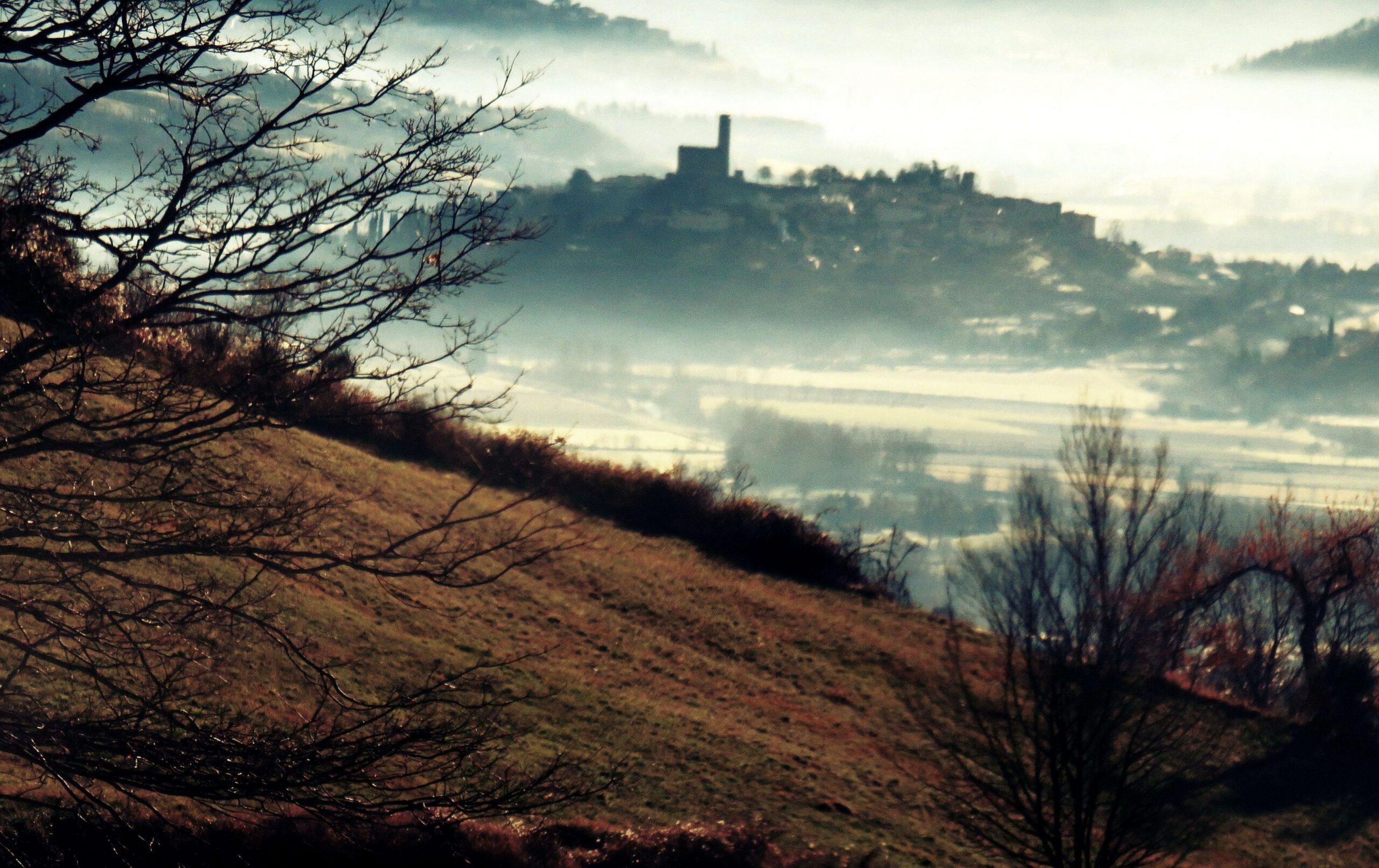
The Casentino asks for a different pace than most Tuscan itineraries. There is no single showstopper to rush toward — instead, the valley accumulates: a castle here, a Romanesque church there, a forest path that opens into a monastery courtyard, a plate of tortelli di patate that tastes like the potatoes were dug that morning. Three days gives you enough time to feel the valley’s rhythm rather than simply cataloging its sites.
Day 1: The castle valley — Poppi, Romena, and the cloth of Stia
Morning: Arrive in the Casentino via the Passo della Consuma from Florence (the most scenic approach, ~1 hour) or from Arezzo via the SR71 (~30 minutes). Head directly to Poppi and park below the walls. Walk up through the medieval streets to the Castello dei Conti Guidi — allow at least an hour for the courtyard, the Taddeo Gaddi frescoes in the Guidi Chapel, the Rilliana Library, and the “Inferno a Campaldino” exhibition. Climb the tower for the valley panorama.
Before leaving Poppi, stand on the north-facing terrace and look down at the flat ground below the castle. That is the Piana di Campaldino, where Dante fought on June 11, 1289. A small memorial column marks the battlefield — worth a brief stop if you’re driving north.
Lunch: Eat in Poppi — tortelli di patate are non-negotiable. Trattoria options around Piazza Amerighi.
Afternoon: Drive north to Pratovecchio Stia (~12 minutes). Stop first at the Pieve di Romena — one of Tuscany’s finest Romanesque churches. Study the carved capitals. Then walk or drive to the nearby Castello di Romena for the Dante connection and the cypressed hilltop views. In Stia itself, visit the Museo dell’Arte della Lana and ask in town where Panno Casentino garments are sold — a coat or a scarf makes a meaningful souvenir.
Dinner: Return to Poppi or eat in Stia. Simple Casentino fare: tortelli, stracotto, chestnut dishes in autumn.
Sleep: Poppi (agriturismo or B&B in or near the village).
Day 2: Sacred silence — Camaldoli and La Verna
Morning: Drive to Camaldoli (~25 minutes from Poppi). Visit the monastery first — the cloister, the church, and especially the Antica Farmacia where monks have made herbal products for centuries. Then walk (or drive) the 3 km through ancient forest to the Sacro Eremo (hermitage). The path through silver firs is one of the finest short walks in the Casentino. At the hermitage, visit Saint Romuald’s cell and absorb the silence of a place where monastic life has continued for a thousand years.
Lunch: Return toward the valley. Simple options in Poppi or Bibbiena, or pack a picnic from a Poppi alimentari and eat in the forest.
Afternoon: Drive to La Verna (about 45 minutes from Poppi via Bibbiena). The Franciscan sanctuary deserves at least two hours: the churches with their Della Robbia terracottas, the Cappella delle Stimmate, the sacred forest paths down to the Sasso Spicco and the rock crevasses. The atmosphere shifts from Camaldoli‘s contemplative order to something rawer and more dramatic — rock, cliff, and the memory of stigmata.
Late afternoon, return to base via Bibbiena. If time allows, pause at the Santuario di Santa Maria del Sasso (just outside Bibbiena) for the Madonna del Buio, an early fifteenth-century Florentine wooden sculpture.
Dinner: In your base town. If it’s June, ask whether the Sagra delle Sagre in Bibbiena is running — it’s the single best way to taste the full range of Casentino cuisine in one evening.
Sleep: Same base as Day 1.
Day 3: Forest, source, and farewell
Morning — choose your adventure:
Option A (for hikers): Drive from Stia toward Monte Falterona and hike to the source of the Arno at Capo d’Arno (~1,350 m). The full summit hike (1,654 m) takes 3–4 hours round trip from the trailhead; the source alone is shorter. Near the top, the Lago degli Idoli is an Etruscan worship site with a haunting mountain-lake atmosphere. This is a genuine mountain hike — bring layers, water, and proper shoes.
Option B (for village lovers): Explore the smaller Casentino: drive to Raggiolo to see the Ecomuseo della Castagna (chestnut museum) and the restored metato drying houses. Continue to Castel San Niccolò and Montemignaio — two small mountain communities with castle remains and Romanesque churches. End at Vallombrosa (if heading toward Florence) — the monastery founded in 1036, set in spectacular forest.
Option C (for the relaxed): Return to Poppi for a slow morning in the village — revisit the castle courtyard without crowds, drink coffee in Piazza Amerighi, browse the village’s small shops. Visit the Parco Zoo della Fauna Europea if traveling with children — wolves, lynx, bears and eagle owls in a forested setting. Then drive out of the Casentino via whichever route suits your next destination.
Lunch: In Stia (if hiking Monte Falterona), Raggiolo area (if doing Option B), or Poppi for a farewell meal.
Practical Tips for This Route
The Consuma pass approach from Florence is scenic but winding — not ideal if you get carsick. The A1 motorway to Arezzo and then SR71 north is faster and straighter but less atmospheric.
Driving in the Casentino: Valley-floor roads are good. Mountain roads to Camaldoli, La Verna, and Monte Falterona are narrow and winding — budget more time than GPS suggests. The monastery roads can be icy in winter.
Train option: The LFI/TFT railway from Arezzo serves Bibbiena, Poppi, and Stia (check TFT’s website for timetables and bicycle rules). You could base yourself at one of these towns without a car for the valley-floor sites, but Camaldoli and La Verna are essentially car-only.
Monastery etiquette: Both Camaldoli and La Verna are active religious communities. Dress modestly (covered shoulders and knees). Photography is generally permitted in churches but not during services. Silence is appreciated, especially at the Eremo.
Food supplies: Stock up in Bibbiena or Poppi before heading to mountain sites. Camaldoli’s monastery sells products (herbal remedies, honey, liqueurs) but not meals. Food options at La Verna are limited, so plan ahead.
Autumn timing: For the best foliage, aim for the last two weeks of October. The forests at 800–1,200 m (Camaldoli road, Badia Prataglia) typically peak earlier than lower-elevation valleys.
Information is provided in good faith and may change. Always confirm opening hours, prices, and event dates with the official source before you travel.