
Maker · Casentino
Meet Raggiolo’s Chestnut Keepers
The Village That Refused to Forget Its Bread Tree
Last updated:
- What they make
- Chestnut flour (farina di castagne), castagnaccio, necci, baldino, and dried chestnuts — using traditional *metato* drying houses and stone mills
- Region
- Casentino
- Location
- Raggiolo, Comune di Ortignano Raggiolo, Province of Arezzo (~600 m elevation)
- Visit possible
- Yes — Ecomuseo della Castagna open seasonally; annual Festa della Castagna (October); chestnut-related products available from local producers
In the mountains above the Casentino valley floor, where agriculture was always marginal and winters were long, one tree kept entire communities alive. The chestnut — l’albero del pane, the bread tree — provided the flour that became the primary carbohydrate for mountain populations from the Middle Ages through the mid-twentieth century. It was ground into flour for castagnaccio (a flat, dense cake known in the Casentino as baldino), necci (crêpes filled with ricotta), and polenta dolce. It was dried, boiled, roasted, and stored. It was, for centuries, the difference between survival and starvation.
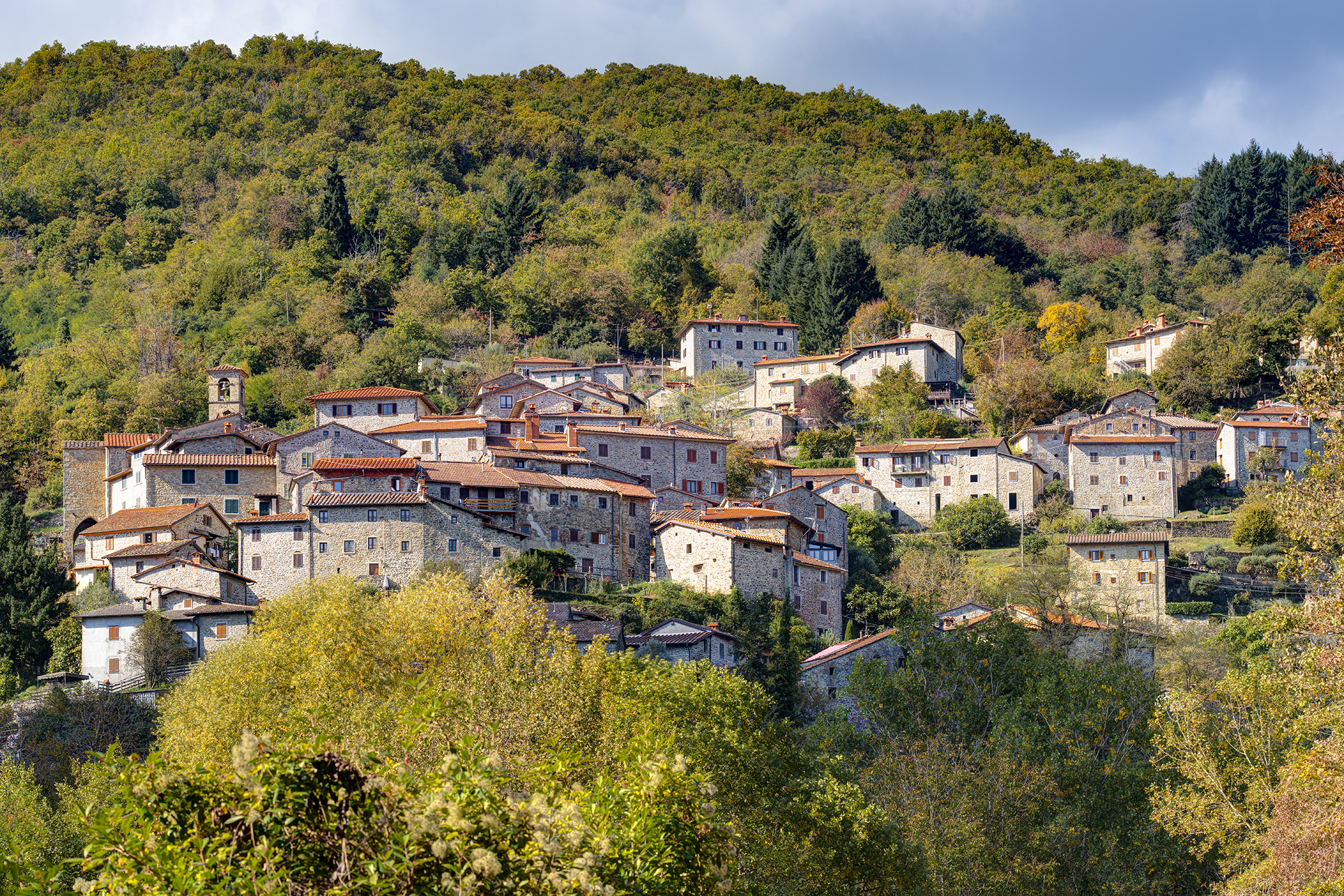
Raggiolo is a tiny stone village clinging to a forested mountainside at roughly 600 meters in the Comune di Ortignano Raggiolo. Its permanent population numbers little more than a hundred. But this village has become the custodian of the Casentino‘s chestnut heritage through its Ecomuseo della Castagna (Chestnut Ecomuseum) — part of the broader Casentino Ecomuseum network that documents the valley’s disappearing rural traditions.
The Chestnut Cycle
The ecomuseum explains the complete annual cycle that once governed mountain life. In autumn (October–November), chestnuts were harvested by hand from the forest floor beneath centuries-old trees. The fresh chestnuts were carried to the metato — a small two-story stone drying house, found throughout the Casentino and Mugello mountains. On the upper floor, chestnuts were spread on a wooden-slat floor; on the lower floor, a slow fire of chestnut wood and husks burned continuously for several weeks. The smoke dried the chestnuts thoroughly, preserving them for the year ahead.
The dried chestnuts were then cleaned (traditionally by beating them in cloth sacks or treading them in wooden shoes) and ground in stone mills powered by the mountain streams that tumble through every Casentino village. The resulting flour — ivory-white, naturally sweet, with a slightly smoky aroma from the metato — became the staple food.
Raggiolo preserves a restored seccatoio (as the metato is called here) and the eighteenth-century Mulino di Morino on the Barbozzaia stream as part of its ecomuseum circuit. The structures are small, rough, and functional — there is nothing picturesque about them in the conventional sense. Their power lies in the recognition that this was the technology that kept people alive in these mountains for generations.
Visiting Raggiolo
The Ecomuseo della Castagna has seasonal opening times; check the Ecomuseo del Casentino or raggiolo.it before visiting. The visit includes the restored metato, the mill, and interpretive panels explaining the chestnut cycle and its role in mountain subsistence. The village itself — stone houses, narrow alleys, surrounding chestnut forest — is a walk back into the world those structures served.
The annual Festa di Castagnatura (Chestnut Festival, usually over the last weekend of October) brings the village to life with roasted chestnuts, castagnaccio, necci, and other traditional preparations. It is small, local, and genuine — not a touristic sagra but a community celebration of a food tradition that nearly disappeared.
Chestnut flour and dried chestnuts from Casentino producers are available at local markets and at autumn fairs around the Casentino and at agriturismi throughout the valley.
Information is provided in good faith and may change. Always confirm opening hours, prices, and event dates with the official source before you travel.