
Maker · Casentino
Meet Tessilnova
The Last Workshop Making Panno Casentino in the Town Where It Was Born
Last updated:
- What they make
- Panno Casentino — traditional curly-surfaced wool cloth in classic orange, green, and other colors; coats, jackets, scarves, blankets, fabric by the meter
- Region
- Casentino
- Location
- Via Giovanni Sartori 2/4, Stia (Pratovecchio Stia), Province of Arezzo
- Generation
- Continuing a tradition documented since the 13th century; Tessilnova operates on the site of the historic Lanificio di Stia
- Visit possible
- Yes — shop open weekly 9:30–13:00 and 15:30–19:30 (Saturday and Sunday until 20:00); direct sales of cloth by the meter and finished garments
The most recognizable fabric in Tuscany is not silk from Florence or linen from Lucca. It is a curly, thick, waterproof wool cloth in a shade of orange so specific that Gabriele D’Annunzio is often quoted as calling it “the fire of the sunset” of the Arezzo valley. Panno Casentino — Casentino Cloth — descends from a coarse wool cloth made in the upper valley of the Arno since the Middle Ages; by the fourteenth century, it is said, the inhabitants of the Palagio Fiorentino in Stia paid their taxes to Florence in cloth. It dressed monks, shepherds, coachmen, and hunters for centuries before it became famous as the cloth of the orange coat Givenchy designed for Audrey Hepburn in Breakfast at Tiffany’s — a link that is widely reported, though we have not found a costume record that documents it.
The cloth’s defining feature is its surface of tight, irregular curls — technically produced through a finishing process called ratinatura (from the French ratiner: to make wool nubs). The raw wool is woven, then fulled (felted with water and pressure to create a dense, waterproof base), then brushed to raise the fibers, and finally “ratinated” — a mechanical process that twists the raised fibers into the characteristic curls. The result is a double-layered cloth: the smooth, dense felt beneath provides waterproofing and wind resistance; the curly surface traps air for insulation and sheds rain. It was, and remains, one of the most functional outerwear fabrics ever developed from pure wool.
Tessilnova, run by Claudio Grisolini, operates in Stia beside the historic Lanificio di Stia, whose buildings now house the Museo dell’Arte della Lana — the wool mill that was the economic engine of the upper Casentino for over a century. The curls themselves come from the ratinatrice, a finishing machine whose modern form was probably imported into the valley from Germany; for decades the valley’s makers sent their cloth to a specialist finishing mill at Soci for this step.
The Products
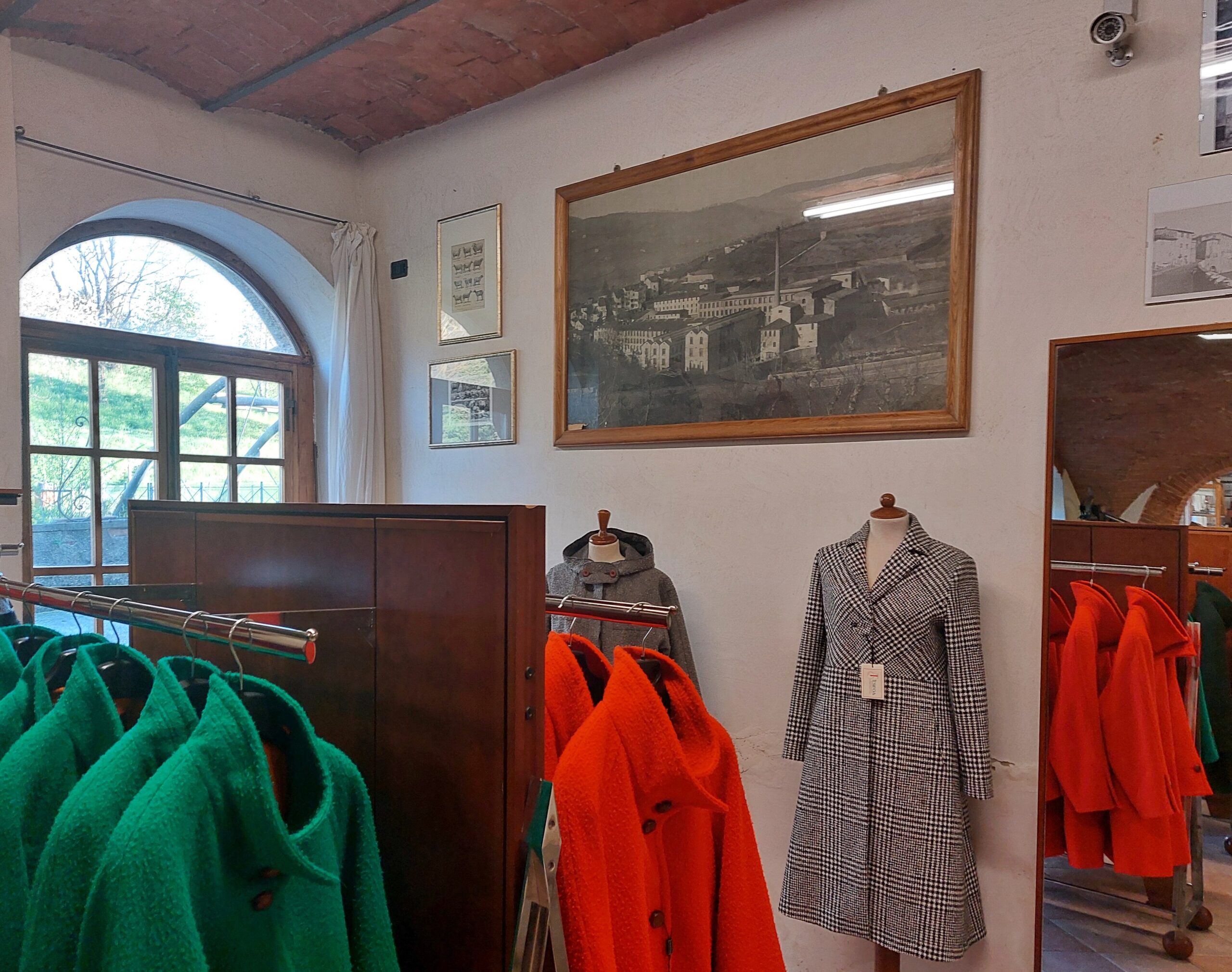
Tessilnova produces Panno Casentino in the classic colors — orange and bottle green remain the most iconic, but the range includes fratino (a brownish-grey originally worn by Franciscan friars), topo (mouse grey), red, and custom colors. The fabric is 100% pure wool and is sold by the meter for those who want to have garments made by their own tailor.
Finished garments include the classic double-breasted coat with martingale — a style associated with Baron Bettino Ricasoli, Giuseppe Verdi, and Giacomo Puccini, all admirers of the cloth, and that Pierre Cardin, Gianfranco Ferré, and Roberto Cavalli have all referenced in their collections. Jackets, capes, scarves, blankets, and home furnishing fabrics are also produced.
Visiting Tessilnova
The shop in Stia (Via Giovanni Sartori 2/4, a few minutes’ walk from Piazza Tanucci) sells directly to visitors. The staff can explain the production process and help with fabric selection. Allow 20–30 minutes for browsing.
For the historical context, combine with a visit to the Museo dell’Arte della Lana in the old mill complex — the museum documents the story of Casentino wool production and the Stia mill.
Information is provided in good faith and may change. Always confirm opening hours, prices, and event dates with the official source before you travel.