
Maker · Garfagnana
Meet the Farro Growers of the Garfagnana
Italy’s First Protected Grain
Last updated:
- What they make
- Farro della Garfagnana IGP (emmer wheat, Triticum dicoccum): whole grain, flour, pasta, bread, and biscuits
- Region
- Garfagnana
- Location
- Consortium based in San Romano in Garfagnana; Garfagnana Coop processing center at Sillicagnana (San Romano in Garfagnana); fields mostly in the central-northern part of the valley
- Generation
- A consortium of more than 50 farmers; over 100 producers on the IGP register
- Visit possible
- Fields visible from the road; no public visiting program announced. Contact Garfagnana Coop before you go.
Say “farro” in a trendy restaurant in London or New York and you’ll probably get a warm grain salad. Say it in the Garfagnana and you’re talking about the crop that kept mountain families fed.
Farro is emmer wheat, one of the oldest cultivated grains. It is a grano vestito, a “dressed grain,” meaning the kernel stays wrapped in its husk at harvest and must be hulled. That makes it more work than modern wheat. It also makes it tough. It grows where other cereals struggle, on steep terraces between 300 and 1,000 m, in one of the wettest corners of Italy.
For a long time, few people outside the valley cared. Then, in 1996, Farro della Garfagnana received the EU’s Protected Geographical Indication (IGP) under EC Regulation No. 1263/96. It became the first Italian cereal to win that kind of quality certification.
A cooperative, not a brand
There is no single farm behind Farro della Garfagnana. The Consorzio per la tutela del Farro della Garfagnana IGP, the consortium that protects the name, was founded in 2010 and is based in San Romano in Garfagnana. It brings together more than 50 farmers. Over 100 producers are listed on the IGP register.
Much of the processing happens at Garfagnana Coop, at Sillicagnana in the municipality of San Romano. The cooperative collects, selects, and processes the growers’ farro. It’s an unglamorous model and a very effective one. It lets small mountain farmers sell a protected product without each needing their own mill.
Grown without chemicals
The production rules are strict. Farro here must be grown without chemical fertilizers, pesticides, or herbicides; the consortium describes the method as organic farming. Yields are capped at 25 quintals (2.5 tonnes) of unhulled grain per hectare. Registered producers farm about 200 ha, and the valley produces roughly 2,500 quintals (250 tonnes) a year, according to the consortium.
It’s sown in October and harvested in July. The farming is simple and old: autumn sowing, a long mountain winter under rain and snow, and a summer harvest.
The Products
The grain
Garfagnana farro has a larger grain than many other emmer wheats. It keeps its shape well in cooking, so it stays pleasantly chewy rather than turning to mush. That quality is exactly why it works in soups.
How the valley cooks it
- Minestra or zuppa di farro: farro soup with beans and vegetables, the valley’s signature dish. Every trattoria makes one.
- Farrotto: farro cooked in the style of risotto.
- Cold farro salads: the summer version, popular across Italy.
- Torta di farro: a savory farro tart, 20–40 cm across, marked by pecorino and spices. You’ll find it in bakeries and on osteria tasting boards.
Flour and beyond
Farro flour goes into bread, pasta, and biscuits. It also goes into beer. Up the road at Piazza al Serchio, Birrificio La Petrognola brews a line of farro beers, from an amber to a dark beer.
How to buy the real thing
Look for the words Farro della Garfagnana IGP, the EU’s blue-and-yellow PGI (IGP) logo, and the consortium’s numbered identification stamp on the pack. “Farro” alone, or “farro from Tuscany,” is not the same product.
Visiting the Farro Growers
See the fields
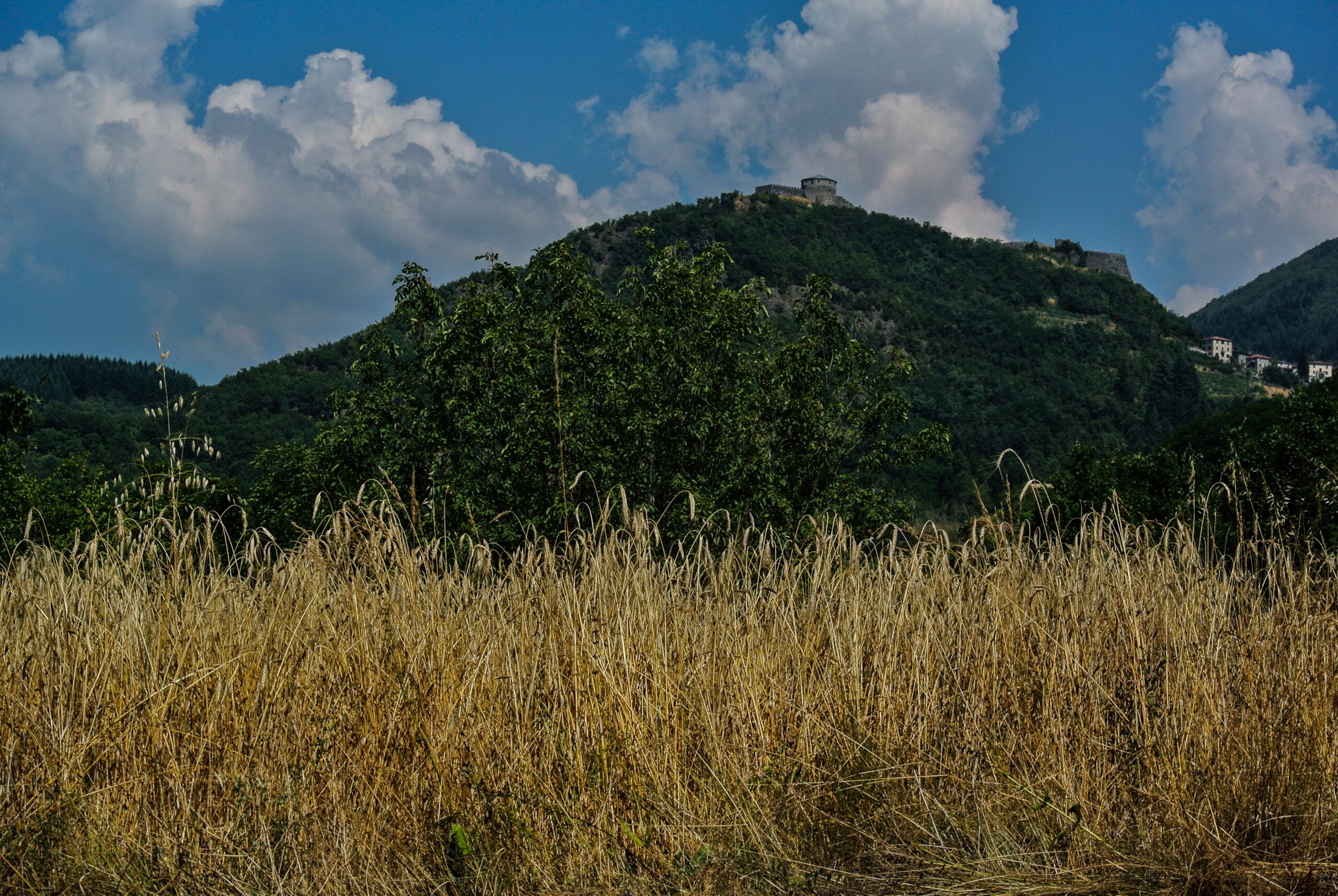
Most farro fields lie in the central-northern part of the valley, around Piazza al Serchio and San Romano, and many are visible from the roads. Early July, just before harvest, is the most photogenic time, when the fields turn gold.
The processing center
Garfagnana Coop at Sillicagnana (San Romano in Garfagnana) processes much of the valley’s farro. It is a working cooperative, not a visitor center. Find its contact details here and ask in advance about visits or buying direct.
The Festa del Farro
The Festa del Farro (Farro Festival) takes place in Filicaia, a hamlet of Camporgiano, usually in August. Expect farro soups, salads, and baked goods. Check this year’s dates before you go.
Where to eat it
Any trattoria in the valley. For a tasting board with torta di farro, go to Osteria Vecchio Mulino in Castelnuovo di Garfagnana.
Information is provided in good faith and may change. Always confirm opening hours, prices, and event dates with the official source before you travel.