
Town · Valdichiana
Cetona
From Neanderthals to Valentino
Last updated:
- Region
- Valdichiana
- Province
- Province of Siena
- GPS
- 42.9620, 11.7973
- Best season
- May–June (wildflowers on Monte Cetona, warm days), September–October (hiking season, fewer visitors)
- Time needed
- Half day (borgo + museum); full day (with Belverde archaeological park and Monte Cetona hike)
- Difficulty
- easy
- Known for
- Monte Cetona hiking, Parco Archeologico di Belverde (Neanderthal and Bronze Age caves), medieval borgo, Borghi più Belli d'Italia, Valentino Garavani's country estate
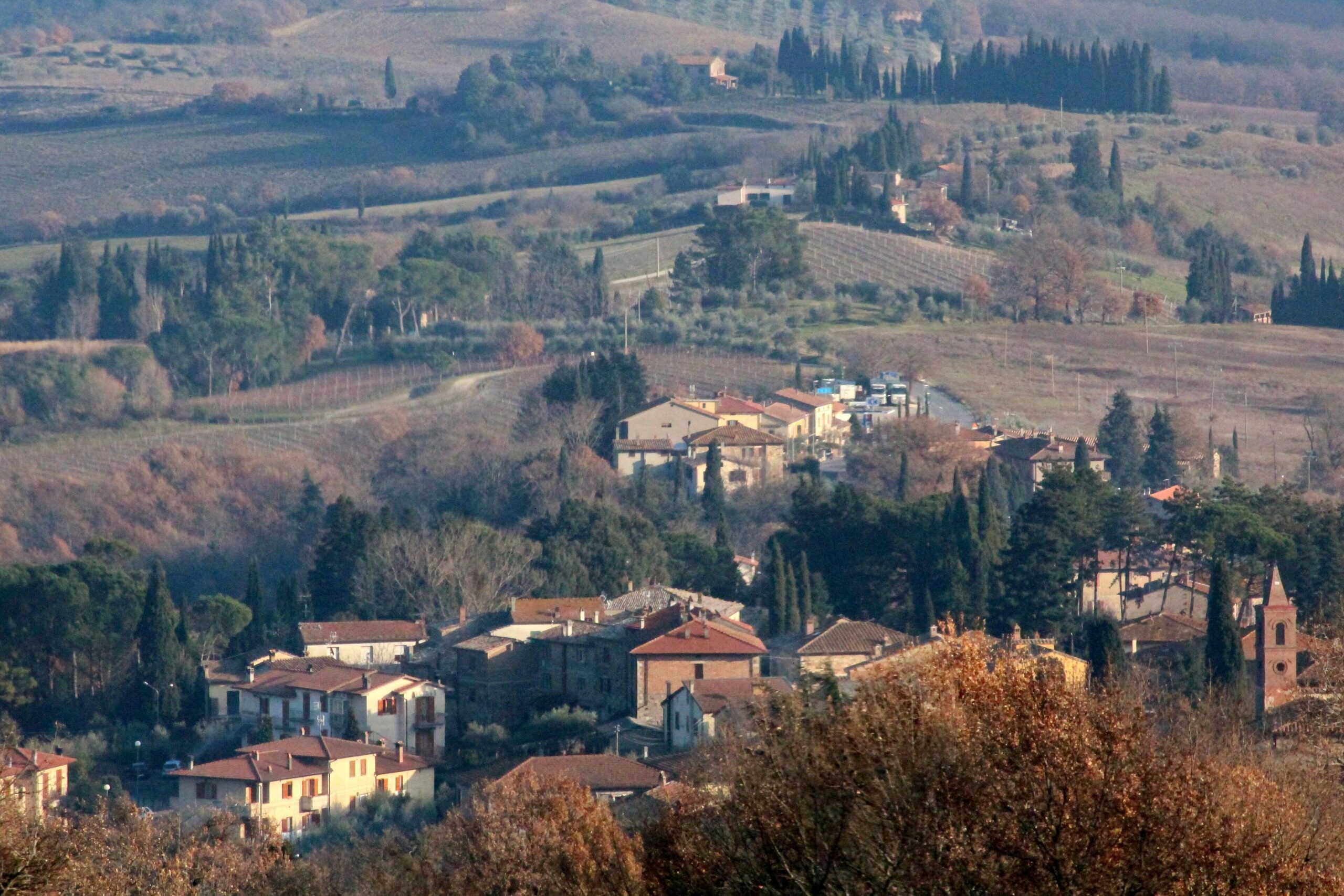
Cetona is the kind of place that makes you reconsider your sense of time. The medieval village — a member of the Borghi più Belli d’Italia — climbs in concentric rings around a tenth-century rocca, its stone streets and Renaissance piazza looking much as they did five centuries ago. That alone would be worth a visit. But beneath the hill on which Cetona sits, the timescale expands violently. The Parco Archeologico di Belverde on Monte Cetona preserves caves that were used by Neanderthals roughly 50,000 years ago and later by Bronze Age communities, while one of them, the Grotta Lattaia, became a Roman-era sanctuary filled with terracotta votive offerings. Between the medieval piazza and the Neanderthal caves, the gap is not centuries but millennia — fifty thousand years of human presence compressed into a landscape you can walk across in an afternoon.
Monte Cetona itself — 1,148 meters, the highest point in the southern Valdichiana — rises behind the village like a natural backstop. On clear days, the summit views reach from the Apennines to the Tyrrhenian Sea. The mountain lies entirely within the province of Siena, shared by the comuni of Cetona, Sarteano, San Casciano dei Bagni, and Radicofani, and it divides the Valdichiana from the Val d’Orcia. That position helps explain why humans have been drawn to its flanks since the last Ice Age.
A Place Shaped by Time
Cetona’s medieval layout centers on a tenth-century Rocca at the summit and spirals downward through concentric streets to the elegant Piazza Garibaldi at the base — an unusually handsome open square created in the mid-sixteenth century by Marquis Vitelli, who cleared the medieval structures to make room for a proper Renaissance civic space. The piazza feels like a village drawing room: proportional, shaded, and just large enough for a market or a summer concert without losing intimacy.
The churches tell a compressed story. The Chiesa di San Michele Arcangelo dates to 1155 and preserves Romanesque bones beneath later additions. The Collegiata della Santissima Trinità (completed around 1475) pairs a Renaissance portal and round window with Romanesque side doors reused from an earlier church. The Convento di San Francesco was founded in 1212, reportedly by St. Francis himself on his way through the area, and today houses La Frateria di Padre Eligio — a restaurant run by the Mondo X recovery community under chef Walter Tripodi. La Frateria is frequently described in English-language guides as Michelin-starred, but this is incorrect: the Michelin Guide lists it as a recommended restaurant, without a star. The distinction matters for travelers managing expectations and budgets: this is a high-end dining experience in a restored Franciscan convent, not a village trattoria.
Cetona’s celebrity geography adds a contemporary layer. Valentino Garavani, the fashion designer, owned Villa La Vagnola, a 1750 villa with 15 bedrooms on 27 hectares, for more than thirty years, and Renzo Mongiardino redesigned its interiors in the 1980s. The villa brought international attention to a village that had been operating in comfortable obscurity, and Cetona has maintained a quietly chic reputation in certain Italian circles ever since, attracting writers, artists, and Romans looking for a weekend refuge that is not Positano or Capri.
What to See and Do
The Parco Archeologico Naturalistico di Belverde
The archaeological park sits on a travertine plateau on the eastern flank of Monte Cetona, where roughly 25 caves preserve evidence of human habitation across an extraordinary timespan. Neanderthals were here approximately 50,000 years ago. Bronze Age populations (second millennium BC) left more extensive remains. The Grotta Lattaia, named for its milky dripping water, later became a Roman-era sanctuary where people left terracotta votives shaped as breasts and swaddled infants in a cult linked to nursing and fertility. The Grotta di San Francesco was excavated in 1927–28; tradition holds that St. Francis stayed here, layering Christian legend over prehistoric sacred space.
The park offers two itineraries: a short route (roughly 800 meters, 50 minutes) and a long route (roughly 1,600 meters, 2 hours), both guided. The Archeodromo di Belverde reconstructs a Bronze Age village with thatched huts, showing how the cave-dwelling populations lived. The Museo Civico per la Preistoria del Monte Cetona in the Palazzo Comunale on Via Roma houses the finds — stone tools, ceramic fragments, the Lattaia votives — in a small but well-organized display. The museum and the Belverde park keep separate seasonal schedules (the park opens mainly on weekends outside summer), so check preistoriacetona.it and consider booking ahead.
Hiking Monte Cetona
The summit at 1,148 meters is marked by a 1967 iron cross commemorating Vatican II. The classic ascent starts from Fonte Vetriana (746 meters) and gains about 400 meters of elevation in roughly 1.5 hours — a moderate hike on marked trails through mixed forest. An alternative starts from Cetona village via Belverde, combining archaeology with the ascent. The Sarteano Pro Loco guide Strade e Sentieri del Monte Cetona describes 12 itineraries of varying difficulty.
The summit views are the reward: on clear days, a full 360-degree panorama taking in the Valdichiana, the Val d’Orcia, the Apennines, Monte Amiata, and — on the best days — a thin line of Tyrrhenian Sea on the western horizon. Monte Cetona is not a challenging mountain, but it is a satisfying one, and the combination of prehistoric archaeology and summit hiking makes it one of the most distinctive outdoor days in the Valdichiana.
Walking the borgo
The village itself rewards a slow walk. Enter through one of the lower gates, climb through the stone streets past modest palazzi and occasional artisan workshops, and work your way to the Rocca for the views. The architecture is unspoiled in the way that only genuine obscurity can produce — no restoration campaigns, no heritage-tourism signage, just a lived-in medieval village that happens to be almost perfectly intact.
Eating Like a Local
Cetona’s dining scene is modest in scale but includes some genuine quality. La Frateria di Padre Eligio in the former Franciscan convent is the headline — an unusual setting with serious cooking and a social mission. The village’s trattorias serve honest local cooking; ask in town for current recommendations. The Saturday morning market brings produce to the village.
The territory around Cetona produces olive oil and the Valdichiana’s standard agricultural products. Wines are typically Chianti Colli Senesi or broader Toscana IGT.
Getting There and Getting Around
By car, Cetona is about 15 minutes west of Chiusi, 25 minutes south of Montepulciano, and roughly 1 hour 45 minutes from Florence and 2 hours from Rome. From the A1, take the Chiusi-Chianciano Terme exit and head west on the SP321.
There is no train station — Chiusi-Chianciano Terme (15 minutes by car) is the nearest. A car is essential.
Parking is outside the village walls. The centro storico is pedestrian. Belverde is reachable by car (limited parking at the site entrance).
Nearby
Chiusi (15 minutes east) — Etruscan museum, labyrinth, catacombs, Lake Chiusi.
Sarteano (10 minutes north) — The Tomba della Quadriga Infernale and a well-preserved medieval centro storico.
San Casciano dei Bagni (20 minutes south) — Thermal baths and the sanctuary of the Bagno Grande, where 24 Etruscan and Roman bronze statues came to light in 2022, one of the most important finds in Italy in decades. The permanent museum is still in the planning stage and the bronzes have been touring major exhibitions, so check the comune’s website for current opportunities to see the finds.
Montepulciano (25 minutes northeast) — Vino Nobile, Piazza Grande, and the barrel race.
Chianciano Terme (15 minutes north) — Four thermal complexes for a spa day.
Information is provided in good faith and may change. Always confirm opening hours, prices, and event dates with the official source before you travel.