
Itinerary · 3 days · Mugello
3 Days in Mugello
The Valley Florence Doesn’t Tell You About
Last updated:
- Duration
- 3
- Best season
- spring, autumn
- Budget
- budget to mid-range
- Best for
- couples, solo travelers, food lovers, history buffs
- Driving required
- yes (strongly recommended)
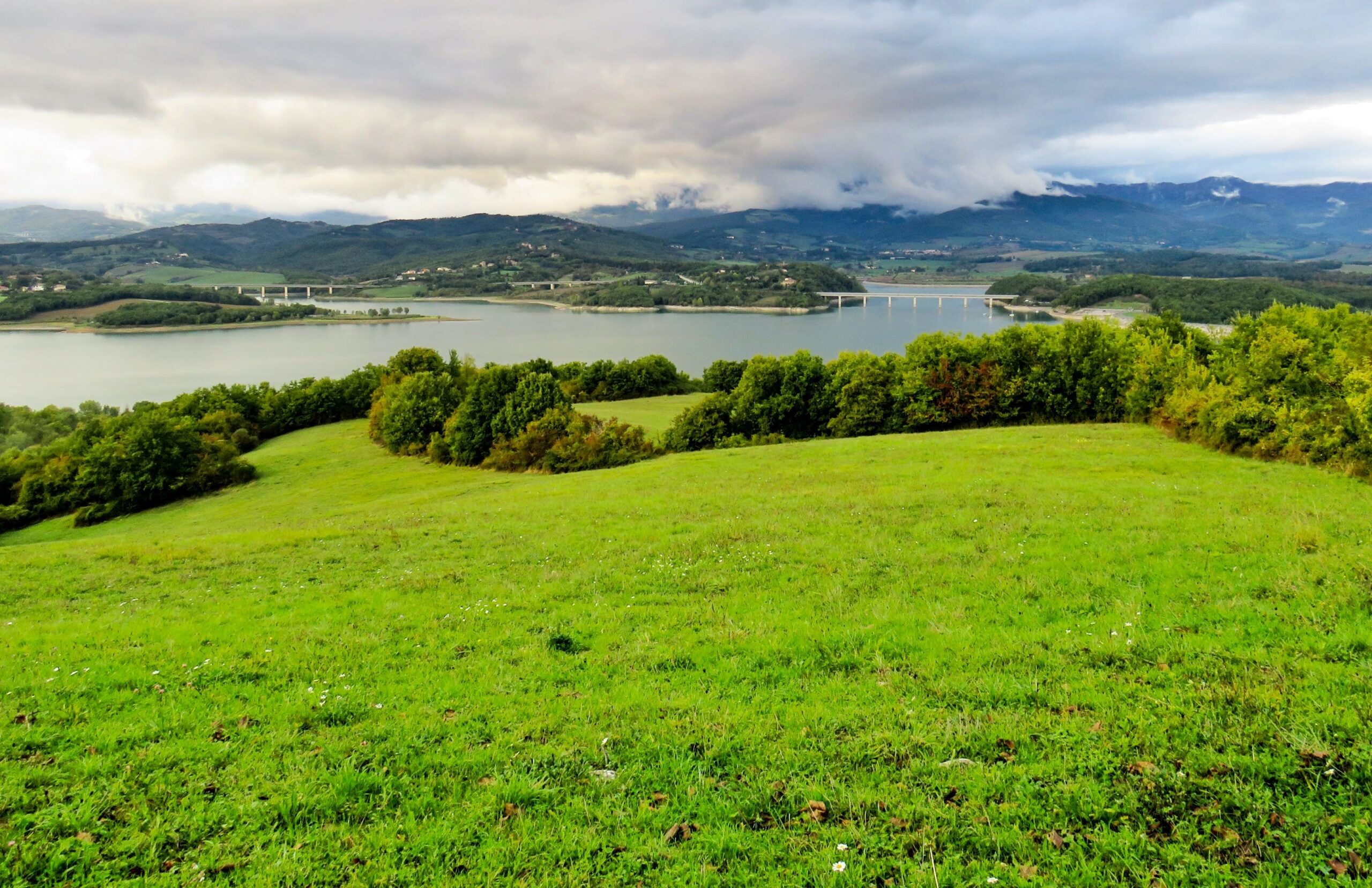
Thirty minutes north of Florence, the cypress-lined postcards end and something else begins. The Mugello is a broad, mountain-ringed valley where the Medici family originated, Giotto learned to see, and tortelli di patate remain a matter of household honor. It has a MotoGP circuit, emerging Pinot Noir vineyards, chestnut forests that feed an entire October festival culture, and villages that belong to the Borghi più belli d’Italia — and practically no international tourists.
This itinerary covers the valley’s essential towns, flavors, and landscapes in three days. You’ll need a car. You’ll eat extremely well. You’ll wonder why nobody told you about this place sooner.
Quick facts:
- Duration: 3 days / 2 nights
- Best season: Spring (April–June) for wildflowers and mild weather; Autumn (September–October) for harvest festivals and chestnut sagre
- Base: Borgo San Lorenzo (best-connected town, most services) or an agriturismo in the surrounding hills
- Budget level: Budget to mid-range. Mugello prices are significantly lower than Florence, Chianti, or Val d’Orcia.
- Best for: Couples, solo travelers, food and wine enthusiasts, history buffs, anyone tired of tourist Tuscany
- Driving required: Yes. Some towns are train-accessible, but a car opens the full valley.
Day 1: Scarperia, San Piero a Sieve, and the Medici Triangle
Knives, Medici villas, a Donatello crucifix, and the best introduction to Mugello‘s character.
Morning: Scarperia
Start in Scarperia — the town the Florentine Republic built in 1306 to break a feudal dynasty. Park outside the walls (free, easy) and walk to the Piazza dei Vicari. The Palazzo dei Vicari hits you immediately: a miniature Palazzo Vecchio with a 42-meter tower, its facade studded with dozens of glazed terracotta coats of arms from the Della Robbia workshops. Spend time outside before going in — the facade is the first exhibit.
Inside, the Museo dei Ferri Taglienti (Cutting Implements Museum) documents five centuries of Scarperia‘s knife-making tradition across five thematic sections. The workbench where you can try assembling a knife is worth the visit alone. Upstairs, find the Brunelleschi Clock — the only surviving clockwork mechanism from the architect of Florence’s dome, documented through his heir’s 1446 claim for payment for the clock.
After the museum, walk the town’s medieval streets and visit one of the working knife workshops. The Zuava pocket knife — ox horn handle, hand-forged blade — is the classic Scarperia product and makes an outstanding gift. Allow 2–2.5 hours for Scarperia.
Lunch: Scarperia or San Piero a Sieve
Your first tortelli di patate. Order them with meat ragù — duck ragù is a classic pairing. Don’t overthink the restaurant choice; in Mugello, tortelli are good everywhere.
Afternoon: San Piero a Sieve — Bosco ai Frati and the Medici Villas
Drive 5 km to San Piero a Sieve and visit the Convento di Bosco ai Frati — a Franciscan convent rebuilt by the Medici, where a wooden Crucifix attributed to Donatello was hidden in the crypt for centuries before being rediscovered in the mid-twentieth century. The atmosphere is austere and powerful. According to tradition, Saint Bonaventure received his cardinal’s insignia here. The Medici coat of arms appears 21 times.
If time and access allow, drive to the Villa Medicea di Cafaggiolo (UNESCO World Heritage) — Cosimo de’ Medici’s country retreat, Lorenzo il Magnifico’s favorite escape. The nearby Villa del Trebbio (also UNESCO) completes the Medici triangle. Check access in advance — visiting arrangements change.
Evening: Borgo San Lorenzo
Drive to your base in Borgo San Lorenzo (8 km from Scarperia). Walk the town center, find the Fido monument (the dog who waited fourteen years at a bus stop for his bombed master), and settle into a trattoria for dinner. Try peposo — slow-cooked beef heavy with black pepper — if your lunch was tortelli.
Day 2: Vicchio, Wine, and the Artists’ Valley
Giotto’s empty frames, Fra Angelico’s homeland, Pinot Noir that shouldn’t exist, and a radical priest’s mountain school.
Morning: Vicchio and Vespignano
Drive 8 km east to Vicchio. Start in the town center at Piazza Giotto for a coffee under the loggia, then drive 3 km (or walk 30 minutes) to Vespignano and the Casa di Giotto. The house itself is modest, but the garden is extraordinary: empty picture frames positioned to capture specific views of the Mugello landscape, inviting you to see the valley as Giotto might have seen it. This is one of the most thoughtful small museum experiences in Tuscany.
Walk down to the Ponte di Cimabue — the bridge where, according to legend, the painter Cimabue discovered young Giotto drawing a sheep on a stone with such skill that he took the boy as his apprentice.
Back in Vicchio, visit the Museo di Arte Sacra Beato Angelico for context on the other great painter from this valley. Fra Angelico — born Guido di Pietro around 1395 — grew up in the Rupecanina neighborhood nearby.
If you want to walk, the Sentiero dei Pittori (Path of the Painters) connects the Giotto and Fra Angelico sites along a walking route through the landscape both painters knew.
Lunch: Vicchio
Tortelli again — or, if you’re saving your appetite, a schiacciata (local flatbread) from a bakery. Check the weekly market if it’s Thursday.
Afternoon option A: Wine tasting
Book ahead to visit Il Rio, Paolo Cerrini‘s pioneering Pinot Noir estate in the hills near Vicchio. A former Florentine goldsmith who moved to the Mugello out of love for cycling its roads, Cerrini planted Pinot Noir in the early 1990s when few believed this valley could make fine wine. The clay soils and continental climate proved him right. His flagship wine, Il Ventisei, is elegant, honest, and unlike any Tuscan wine you’ve tasted. Visits by appointment only — contact in advance.
If Il Rio isn’t available, ask about other Provimu association producers who accept visitors. When the Provimu association was founded in 2025, it brought together seventeen wineries producing around 192,000 bottles a year.
Afternoon option B: Barbiana
Drive 9 km up a winding mountain road to Barbiana, where the priest Don Lorenzo Milani created a radical school for poor rural children in the 1950s–60s. The school — a few rooms beside a church — is preserved as he left it. His students collectively wrote Lettera a una professoressa, one of the most influential texts in Italian education. This is a powerful, quiet place, even if you don’t know the full story. Check visiting arrangements in advance.
Evening: Borgo San Lorenzo
Back to base. If the Museo della Manifattura Chini at Villa Pecori Giraldi is open (its hours are limited, so check ahead), don’t miss it — the Art Nouveau ceramics of Galileo Chini (who designed the original sets for Puccini’s Turandot and painted murals for the King of Siam) are a genuine surprise. Then dinner — try local Calvana beef if you see it on a menu, or any seasonal dish involving mushrooms or chestnuts.
Day 3: The Alto Mugello — War, Stone, and Silence
Gothic Line battlefields, the largest German cemetery in Italy, a town rebuilt from zero, and the quietest village you’ve ever visited.
Morning: Firenzuola via the Futa Pass
Drive north from Borgo San Lorenzo toward the Futa Pass on the SS65 (the old Via Bolognese). The road climbs through increasingly mountainous terrain. Just below the pass, stop at the German Cemetery (Cimitero Militare Germanico) — more than 30,000 burials on concentric terraces descending a hillside, the largest German military cemetery in Italy. The scale and the silence demand a pause, regardless of your relationship to this history.
Continue over the Futa Pass (903 m) to Firenzuola — the town that was completely destroyed by Allied bombing on September 12, 1944, and had to be rebuilt from nothing. Walk the center: the uniform grey pietra serena sandstone, the rational postwar street plan, the absence of accumulated centuries that makes this place unlike any other town in Tuscany. Visit the Museo della Pietra Serena inside the reconstructed fortress.
Lunch: Firenzuola
Mountain food. Polenta with ragù or mushrooms. Game if it’s on the menu. Honest, hearty, inexpensive.
Afternoon: Choose Your Ending
Option A: Palazzuolo sul Senio (if you want deep isolation)
Drive 25 km east to Palazzuolo sul Senio — 1,000 inhabitants, Borghi più belli d’Italia, at the absolute end of Tuscan geography where the map dissolves into Romagna. Walk the village in fifteen minutes. Then walk it again more slowly. Visit the Museum of Mountain People. Sit by the Senio River and listen to nothing. If you’ve booked at the Locanda Senio (an albergo diffuso — a distributed hotel woven into the village fabric), stay the night. Otherwise, return to Borgo San Lorenzo via Marradi.
Option B: The Giogo di Scarperia and Autodromo (if you want scenery and speed)
Drive the Giogo di Scarperia pass (882 m) — a serious mountain road with panoramic views across the Mugello valley. The pass was part of the original 1914 road racing circuit, and the climb is popular with cyclists. Descend to the Autodromo del Mugello — Ferrari-owned, MotoGP home, and even if there’s no race, the facility and its mountain setting tell a story. End the day back in Scarperia with a knife workshop visit if you missed one on Day 1.
Option C: Marradi (if it’s October)
If you’re doing this itinerary in October, skip everything else and take the road (or the train) to Marradi for the Sagra delle Castagne. The historic train from Florence, often steam-hauled, through the autumn forests is one of the most scenic rail journeys in Tuscany. Roasted chestnuts, castagnaccio, chestnut beer, crowds many times the size of this village of 3,000. Book the steam train well in advance.
Practical Tips for This Route
Accommodation: Agriturismi (farm stays) are the Mugello’s strength — working farms with rooms, pools, and farm-to-table cooking. Prices are substantially lower than comparable options in Chianti or Val d’Orcia. Borgo San Lorenzo has the widest selection of in-town options. For character, look for converted farmhouses in the hills between Scarperia, Vicchio, and Borgo San Lorenzo.
Transport: A car is strongly recommended. Vicchio and Borgo San Lorenzo are reachable by train from Florence (Borgo on the Faentina line, Vicchio via Pontassieve), but Scarperia, Firenzuola, and Palazzuolo have no train service. The A1 motorway exit at Barberino di Mugello is about 30 minutes from Florence.
Budget: This itinerary is very affordable by Tuscan standards. Trattoria meals, agriturismo rooms, museum tickets and wine tastings all typically cost noticeably less than in Florence or Chianti; check each venue’s current prices when booking.
Driving: Roads are good throughout the valley. The mountain passes (Futa, Giogo, Colla di Casaglia) are winding but well-maintained. The road to Palazzuolo is slower and narrower. Borgo San Lorenzo’s historic centre has a ZTL, so watch for the signs.
Connectivity: Pack patience. Mobile signal can be patchy in the Alto Mugello mountains. This is a feature, not a bug.
Language: English is less widely spoken in the Mugello than in Florence or Chianti. Basic Italian phrases go further here, and people appreciate the effort. Restaurant menus may be Italian-only outside the agriturismo circuit.
Information is provided in good faith and may change. Always confirm opening hours, prices, and event dates with the official source before you travel.