
Maker · Mugello
Meet Paolo Cerrini
The Goldsmith Who Gave Mugello Its Wine
Last updated:
- Region
- Mugello
- Location
- Vicchio
- Visit possible
- Yes, by appointment
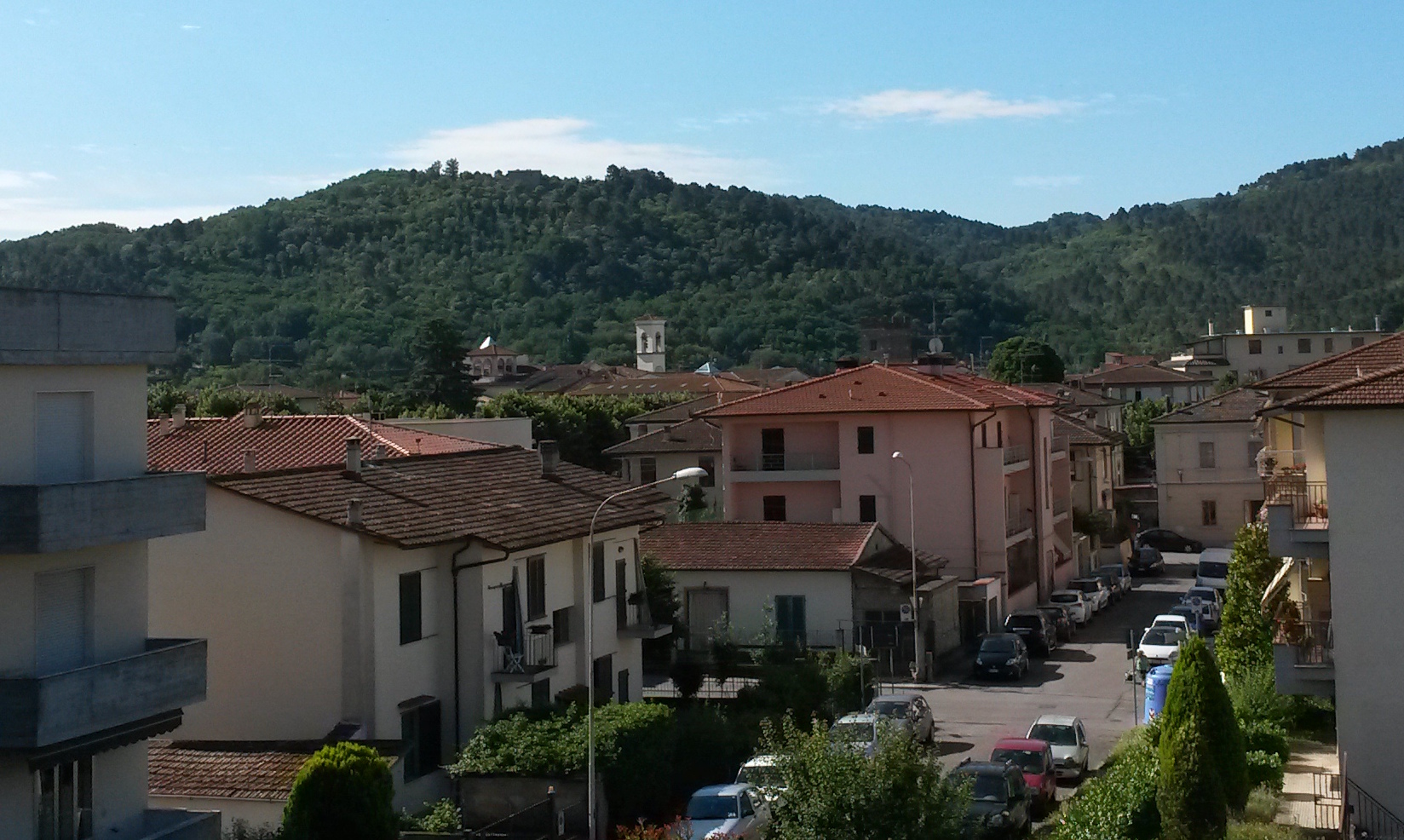
In the early 1990s, Paolo Cerrini was a goldsmith in Florence. He was also a cyclist who loved riding the roads of the Mugello valley — the broad, green basin north of the city where the Apennines rise and the landscape turns from Tuscan postcard into something cooler, wetter, and more mountainous. At some point during those rides through the hills near Vicchio, past clay soils and chestnut forests, a thought that most oenologists would have dismissed as romantic nonsense took root: what if this place could grow Pinot Noir?
The Mugello was not wine country. The climate was thought too cool and continental, and there was no tradition of fine wine. Local farms had always grown vines in the old mezzadria (sharecropping) style — quantity over quality, wines made for the family table rather than for the bottle. The idea that this valley could produce Pinot Noir — a grape so finicky that even Burgundy, its spiritual homeland, considers it difficult — seemed, by any rational measure, absurd.
Cerrini planted anyway. And the clay soils, the cool nights, the sharp diurnal temperature swings between Apennine shade and Tuscan sun turned out to be exactly what Pinot Noir wanted.
Factbox:
- What they make: Pinot Noir (Il Ventisei, Il Terosé), Chardonnay/Pinot Noir blend (L’Annita), Sauvignon Blanc (Il Carabà)
- Region: Mugello
- Location: Vicchio di Mugello
- Founded: 2003 (experimental planting from early 1990s)
- Vineyard size: 2 hectares across two plots
- Generation: First — this tradition didn’t exist before Paolo
- Visit possible: Yes, by appointment
The Story
Paolo Cerrini’s path from goldsmith to winemaker wasn’t a sudden career change — it was a gradual gravitational pull. He’d loved the Mugello since childhood cycling trips. When he began experimenting with vines in the early 1990s, he wasn’t launching a business; he was testing a hunch. He planted Pinot Noir, Chardonnay, and Sauvignon Blanc on a small plot near his home in the hills between Vicchio and the Tuscan-Romagnolo Apennines.
The results were encouraging enough that he later added a second vineyard, Le Panche (planted from 2004), along a small creek that flows down to the Sieve. In 2003, together with his partner Manuela Villimburgo, he formally founded the Il Rio winery — named after one of the historic farmhouses of the Fattoria di Molezzano, whose cellars he converted into his cantina.
What Cerrini discovered was something that careful soil and climate analysis would have predicted, had anyone bothered to do it for a region that was supposedly unsuitable for serious viticulture. The clay soils around Vicchio retain moisture well. The continental climate — cooler than the Chianti or Montalcino zones to the south, with significant temperature drops at night — slows ripening and preserves the acidity that gives Pinot Noir its elegance. The Apennine barrier creates a microclimate that is, in certain respects, more similar to Burgundy or the Alpine foothills of Alto Adige than to the Mediterranean warmth of central Tuscany.
The wines proved it. Il Rio’s Pinot Noir — particularly the flagship Il Ventisei, aged twelve months in barrique and twelve in bottle — began earning recognition for finesse, red-fruit character, and a distinctly Burgundian elegance that surprised critics who expected Italian Pinot Noir to be heavy or undistinguished. The wines are made with minimal cellar intervention and a philosophy that prioritizes the expression of the specific place over winemaking technique.
The Products
Il Rio produces four wines from its two hectares, all labeled as Toscana IGT:
Il Ventisei — 100% Pinot Noir. The flagship. Hand-harvested, partial carbonic maceration, fermented at controlled temperatures, malolactic fermentation in barrique, twelve months in barrique with regular bâtonnage, twelve months in bottle. Pale ruby red, aromas of black cherry and cherry, withered rose petals, fine tannins, sweet spice and tobacco on a long finish. This is the wine that proved Mugello could make serious Pinot Noir.
Il Terosé — 100% Pinot Noir rosé. Fermented in stainless steel at controlled temperature. A lighter expression of the same grape, the same terroir.
L’Annita — A white blend of Chardonnay (about 70%) and Pinot Noir vinified as a white wine, with prefermentative cold maceration and partial fermentation in barrique. It shows a different dimension of what the Mugello climate can do.
Il Carabà — 100% Sauvignon Blanc. Cold pre-fermentation maceration; released about a year after harvest. Clean, fresh, a further demonstration that this valley’s cool continental character suits northern grape varieties.
Production is tiny — two hectares, entirely hand-worked, certified organic methods. These are artisan wines in the truest sense: made by the people who grew the grapes, in the building where they live.
What Cerrini Started
The significance of Il Rio extends beyond its own bottles. Cerrini’s success inspired other Mugello landowners to experiment with Pinot Noir. In the early 2010s, Il Rio became a founding member of Appennino Toscano – Vignaioli di Pinot Nero, an association of Pinot Noir growers from the Tuscan Apennine valleys. In February 2025, the broader Provimu (Produttori Vini Mugello) association was formally established; at its founding it counted seventeen wineries, 151 hectares of vineyard, 64 labels and around 192,000 bottles a year.
The members range from tiny plots of half a hectare to the Tenuta di Monteloro, the Marchesi Antinori’s 95-hectare estate — a significant investment from one of Italy’s most prestigious wine families, and a signal that the Mugello’s wine potential is taken seriously at the highest level. The Fattoria di Cortevecchia produces the Mugello’s first méthode classique sparkling wine. Fattoria Il Lago and Tenuta Frascole each work around twelve hectares with a quality-first approach.
Beyond Pinot Noir, the Mugello producers grow Merlot, Rebo, Teroldego (varieties typically associated with Trentino in the Alpine north), Chardonnay, Sauvignon Blanc, Riesling, Traminer, Müller-Thurgau, and Petit Manseng. The diversity says something important: this is not Chianti, and it isn’t trying to be. The Mugello is a cool-climate wine frontier within Tuscany, and the producers are exploring what the terroir actually wants rather than planting what tradition dictates.
The Mugello has been called “a small Burgundy of Tuscany” — a description that is both flattering and slightly misleading. It’s flattering because the Pinot Noir is genuinely elegant. It’s misleading because the Mugello is its own place, not a copy of anywhere else. The best thing about these wines is that they taste like the valley they come from — cool, green, mountain-shadowed, honest.
Visiting Il Rio
Il Rio welcomes visitors by appointment. Contact in advance through the winery’s website, ilriocerrini.it. Paolo and Manuela are hands-on — they work the vines, make the wine, and host the visits themselves. This is not a corporate tasting room experience; it’s a conversation with the people who do the work.
The winery is located in the hills between Vicchio and the Apennines, accessible by car on local roads. Combine a visit with the Casa di Giotto in Vespignano (nearby) and a walk on the Sentiero dei Pittori. The landscape around Il Rio is the same landscape Giotto grew up in — and on a clear day, with the vines in the foreground and the Apennines behind, you’ll understand why both the painter and the goldsmith decided this valley was worth a life’s work.
Information is provided in good faith and may change. Always confirm opening hours, prices, and event dates with the official source before you travel.