
Maker · Valdichiana
Meet Stefano Amerighi
The Biodynamic Farmer Behind Cortona Syrah
Last updated:
- What they make
- Syrah from Cortona (Demeter biodynamic), plus grains and other farm produce
- Region
- Valdichiana
- Location
- Poggiobello di Farneta, in the comune of Cortona (Province of Arezzo)
- Visit possible
- By appointment, arranged through the farm (+39 0575 648340)
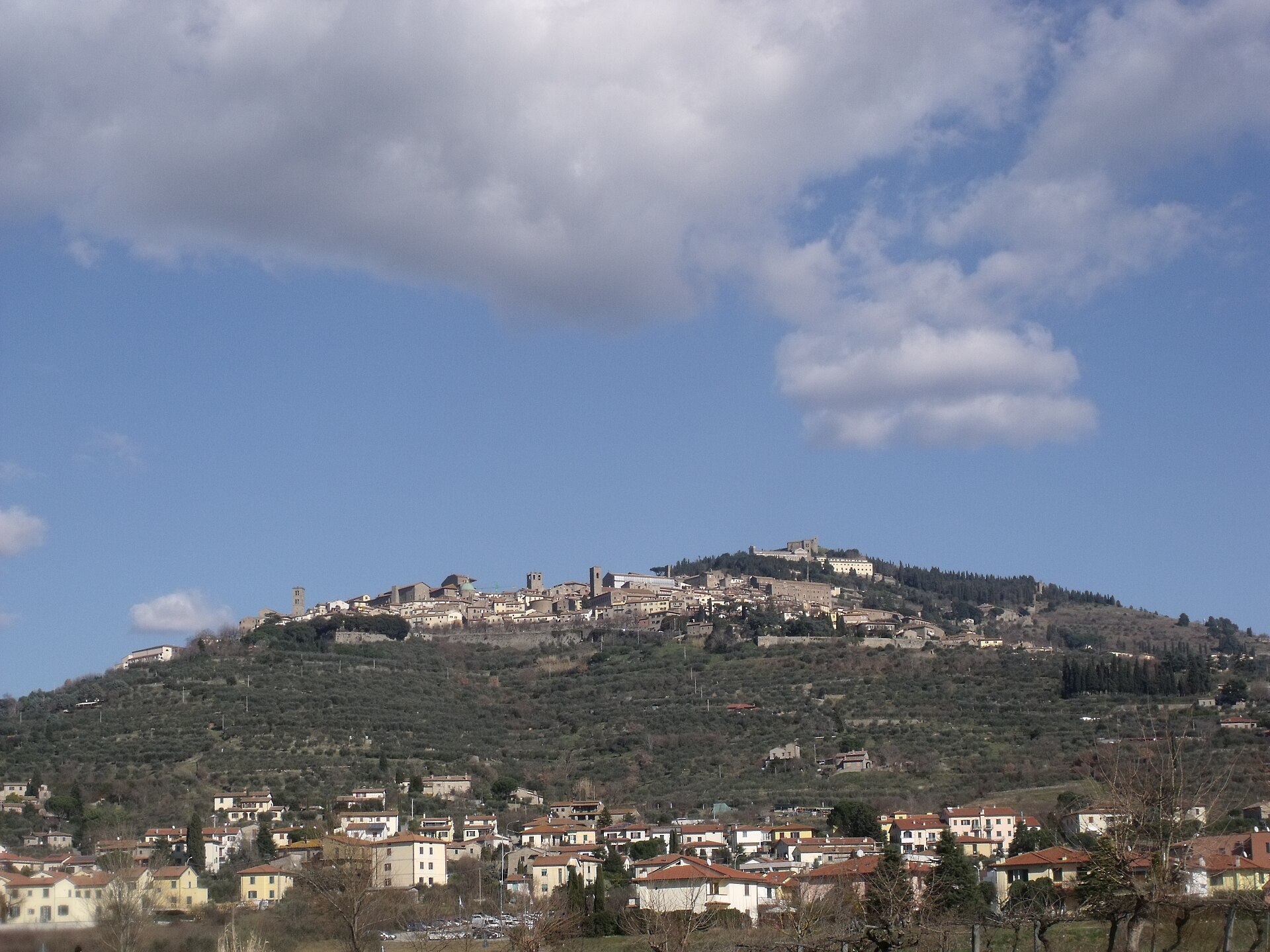
Ask Italian wine people about Syrah and one name comes up fast. Stefano Amerighi grows it on a small hill farm at Poggiobello di Farneta, in the countryside of Cortona. The site sits in the Valdichiana (the Chiana Valley), between Cortona and Montepulciano.
His first contact with wine came early. He has told the Italian wine blog Tannina that he saw his first harvests as a child, in his maternal grandfather’s cellar. He later studied political science, then traveled and tasted widely. A glass of Cortona Syrah convinced him that the grape belonged here. He studied the Rhône Valley, Syrah’s homeland, and then came back to the hills he grew up in.
His US importer and wine merchants date the key decision to 2001, when he settled on the Poggiobello di Farneta site after checking its climate and soil. The first vintage to carry his name was 2006, according to the Italian site Vinodabere. Early profiles describe vines grown from selections made in the Rhône Valley.
From outsider to Italy’s grower of the year
Amerighi did not stay small in reputation for long. Gambero Rosso’s Vini d’Italia guide named him Viticoltore dell’Anno (Grower of the Year) in its 2018 edition. By late 2024, La Nazione reported, his Syrah had earned the guide’s top Tre Bicchieri rating ten years running.
That same year, American critic James Suckling ranked his Cortona Syrah 2020 third in his list of the world’s top 100 wines. It was the only Italian wine in the top five. Amerighi told La Nazione that he had never sent wines to international guides. Suckling had simply come to find him.
In France, the Revue du Vin de France put his Syrah on its cover, according to Gambero Rosso. It shared the photo with benchmark northern Rhône names, including Jean-Louis Chave’s Hermitage and Clape’s Cornas. For a Tuscan Syrah, that is unusual company.
A natural grower who runs the consortium
In May 2019 Amerighi was elected president of the Consorzio Vini Cortona, the producers’ body for the Cortona DOC. It is an interesting pairing: a natural-wine grower chosen to lead an official appellation. His stated aim, quoted by Gambero Rosso, is that “when people think of great Italian Syrah, they will automatically think of Cortona.”
The appellation is young. The Cortona DOC was created by ministerial decree on September 1, 1999, and the consortium followed in spring 2000. Today Syrah makes up about 80 percent of Cortona DOC production, the consortium says. The consortium credits Professor Attilio Scienza of the University of Milan with research in the 1970s. He planted an experimental vineyard of Syrah varieties and clones and noted the climate’s likeness to the Rhône.
The Products
A farm first, a winery second
Amerighi talks about his place as a farm, not a wine estate. He works to Demeter biodynamic standards, and Demeter Italia lists his farm for wine, wine grapes, and cereals. Pruning and soil work follow lunar and planetary cycles, and vineyard treatments rely on copper and sulfur.
The vines cover roughly eight hectares, a figure his importers and Italian retailers repeat. Around them, the farm grows grains, vegetables, and fruit. Visitors describe Chianina cattle, the white Valdichiana breed, grazing on the property. His US importer, Bowler Wine, adds heirloom fruit trees, pigs, geese, and hens. Bowler also quotes his rule for wet weather: no tractor, only a backpack sprayer.
How the Syrah is made
The Italian press describes cellar work that has changed little in spirit since the start. Grapes are picked by hand and partly trodden by foot. Fermentation starts on its own, with native yeasts, in cement vats. There is no temperature control and no sulfur added during fermentation. Aging takes place in wood and cement, and some writers also mention ceramic vessels.
Precision is the other half of the story. Vinodabere counts about thirty micro-parcels, each fermented separately. Some lots use whole clusters, some are destemmed, and some are foot-trodden. The wines are bottled without filtration or stabilization. Gambero Rosso sums up his style as clarity, precision, and juicy tannins rather than power and new oak.
The labels
The main wine is his Syrah from Cortona, the one that built the reputation. Apice is a selection from the top of the vineyard, made only in great vintages. Serine comes from a massal selection, meaning vines propagated from the estate’s own plants. Vinodabere says it has been in full production since 2018.
Amerighi also works beyond Tuscany. With Marche wine writer Maurizio Silvestri, he started Noè in 2013. It is a Pecorino from mountain vines around Arquata del Tronto, in the area hit by the 2016 earthquakes. In western Sicily he is one of six growers behind Halarà, near Marsala. The group works a small plot of Catarratto and the rare Parpato grape.
Visiting Stefano Amerighi
How to arrange a visit
Visits are by appointment only, so do not simply turn up. Contact the farm through the official Stefano Amerighi website or by phone (+39 0575 648340) well before your trip. Wine-tourism listings note that tastings are offered in Italian, English, and French. Check the current format and any costs directly with the farm, as these can change.
Expect a working farm rather than a polished tasting room. This is the place to ask about the micro-parcels, the animals, and why Syrah suits this corner of Tuscany. If you only want a quick glass, a wine bar in Cortona is the easier choice.
Fitting it into your trip
You will need a car, since the farm lies out in the countryside rather than in town. Cortona itself makes a natural base, and Montepulciano sits across the valley. For a route that links Cortona, Montepulciano, and the smaller towns of the plain, see our 5 days in Valdichiana itinerary.
If your timing is flexible, look at Cortona’s annual Chianina & Syrah festival. The event pairs the valley’s famous beef with local Syrah. Check the Consorzio Vini Cortona’s official website for current dates.
Information is provided in good faith and may change. Always confirm opening hours, prices, and event dates with the official source before you travel.