
Town · Valdichiana
Chiusi
Where an Etruscan King Built a Labyrinth (Maybe)
Last updated:
- Region
- Valdichiana
- Province
- Province of Siena
- GPS
- 43.0164, 11.9488
- Best season
- April–June (comfortable weather, tomb visits); September–October (quiet, lake birdwatching)
- Time needed
- Full day (archaeological museum + labyrinth + catacombs + tomb visits + Lake Chiusi = 5–6 hours)
- Difficulty
- easy
- Known for
- Etruscan capital (Clevsin/Clusium), Lars Porsenna legend, underground labyrinth, Museo Archeologico Nazionale Etrusco, painted Etruscan tombs, early Christian catacombs, Lake Chiusi, brustico fish
There is something unsettling about Chiusi, and that is part of its appeal. The town sits on a hill above the southern Valdichiana, quiet and unhurried, its center a modest grid of streets around a cathedral that was built from recycled Roman columns around AD 560. Below the surface, things are more complicated. Etruscan aqueducts thread through the rock. Christian catacombs from the third and fourth centuries tunnel beneath the outskirts. A Roman-era cistern the size of a small church lies under the cathedral complex. And somewhere — according to Pliny the Elder, who was quoting Varro — a vast stone tomb with five pyramids and an inextricable labyrinth holds the body of Lars Porsenna, the Etruscan king who may or may not have conquered Rome.
Chiusi’s ancient name was Clevsin in Etruscan, Camars in the earlier Umbrian language, and Clusium in Latin. It was one of the twelve cities of the Etruscan Dodecapolis — the league of the most powerful city-states in pre-Roman Italy — and at its peak in the sixth and fifth centuries BC it was among the most powerful cities of Etruria. The transformation from Etruscan capital to quiet Tuscan hill town is one of the longest slow declines in Italian history: from Porsenna’s siege of Rome in 508 BC to the malaria that depopulated the valley in the Middle Ages, Chiusi lost two and a half millennia of importance and gained, in return, the particular beauty of a place that has outlived its own ambitions.
For travelers, the payoff is tangible. Chiusi has one of Italy’s finest Etruscan archaeological museums, a genuinely atmospheric underground “labyrinth” visit, painted tombs that can be toured by appointment, early Christian catacombs dating from the third century, and — five kilometers away — a lake where fish are still grilled over dried reeds in a technique that the Etruscans might recognize. It is also the Valdichiana‘s best-connected town by rail, with frequent direct trains to both Florence and Rome.
A Place Shaped by Time
The Etruscan story is the big one. Chiusi was established on an earlier Umbrian settlement by the eighth century BC and rose to become one of the wealthiest members of the Etruscan League. The archaeological evidence — cinerary urns, canopic jars with sculpted portrait heads, the extraordinary painted tombs in the surrounding countryside — points to a society that was wealthy, artistically sophisticated, and deeply invested in the afterlife.
Lars Porsenna (Porsenna in Italian) is the figure who electrifies the imagination. Around 508 BC, according to Livy, the king of Clusium marched on Rome after the overthrow of Tarquinius Superbus, the last Roman king. Livy’s version gives us the heroic defense — Horatius Cocles on the bridge, Mucius Scaevola thrusting his hand into the fire — but Tacitus suggests a less flattering reality: that Rome may have actually surrendered. Either way, Porsenna’s power was real enough to threaten the nascent Republic.
It is Pliny the Elder’s description of Porsenna’s tomb that has haunted Chiusi for two millennia. Writing in Naturalis Historia (XXXVI.91–93) and quoting the earlier writer Varro, Pliny described a square stone monument 300 feet on each side and 50 feet high, containing an “inextricable labyrinth” beneath, surmounted by five pyramids capped with bronze discs from which bells hung, their sound carried by the wind. It has never been found. Candidate sites include the Poggio Gaiella tumulus north of town, but no excavation has produced anything matching Pliny’s description. The labyrinth may be real, may be exaggerated, or may be entirely mythological. Chiusi has wisely decided to lean into the ambiguity rather than resolve it.
Rome settled a colony at Clusium under Sulla in the early first century BC. The subsequent centuries were quiet, the town shrinking as the valley around it flooded. By the eleventh century, malaria had reduced Chiusi to a shadow. The Sienese took control in 1231 and held it until the Medici absorbed Siena in 1556. The cathedral — San Secondiano, built around AD 560 — used columns of antique marble taken from Roman buildings, a material choice that perfectly captures a town living inside the ruins of something larger.
What to See and Do
The Museo Archeologico Nazionale Etrusco
The museum on Via Porsenna 93 is one of the great Etruscan collections in Italy. It is arranged by period and theme, with close links to the surrounding territory, which makes it accessible even for visitors with no background in Etruscan archaeology. The highlights include cinerary canopi — jars with sculpted portrait heads that functioned as vessels for cremated remains, a burial practice distinctive to the Chiusi area — among them the famous Dolciano canopic urn, an Attic amphora showing Achilles and Ajax playing dice, bucchero ceramics (the distinctive black Etruscan pottery), and documentation of the painted tombs in the surrounding territory.
The museum also organizes visits to three tombs outside town: the painted Tomba della Scimmia (Tomb of the Monkey) and Tomba del Leone, and the Tomba della Pellegrina. These must be arranged through the museum, typically require advance booking, and are among the most significant Etruscan funerary monuments in Tuscany. The Tomba della Scimmia, with its scenes of games, dancers, and a small painted monkey, is particularly vivid.
Practical info: Admission approximately €6. Open daily except certain holidays; hours vary seasonally. The painted tombs lie a few kilometers outside town, so plan on a short drive, and visits are arranged through the museum (the Tomba della Scimmia by reservation only). Ask at the ticket desk or check the museum’s page on the Musei nazionali Toscana website before you go.
The Labirinto di Porsenna
The visit that most captures the imagination begins at the Museo della Cattedrale, adjacent to the Duomo, where a guided tour descends into the Labirinto di Porsenna — an underground passage through Etruscan-era tunnels to a large double-vaulted cistern beneath the cathedral complex.
In strict archaeological terms, what you walk through is a sixth-to-fifth-century BC Etruscan aqueduct and water-collection system, not Porsenna’s legendary tomb. The tunnels are carved into the rock, low-ceilinged in places, with visible chisel marks and branching passages. The large cistern at the end — first-century BC Roman construction, repurposed and enlarged — sits beneath a twelfth-century tower that was converted into the cathedral bell tower in 1585. The layering is vertiginous: Etruscan tunnels leading to a Roman cistern topped by a medieval tower turned into a Renaissance campanile.
The name “Labyrinth of Porsenna” is traditional rather than archaeological. Nobody has proved or disproved a connection to Pliny’s description. The guides are honest about this — the visit is presented as a genuine archaeological experience with a legendary overlay, not as a confirmed discovery of the royal tomb. That honesty makes it more interesting, not less. You walk through real Etruscan infrastructure, two and a half thousand years old, and the question of what else might lie under these streets remains open.
The visit concludes with a climb up the tower for a panoramic view over Chiusi and the southern Valdichiana toward Lake Chiusi and Lake Montepulciano.
The Catacombs of Santa Mustiola and Santa Caterina
Chiusi’s Christian catacombs date to the third and fourth centuries AD and are among the earliest in Italy outside Rome. The Catacombe di Santa Mustiola — named for Chiusi’s patron saint, who according to tradition was buried here in 274 — are the more extensive of the two, with corridors of loculi (burial niches), inscriptions, and early Christian symbols. The Catacombe di Santa Caterina are smaller but similarly atmospheric.
These are not the grand multi-level complexes of the Roman catacombs. They are modest, provincial burial tunnels — which is precisely what makes them significant. They testify to the existence of a Christian community in Chiusi that was large and organized enough to construct dedicated burial infrastructure at a time when Christianity was still illegal or barely tolerated. Visits are guided and arranged through the Museo della Cattedrale, with regular tours on weekend and holiday afternoons and other times by reservation; check the museum’s website for the current schedule.
The Duomo di San Secondiano
The cathedral itself deserves more than a quick pass-through. Built around AD 560 on the foundations of an earlier basilica, it reuses eighteen columns of antique marble — recycled from Roman buildings — to divide the nave, creating an interior that feels simultaneously early Christian and classical. The apparent mosaics in the nave are actually nineteenth-century trompe-l’oeil paintings by Arturo Viligiardi (1887), which is either a charming deception or a minor scandal depending on your relationship with authenticity.
Lake Chiusi: The Last Remnant
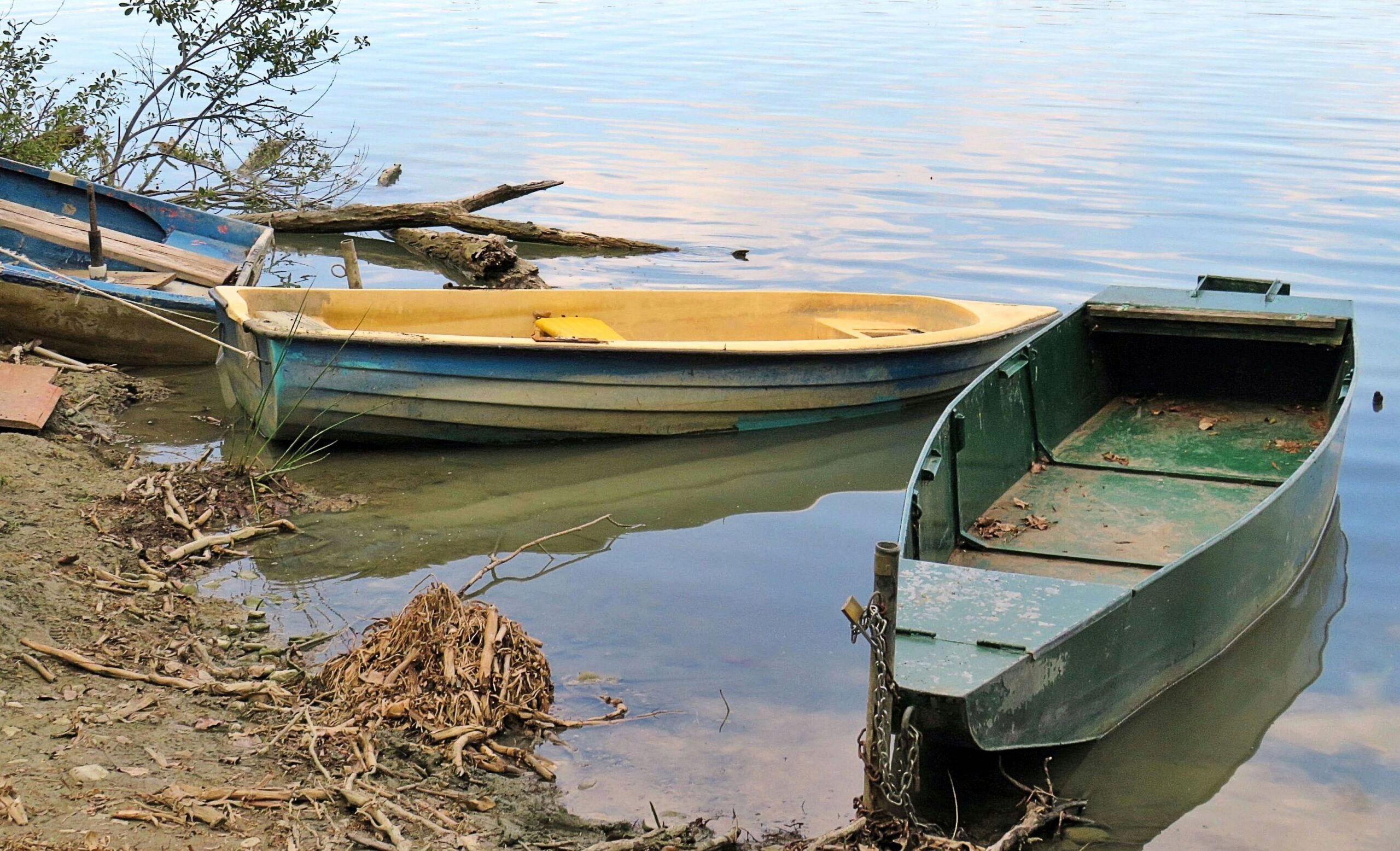
Lake Chiusi sits roughly five kilometers southeast of town — a shallow body of water (maximum depth about 5 meters, surface area 3.87 square kilometers) that is one of Tuscany’s largest natural lakes and, together with nearby Lake Montepulciano, one of the two surviving remnants of the ancient Lacus Clusinus that once filled much of the southern Valdichiana.
The lake is classified as an ANPIL (Area Naturale Protetta di Interesse Locale), with its southern portion designated as a WWF Oasis protecting one of central Italy’s most important garzaie — heron nesting colonies. Birdwatchers come for grey, little, great, and purple heron, glossy ibis, bearded reedling, great crested grebe, and migratory visitors including osprey, marsh harrier, and kingfisher. A reed-bed trail circles part of the lake, and a roughly 12-kilometer perimeter cycling loop provides a flat, easy ride with constant birdlife.
The culinary tradition here is distinctive and almost entirely unknown outside the immediate area. Brustico is the signature preparation: whole lake fish — traditionally perch, but also pike, tench, or scardola — grilled directly over a fire of dried lakeside reeds. The carbonized skin is scraped off, the fish is filleted at the table, and dressed simply with olive oil and lemon. The companion dish is tegamaccio, a three-hour lake-fish stew cooked in terracotta. Both preparations belong to the Chiusi and Montepulciano lakes and to the western shore of nearby Lake Trasimeno, just across the Umbrian border.
The lakeside has a couple of simple restaurants and a campsite. Regulated fishing is popular with locals. The atmosphere is the opposite of the archaeological intensity of the town — flat, quiet, reedy, and populated more by herons than by humans.
Eating Like a Local
Beyond the lake fish, Chiusi shares the Valdichiana table: pici all’aglione, Chianina beef, local pecorino and salumi. The town’s position at the southern end of the valley also means easy access to the wines of Montepulciano (Vino Nobile DOCG, 15 minutes north) and the thermal-town dining of Chianciano Terme. I Salotti del Patriarca is among the more notable restaurants in the immediate area.
The Monday morning market at Chiusi Scalo (the lower-town station area) is one of the valley’s regular weekly markets, with produce, clothing, and household goods.
Getting There and Getting Around
Chiusi has the best rail connections in the Valdichiana. Chiusi-Chianciano Terme station sits on the Florence–Rome line. Direct regional and InterCity trains take roughly 1.5 to 2 hours from both Florence and Rome Termini, and a few Frecciarossa services also stop here. This makes Chiusi the natural gateway for rail travelers exploring the southern Valdichiana, and a practical budget base — accommodation is cheaper here than in Cortona or Montepulciano.
By car, the A1 exit Chiusi-Chianciano Terme puts you five minutes from the town center. Driving times: Rome about 2 hours, Florence about 1 hour 40 minutes, Siena about 1 hour, Montepulciano about 15 minutes.
The town center is compact and walkable. The archaeological museum, labyrinth, catacombs, and cathedral are all within a few minutes’ walk. The painted tombs and the lake require a car or bicycle.
Nearby
Montepulciano (15 minutes north) — Piazza Grande, Vino Nobile DOCG, the Bravio delle Botti barrel race, and underground cellars.
Cetona (15 minutes west) — Neanderthal caves at Belverde, a pristine medieval borgo, and Monte Cetona hiking.
Chianciano Terme (10 minutes west) — Four thermal complexes drawing on Etruscan-era springs, including the Piscine Theia family pools and the atmospheric Terme Sensoriali.
Sarteano (15 minutes southwest) — The Tomba della Quadriga Infernale (Tomb of the Infernal Chariot), an Etruscan painted tomb discovered in 2003, is one of the most spectacular recent archaeological finds in Italy. Visitable by appointment through the Museo Civico Archeologico.
Lake Montepulciano (10 minutes north) — The smaller, wilder partner lake, with a nature reserve, electric-boat tours, and an observation tower.
Information is provided in good faith and may change. Always confirm opening hours, prices, and event dates with the official source before you travel.