
Town · Garfagnana
Camporgiano and Piazza al Serchio
Tuscany’s Upper Serchio Valley
Last updated:
- Region
- Garfagnana
- Province
- Province of Lucca
- GPS
- 44.1608, 10.3344 (Camporgiano); 44.1833, 10.3000 (Piazza al Serchio)
- Best season
- Late spring to autumn; July for the farro harvest
- Time needed
- Half day for both
- Difficulty
- easy
- Known for
- Rocca Estense of Camporgiano, Renaissance ceramics collection, farro country, Birrificio La Petrognola, Lucca–Aulla railway
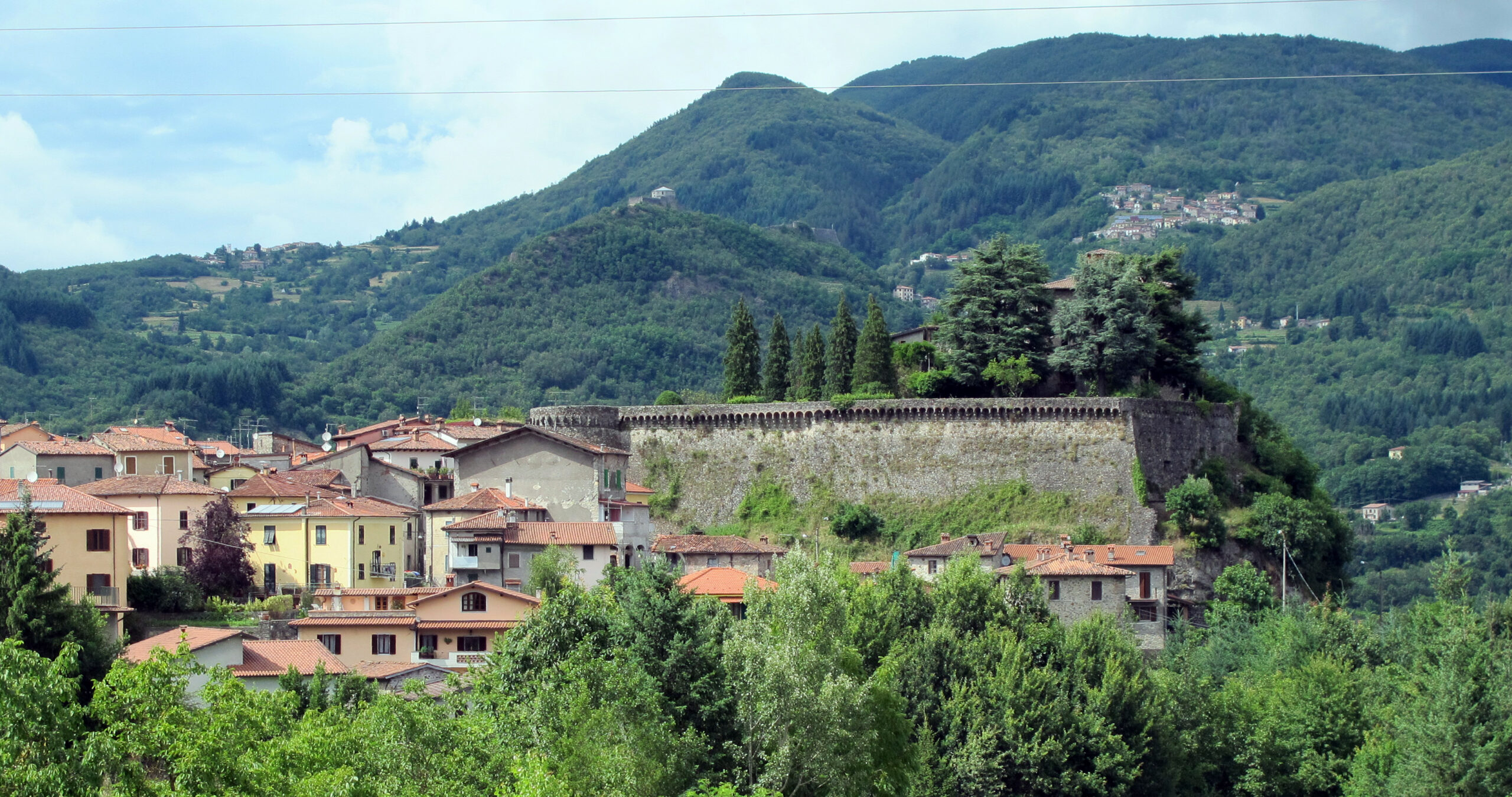
North of Castelnuovo, the Garfagnana changes mood. The valley opens a little. The traffic thins. The fields on the terraces grow a grain most visitors have never heard of. The two towns that anchor this upper valley, Camporgiano and Piazza al Serchio, are not showpieces. They are working places, and that’s their appeal.
Camporgiano has something you’d never expect in a village of about 2,000 people: a collection of Renaissance pottery displayed in the tower of an Este fortress. Piazza al Serchio, a few kilometers on, was for almost 20 years the end of the railway line from Lucca. It is also the center of farro country. It also has a brewery that makes beer from that farro.
Put them together and you get a half day that shows you how the upper valley actually lives.
A Place Shaped by Time
The Este frontier
Camporgiano’s Rocca Estense was one half of a defensive pair. Together with the Fortezza delle Verrucole above San Romano, it guarded the upper Serchio route, the road north toward the Lunigiana and the Apennine passes.
The Rocca has an irregular quadrangular plan and two towers. It was badly damaged in the 1920 earthquake that struck the Garfagnana and the Lunigiana. Restoration began in 2020, and in 2024 the Rocca opened as an albergo diffuso, a hotel spread across several historic buildings.
Pottery from the rubbish pits
The ceramics in the tower came from pozzi da butto. These were rubbish pits where broken and unwanted tableware was thrown away. They came to light during renovation work in the 1960s. The finds include maiolica from Faenza and incised graffito ware, spanning the early 15th to the mid-17th century. In other words, you’re looking at what people in and around the fortress actually ate from.
The railway junction
Piazza al Serchio sits at 536 m. The Lucca–Aulla railway was slow to build. The section from Castelnuovo reached Piazza al Serchio in April 1940, and for almost two decades the town was the end of the line. On the Lunigiana side, the 4,400 m Ugliancaldo tunnel was finished in 1944, bringing the tracks to Minucciano. The last gap, from Minucciano to Piazza al Serchio, only opened on March 21, 1959.
What to See and Do
Civica Raccolta di Ceramiche Rinascimentali, Camporgiano
The Civic Collection of Renaissance Ceramics fills two floors of the fortress’s main tower. It’s small, specific, and rewarding if you like everyday history more than masterpieces. Opening days are limited. Check current opening times with the Comune di Camporgiano before you go.
The Rocca from outside
The Rocca is now a hotel, but you can still walk around its exterior. You’ll understand how it covered the valley road.
Borsigliana’s Romanesque pieve
In the hamlet of Borsigliana, in the municipality of Piazza al Serchio, stands the church of Santa Maria Assunta. It is Romanesque in origin, first documented in 1020, and was heavily rebuilt in the 18th century. Its treasure is a late 15th-century triptych of the Madonna and Child with saints. The painter was long known only as the “Master of Borsigliana” and is now identified as Pietro da Talada. In the town itself, the church of San Pietro is medieval in origin, with a 17th- and 18th-century look today.
Farro fields
Piazza al Serchio, San Romano, and Giuncugnano hold the largest farro acreage in the valley. Farro is sown in October and harvested in July. In early summer the terraces turn gold. You don’t need a tour. Just drive the side roads and look.
Birrificio La Petrognola
At Colognola, in the locality of Tato, Birrificio La Petrognola brews beers made with farro, plus a seasonal chestnut beer. Check current opening hours on the brewery’s website before you go.
Eating Like a Local
The upper valley eats what it grows. Look for:
- Zuppa di farro: farro soup with beans, the dish of the valley
- Torta di farro: a savory farro tart flavored with pecorino and spices, 20–40 cm across
- Pane di patate: the dark, salted potato bread; the best potatoes come from Metello and Dalli, higher up in Sillano
- Testaroli: thin cooked batter rounds, cut and dressed; this is Lunigiana border territory, and the dish crosses over
For a more elaborate meal, head back toward Castelnuovo or Pieve Fosciana.
Getting There and Getting Around
By train
Both towns have stations on the Lucca–Aulla line: Camporgiano and Piazza al Serchio. That makes this one of the few corners of rural Tuscany you can explore reasonably well by train. The line north of Castelnuovo has closed for works in summer, with replacement buses, most recently from June to early September 2026. Check current timetables and service changes before you go.
By car
From Castelnuovo di Garfagnana, follow the SR 445 north. You reach Camporgiano first, then Piazza al Serchio. From Piazza al Serchio, the road continues over the Foce di Carpinelli toward the Lunigiana.
Nearby
- San Romano and the Fortezza delle Verrucole: Camporgiano’s partner fortress, now a living-history museum.
- Minucciano and Gorfigliano: marble quarries and the climbing wall of the Pizzo d’Uccello.
- Lago di Gramolazzo: a mountain reservoir in Minucciano, good for a lakeside walk.
- The Lunigiana: over the Carpinelli saddle, the next valley north.
Information is provided in good faith and may change. Always confirm opening hours, prices, and event dates with the official source before you travel.