
Maker · Maremma
Meet the Fishermen of Orbetello
Bottarga Makers of a Fragile Lagoon
Last updated:
- What they make
- bottarga di muggine (salted, pressed grey mullet roe), anguilla sfumata (eel prepared in the lagoon's traditional way), processed cefalo (grey mullet), and fresh lagoon fish
- Region
- Maremma
- Location
- Orbetello, Province of Grosseto
- Visit possible
- yes, at the cooperative's tasting center and restaurant in Orbetello (check the official site for hours)
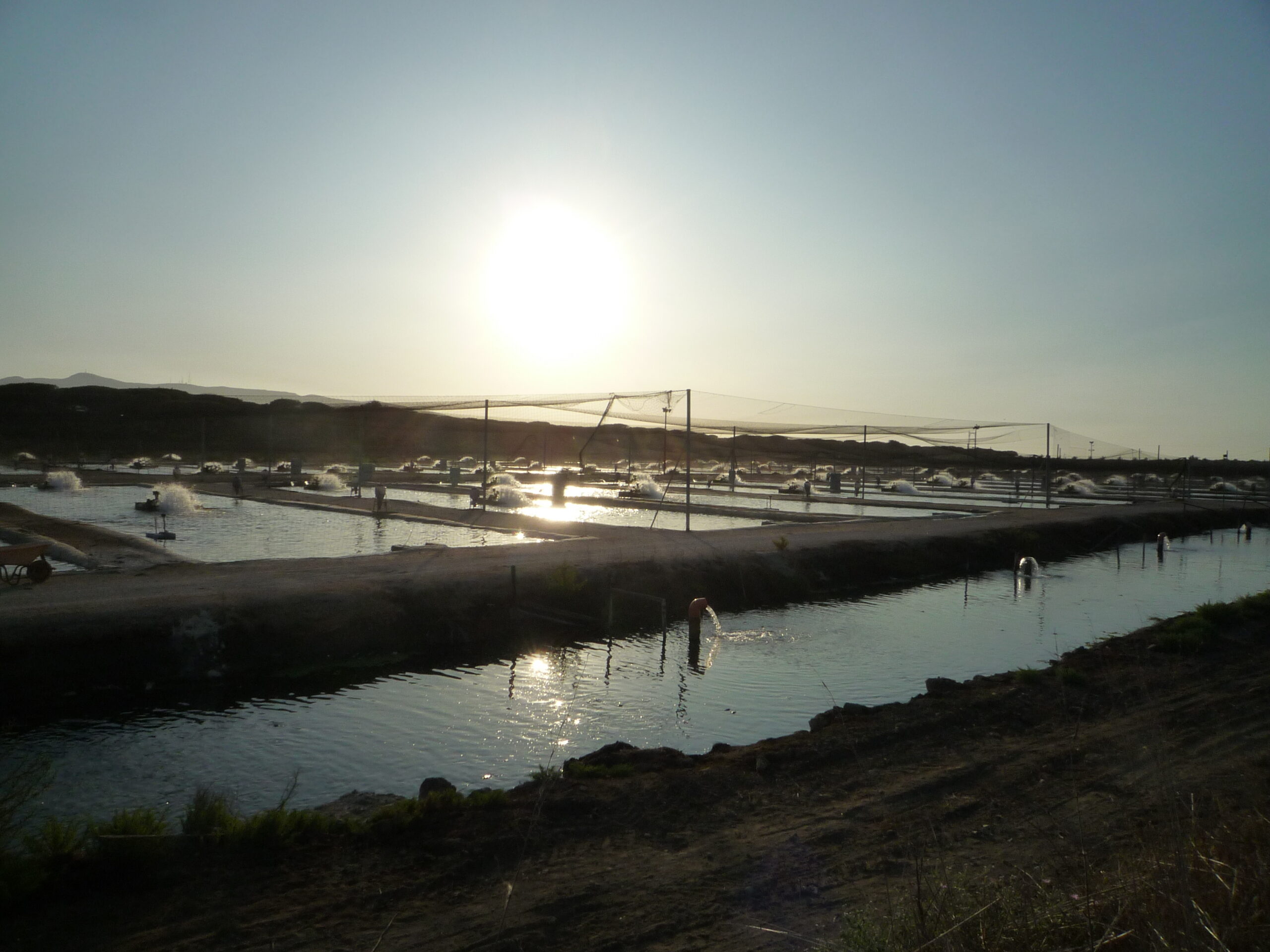
Most Tuscan food stories begin on a hillside. This one begins in a shallow lagoon about one meter deep. The Laguna di Orbetello covers roughly 27 km², and its water never gets deeper than about 2 m. Two sand spits, the Tombolo della Giannella and the Tombolo della Feniglia, each about 6 km long, hold it apart from the sea. A causeway, the Diga Leopoldina, runs across the middle to the old island of Monte Argentario.
In 1946, thirteen fishermen from this lagoon founded a cooperative, the Cooperativa dei Pescatori di Orbetello. The cooperative still fishes here, and it still preserves its catch by methods that Slow Food credits to the Spanish period. Its own phrase for the work is “con le mani nell’acqua”: with our hands in the water.
That phrase is worth taking literally. This is not fishing from big boats far offshore. It happens in shallow water, at fixed traps and nets, inside a lagoon linked to the sea by three canals. If you have eaten bottarga only as grated gold on a plate of pasta, the lagoon shows you where it starts.
A Spanish kitchen on the Tuscan coast
The recipes have a political history. From 1557, Orbetello was the capital of the Stato dei Presidi (State of the Garrisons), a Spanish military enclave run through the viceroys of Naples. Orbetello, Talamone, and the Argentario ports stayed outside Tuscany until 1815.
Slow Food credits that Spanish period, between the 1500s and 1600s, with two of the lagoon’s preserving techniques. Sfumatura means dressing the fish with a sauce based on peperone (pepper). Scavecciatura is a kind of escabeche: a hot dressing of vinegar, rosemary, garlic, and pepper. The trade publication Acquacoltura.org also dates the lagoon’s fish-processing tradition to the 16th and 17th centuries under Spanish rule. The cooperative did not invent these recipes. It kept them alive.
Old gear, no bait
The fishing methods are as specific as the recipes. The Slow Food Presidium for traditional lagoon fishing names three. The lavoriero is a barrier trap that uses the tides to guide fish into a series of chambers. The tramaglio is a fixed net made of three layers of mesh. Martavelli and nasse are smaller traps that take eels, crabs, and shrimp.
None of them uses bait. Slow Food notes that the fish arrive on their own, with the seasons and the tides, and that martavelli and nasse are the most selective, taking only a few target species. All of it depends on the lagoon behaving the way it always has. That dependence is the uncomfortable part of this story.
A lagoon under heat stress
Twice in recent years, the lagoon has suffocated. In summer 2015, a heat-driven die-off killed about 200,000 kg of fish. In July 2024, it happened again. By 29 July, more than 24,000 kg of dead fish had been collected, mostly eels, bream, and sea bass, according to Il Post. Fishermen told Il Post that 2024 might prove worse than 2015.
The mechanism is simple and brutal. Hot, shallow water warms fast. Algae die and decompose, and the decay strips the water of oxygen, a condition called anoxia. Orbetello’s mayor, Andrea Casamenti, asked the Region of Tuscany for an emergency declaration, saying the town could not carry the cleanup cost alone. Dead fish also washed onto the beaches at Ansedonia, Feniglia, and Tagliata.
For a cooperative that lives on eel and mullet, a hot summer is no longer just a bad season. It is a threat to the stock itself. When you buy a jar of bottarga here, you are buying from people who watch the water temperature the way hill farmers watch for hail.
The Products
Bottarga di muggine. This is the lagoon’s emblem. Slow Food describes the process in a few steps. The ovary sacs of the female grey mullet are removed with care, salted for a few hours, pressed, and dried. The word itself, Slow Food notes, comes from the Arabic botarikh, meaning salted fish roe. Buy it whole if you can, and grate or slice it thin at home.
Anguilla sfumata. English menus often call it smoked eel. The Italian sources are less tidy. Slow Food defines sfumatura as a pepper-based dressing, and Italian Wikipedia lists “anguille sfumate” separately from smoked eels flavored with spices and chili. We could not find a source on the exact method that we trust. So ask at the counter how theirs is made. The answer is part of the pleasure.
Cefalo lavorato and scavecciatura. Processed grey mullet is the third traditional product. The scavecciatura dressing, with vinegar, rosemary, garlic, and pepper, turns an everyday fish into something that keeps and travels. It is the kind of food that made sense in a garrison town.
Fresh lagoon fish. The Presidium lists sea bass, gilthead bream, grey mullet, eels, calcinelli (small clams), femminelle (winter crabs), and mazzancolle (a large local prawn). Grey mullet, eels, and sea bass are available year-round. Mazzancolle come in winter and spring.
A note on names
You will meet two names for the lagoon’s fishing cooperative, and we have not been able to confirm how they relate. The Slow Food Foundation’s Presidium page lists the Cooperativa La Peschereccia, with 48 fishermen, and processing at Orbetello Pesca Lagunare in Albinia. The cooperative founded in 1946 trades today as “I Pescatori di Orbetello.” Its website has its own Slow Food Presidium page and runs the tasting center described below. They may be the same organization under different names, or linked bodies. We have kept each fact with the name its source uses.
Visiting I Pescatori di Orbetello
The easiest way to meet the cooperative is at the table. I Pescatori di Orbetello runs a Centro Degustazione, a tasting center and restaurant in Orbetello, where the lagoon’s products are served and sold. Hours change with the season, so check the official tasting-center page before you go. The cooperative’s “about us” page and its Slow Food page give background and current activities, including tourism offers.
Order something you cannot easily get elsewhere. Good bottarga travels, and you will see it in delicatessens far from here. Scavecciatura and the lagoon’s eel preparations are much harder to find outside Orbetello.
Seeing the lagoon itself
Pair the meal with the water. The WWF Oasi Laguna di Orbetello protects the western lagoon, a Ramsar wetland where you can see flamingos, herons, and ospreys. Visits are seasonal and partly guided-only, and the oasis closes during weather alerts, so check the rules and book through WWF Italia. Then walk Orbetello’s walls, where Etruscan polygonal masonry along Via Mura di Levante shares the circuit with Spanish bastions and gates. It is the same history you just tasted.
One honest caution: if you visit in a hot July or August, you may see or smell the lagoon under stress. That is not a reason to stay away. It is the context for everything on your plate.
Information is provided in good faith and may change. Always confirm opening hours, prices, and event dates with the official source before you travel.