
Itinerary · 5 days · Valdichiana
5 Days in Valdichiana
Etruscans, Engineers and the Best Steak in Tuscany
Last updated:
- Duration
- 5 days / 4 nights
- Best season
- April–June or September–October (mild weather, festivals, manageable crowds)
- Budget
- Mid-range (€80–200/night agriturismo or B&B; €25–40/person for meals)
- Best for
- Couples, culture travelers, food-and-wine enthusiasts, active travelers (cycling Day 3)
- Driving required
- Yes — a car is essential for the Aretine towns and Day 5; cycling Day 3 is car-free
This itinerary treats the Valdichiana as a single story rather than a series of isolated stops. The first two days explore the Aretine side — the smaller, less tourist-visited northern half of the valley. Day 3 rides the bonifica cycle path from Arezzo toward Chiusi, reading the valley’s engineering transformation at pedal speed. Days 4 and 5 shift to the Senese side for wine, underground cellars, Etruscan archaeology, and the deep-time landscapes of Monte Cetona.
The connecting thread is the valley itself: the same water system that the Etruscans navigated, that Leonardo studied, that Fossombroni reversed, and that today feeds the vineyards, the lakes, and the steak grills.
Day 1: The Aretine Quartet
Lucignano → Foiano della Chiana → Monte San Savino → Castiglion Fiorentino
Morning: Start at Lucignano (arrive by 9:30). Walk the elliptical ring streets upward to Piazza del Tribunale. Visit the Museo Comunale for the Albero d’Oro — a tree-shaped reliquary often described as unique in the world. Allow 45 minutes for the museum and a circuit of the innermost ring. Coffee at a bar on the piazza before leaving.
Mid-morning: Drive 10 minutes east to Foiano della Chiana. Visit the Collegiata di San Martino for Andrea della Robbia’s Madonna della Cintola and Signorelli’s last painting, then walk to Santa Maria della Fraternità for the second Della Robbia. The three-church Della Robbia trail takes about an hour. If visiting during Carnival (February–March), schedule Day 1 for a Sunday to catch the floats.
Lunch: Eat in Foiano — a trattoria on the main piazza, pici all’aglione as the mandatory first course.
Afternoon: Drive 15 minutes northwest to Monte San Savino. Walk the Corso Sangallo past the Logge dei Mercanti and into the Chiesa di Sant’Agostino for Vasari’s signed Assunta. If time allows, ask at the Palazzo Comunale about visiting the hanging garden above the Cisternone. A visit to the Campaccio Jewish cemetery (outside the walls, cared for by the Jewish Community of Florence) adds a sober historical dimension — allow 20 minutes, and check access arrangements with the community or the tourist office beforehand.
Late afternoon: Drive 20 minutes east to Castiglion Fiorentino. Climb to the Loggiato Vasariano for the Val di Chio view in the afternoon light. Visit the Cassero pinacoteca if open. Walk the wall section between Porta Fiorentina and Porta Romana.
Dinner: Eat in Castiglion Fiorentino — honest Aretine trattorias in the streets below the piazza.
Sleep: Agriturismo in the Val di Chio (Castiglion Fiorentino area) or near Foiano/Lucignano.
Day 2: Cortona — The Etruscan City
Full day in and around Cortona
Morning: Drive to Cortona (15 minutes from Castiglion Fiorentino). Park at Spirito Santo (€1.50/hour; escalators to Piazza Garibaldi). Start at the MAEC museum in Palazzo Casali — the Tabula Cortonensis and the Etruscan Bronze Chandelier need at least an hour. The Gino Severini collection on the top floor adds 20 minutes.
Mid-morning: Walk to the Museo Diocesano for Fra Angelico’s Annunciation and the Signorelli works. Then climb Via Santa Margherita to walk Severini’s Via Crucis — fourteen mosaic stations plus a final shrine, from Porta Berarda to the Basilica of Santa Margherita. The climb is steep and takes 20–25 minutes; the mosaics are the reward. Views from Santa Margherita are extraordinary.
Lunch: Descend to the center. La Bucaccia (Bib Gourmand) for a serious lunch, or a lighter meal at one of the piazza restaurants.
Afternoon: Drive to the Etruscan tombs outside the walls — the Melone del Sodo with its sphinx-guarded staircase (check access arrangements with MAEC) and the Tanella di Pitagora. Then drive below the walls to visit Santa Maria delle Grazie al Calcinaio — Francesco di Giorgio Martini’s Renaissance church among olive groves. Time for a late-afternoon gelato back in the center.
Dinner: Cortona has the valley’s strongest restaurant scene — Osteria del Teatro, Pane e Vino, or Preludio for something contemporary. If visiting in August, the Sagra della Bistecca (mid-August) replaces dinner plans: Chianina T-bone from a 14-meter grill at a fixed price.
Sleep: Same base, or move to a new agriturismo closer to Cortona for one night.
Day 3: The Bonifica by Bicycle
Sentiero della Bonifica cycle path — Arezzo to Chiusi
Morning: This is the day that reads the valley’s transformation. The Sentiero della Bonifica runs 62 kilometers along the Canale Maestro della Chiana from the Chiusa dei Monaci near Arezzo to Chiusi Scalo — flat, car-free, and entirely rideable in a day. For a half-day ride (recommended unless very fit), arrange a bike rental in Chiusi or at the visitor center on Lake Montepulciano and ride north from Chiusi Scalo as far as you like before turning back, or ride one-way to Foiano with a car shuttle.
Key stops along the southern section: the Callone di Valiano (the 1723 sluice that regulates the two lakes), the medieval border towers Beccati Questo and Beccati Quell’altro (Sienese and Perugian, built within shouting distance), and the Botte allo Strozzo where two canals cross at different levels without mixing. The 12-kilometer Sentiero dei Principes Etruschi spur climbs from the canal to Cortona for the very ambitious.
Lunch: Pack a picnic from the morning market, or stop at a lakeside restaurant near Lake Chiusi for brustico — whole lake fish grilled over dried reeds.
Afternoon: Finish the ride, return bikes, and drive to your new base in the Senese Valdichiana. Check in at a Montepulciano agriturismo or Chiusi B&B.
Dinner: Simple and local — a trattoria near your new base. Rest your legs.
Sleep: Montepulciano area or Chiusi (for budget + rail convenience).
Day 4: Montepulciano and the Wine Underground
Full day in Montepulciano + Torrita/Montefollonico
Morning: Drive to Montepulciano. Park at P1 Porta al Prato and begin the 1.5-kilometer climb up the Corso. Visit underground cellars as you ascend — Cantina de’ Ricci for the deepest Etruscan-era tuff excavations, Contucci on Piazza Grande for the convenience of tasting in a palace basement. Reach Piazza Grande: the Palazzo Comunale tower (climbable for views), the Duomo with Taddeo di Bartolo’s Assumption triptych.
Late morning: Drive or walk down to the Tempio di San Biagio below the walls — Sangallo’s masterpiece in golden travertine. Allow 30 minutes inside and around the church.
Lunch: Back in Montepulciano — Osteria dell’Acquacheta (book ahead) for bistecca, or Le Logge del Vignola for a more contemporary take.
Afternoon: Drive 15 minutes to Montefollonico — the Vin Santo village above Torrita di Siena. Walk the medieval streets, look for local Vin Santo in the village’s shops and wine bars (the big tasting event is the village’s annual Vin Santo festival), and enjoy the views from the walls where the Valdichiana meets the Val d’Orcia.
Late afternoon: If energy allows, drop down to Torrita di Siena for the Teatro Comunale degli Oscuri (the tiny jewel-box provincial theater) and a walk through the contrada streets.
Dinner: Montepulciano for a final wine-focused dinner. Ask for the new Pievi crus if available — the debut vintage 2021 should be in circulation.
Sleep: Montepulciano area.
Day 5: The Deep South — Chiusi, Cetona, and Deep Time
Chiusi → Cetona → Monte Cetona or thermal baths
Morning: Start at Chiusi (15 minutes from Montepulciano). Visit the Museo Archeologico Nazionale Etrusco — the cinerary canopi, bucchero, and painted-tomb documentation. Then the Labirinto di Porsenna via the Museo della Cattedrale — underground Etruscan aqueducts, the Roman cistern, and the tower climb for the panorama. Allow 2–2.5 hours for museum + labyrinth + catacombs.
Lunch: Lake Chiusi — a lakeside restaurant for brustico (reed-grilled fish) and tegamaccio (lake-fish stew). This is one of Tuscany’s most unique food experiences and virtually unknown outside the area.
Afternoon — Option A (Active): Drive to Cetona (15 minutes). Visit the Museo Civico per la Preistoria in the Palazzo Comunale, then drive to the Parco Archeologico di Belverde for the cave itinerary (short route: 50 minutes; long route: 2 hours). If still energetic, hike from Belverde toward the Monte Cetona summit (1,148 m) — add 1.5 hours each way from Fonte Vetriana.
Afternoon — Option B (Restorative): Drive to Chianciano Terme (10 minutes from Chiusi) for an afternoon at the Piscine Theia (family pools, 600+ m² of thermal water) or the atmospheric Terme Sensoriali. Alternatively, drive 30 minutes to Bagno Vignoni for the most visually spectacular thermal experience in Tuscany — a Renaissance basin filled by a 51°C spring that occupies the entire village piazza.
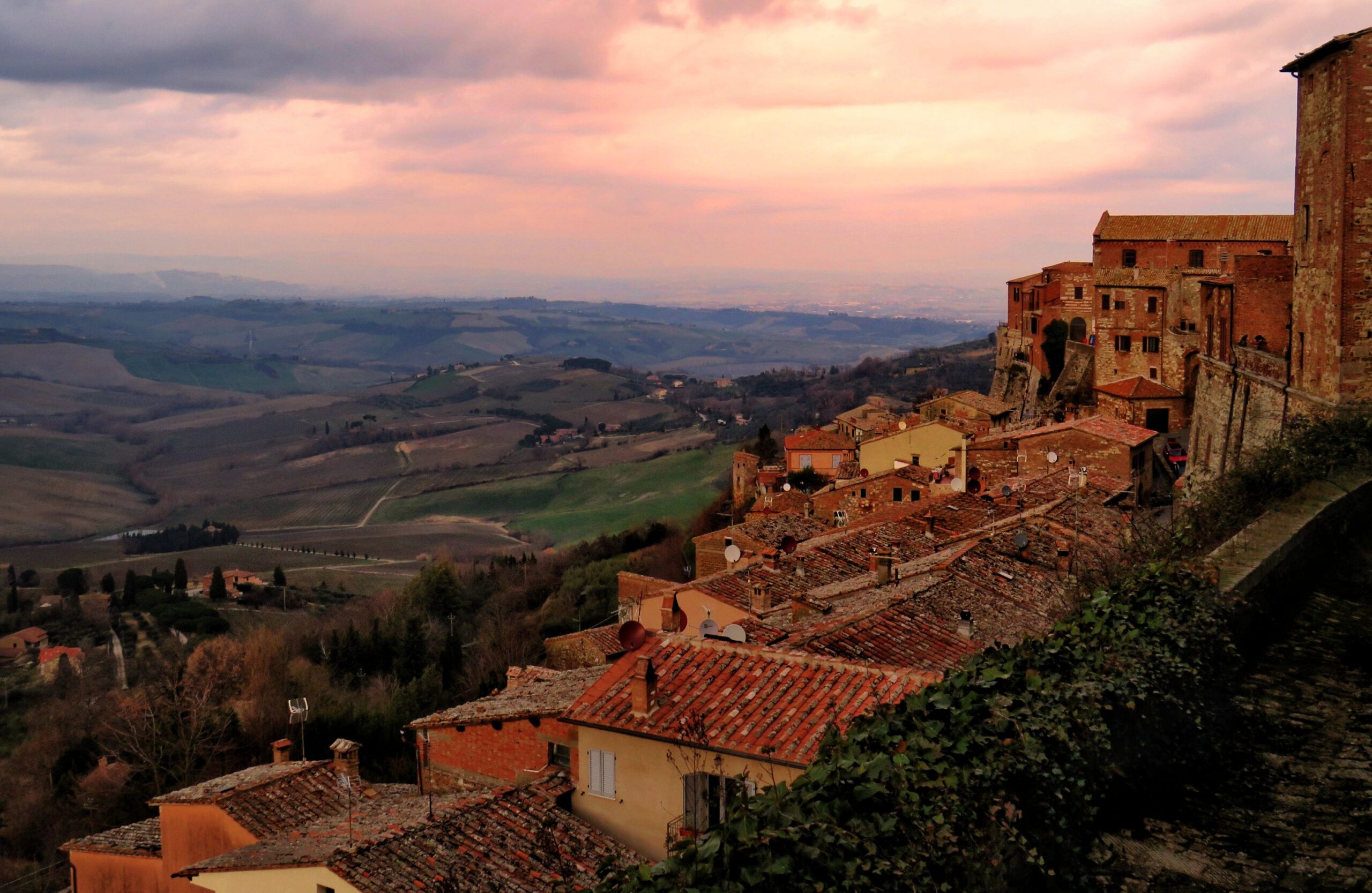
Evening: Return to base for packing, or linger at a terrace overlooking the valley for a final Vino Nobile. The Valdichiana spreads below — the plain that was once a swamp, the canal that Fossombroni built, the hill towns that watched six centuries of engineering transform their landscape. It is a good view to end on.
Practical Tips for This Route
Car rental is essential. Distances between towns are short (10–25 minutes), but public transport between the smaller Aretine towns is impractical.
Cycling Day 3 requires advance planning: arrange bike rental in Chiusi (several rental points near the station) or at La Casetta on Lake Montepulciano. E-bikes are available and recommended for non-cyclists. The path is flat and well-maintained but unpaved in sections — hybrid or gravel bikes are ideal; road bikes are not suitable.
Booking priorities: Osteria dell’Acquacheta (Montepulciano) needs reservations days or weeks ahead in high season. Sagra della Bistecca (Cortona, August) sells tickets online in advance, which is worth doing for the busiest nights. Etruscan tomb visits (Cortona area) require arrangement through the MAEC museum. Cantina de’ Ricci cellar visits can usually be arranged day-of, but booking ahead is advisable in summer.
Budget estimate for 5 days (two people): Accommodation (agriturismo/B&B): €400–1,000 Meals: €350–500 Car rental + fuel: €200–300 Museum admissions + cellar visits: €60–100 Bike rental (Day 3): €30–60 Total: approximately €1,040–1,960 for two people
The best festival overlaps: August brings both the Sagra della Bistecca (August 11–15) and the Bravio delle Botti (last Sunday of the month), about two weeks apart, so one five-day trip will not catch both. Late May catches the Maggiolata Lucignanese. February aligns Carnevale di Foiano and the Anteprima del Vino Nobile. March brings the Palio dei Somari at Torrita.
Information is provided in good faith and may change. Always confirm opening hours, prices, and event dates with the official source before you travel.