
Town · Colline Metallifere
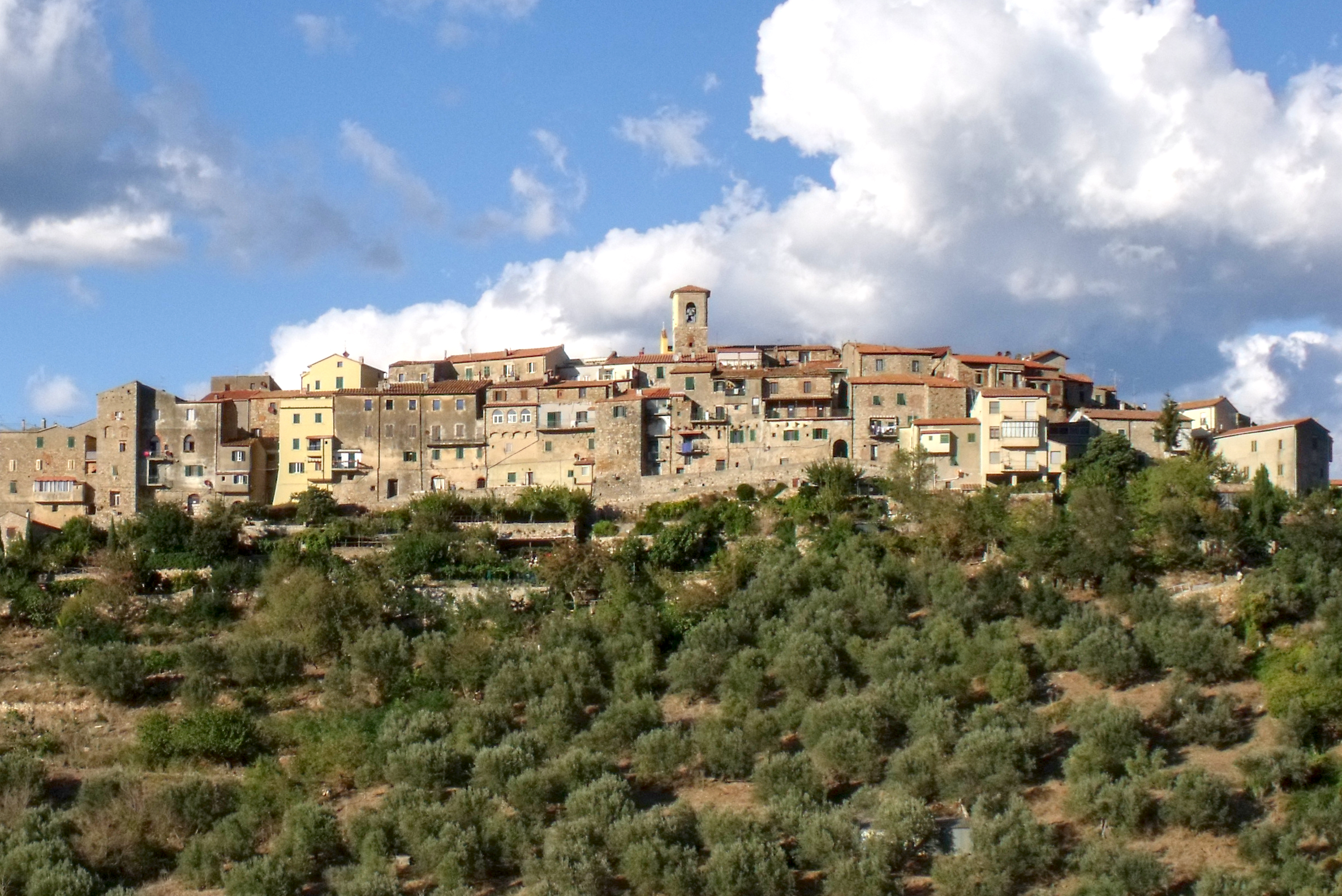
Gavorrano
From Europe’s Largest Pyrite Mine to a Theater in Stone
Last updated:
- Region
- Colline Metallifere
- Province
- Province of Grosseto
- GPS
- 42.9239, 10.9061
- Best season
- Late July–August (Teatro delle Rocce summer festival + Salto della Contessa reenactment); April–June for quieter mine visits
- Time needed
- Half day (mining park + Teatro delle Rocce + Castel di Pietra)
- Difficulty
- easy
- Known for
- Parco Minerario Naturalistico, Teatro delle Rocce (2,000-seat quarry amphitheater), Pia de' Tolomei legend, Ravi-Marchi ore-processing plant, Caldana hamlet
Gavorrano’s identity was built underground. The town’s pyrite mine, opened in 1898, became one of the most important in Europe — extracting an estimated 27 million tonnes of pyrite over 83 years. A network of aerial cableways carried ore from the hillside shafts to the railway and to the maritime loading point at Portiglioni. When the mine closed in June 1981, Gavorrano faced the choice that every exhausted mining town confronts: forget or transform.
It chose to transform. The Parco Minerario Naturalistico di Gavorrano, inaugurated in 2003, preserves the mining heritage across multiple sites. And from the raw material of a limestone quarry, the town carved the Teatro delle Rocce — a 2,000-seat open-air amphitheater that hosts summer festivals of theater, music, and dance in a setting that recalls an ancient Greek theater more than a former quarrying site.
What to See and Do
The Mining Park
The Museo Minerario in Galleria takes visitors into a former explosives-storage tunnel for a multimedia recreation of 1950s and 1960s mining conditions — the sounds, the darkness, the claustrophobic reality of extracting pyrite at depth. The Ravi-Marchi mining area preserves the ore-washing plant built from 1955 and shut down in 1965, a five-story structure where jaw crushers, cylindrical mills and the round tanks of the flotation plant still stand in the open air, like an industrial ruin that nobody has bothered to romanticize. Access is by guided visit only and arrangements vary by season, so book through the park’s Porta del Parco in Gavorrano (parcocollinemetallifere.it).
The Teatro delle Rocce
The quarry amphitheater — designed by architect David Fantini — seats 2,000 in a natural stone bowl carved from the San Rocco limestone quarry. The summer festival runs from late July through August with theater, concerts, and cultural events, often featuring nationally recognized performers. The setting — rough-cut stone walls rising around the stage, open sky above, the acoustics shaped by geology — is extraordinary. The summer festival usually runs in August and is organized by LEG (legsrl.net) with the Comune di Gavorrano. Tickets go on sale through the major Italian ticketing circuits once the program is announced in spring.
Pia de’ Tolomei and Castel di Pietra
Dante immortalized Pia de’ Tolomei in a handful of lines at the end of Purgatorio V that are among the most quoted in Italian literature: “Ricorditi di me, che son la Pia: Siena mi fé, disfecemi Maremma” — “Remember me, who am La Pia: Siena made me, Maremma undid me.” The tradition holds that her husband, Nello della Pietra dei Pannocchieschi, murdered her by pushing her from the walls of Castel di Pietra — a fortress whose ruins stand above the cliff still called the Salto della Contessa (the Countess’s Leap).
The annual Salto della Contessa reenactment, held in early August, dramatizes the legend with medieval processions through Gavorrano. Whether the historical Pia actually died at Castel di Pietra is debated — scholars have proposed malaria, deliberate neglect, or defenestration — but the literary tradition is powerful enough that the landscape itself has absorbed the story. The cliff, the ruins, and the name feel as though they were always waiting for Dante to give them meaning.
Caldana
The frazione of Caldana, south of Gavorrano, has a Renaissance character distinct from the mining towns — a small, handsome hamlet with a church façade attributed to the school of Antonio da Sangallo the Elder. It makes a pleasant short stop en route to the coast.
Getting There and Getting Around
By car, Gavorrano is roughly 30 minutes south of Massa Marittima and 15 minutes inland from Follonica. Gavorrano’s station on the Tirrenica coastal line is in the hamlet of Potassa, several kilometers below the town, and only a few regional trains a day stop there, so plan your onward transport in advance. A car is practical for reaching the mining park and Castel di Pietra.
Nearby
Scarlino (15 minutes west) — Fortress, Cala Violina singing-sand beach, Garibaldi’s escape.
Massa Marittima (30 minutes north) — Cathedral, Lorenzetti, mining museum.
Roccastrada (about 35 minutes northeast) — Boulder villages, Montemassi, Ribolla memorial.
Follonica (15 minutes southwest) — Cast-iron church, beaches, train station.
Information is provided in good faith and may change. Always confirm opening hours, prices, and event dates with the official source before you travel.