
Town · Versilia
Sant’Anna di Stazzema
The Village That Remembers 12 August 1944
Last updated:
- Region
- Versilia
- Province
- Province of Lucca
- GPS
- 43.97417, 10.27361
- Best season
- spring, summer, and autumn; the anniversary is on 12 August
- Time needed
- half day
- Difficulty
- moderate (mountain village at about 660 m; the memorial sites are linked by footpaths)
- Known for
- 12 August 1944, Museo Storico della Resistenza, Parco Nazionale della Pace, Via Crucis and Ossario, Sentieri di Pace
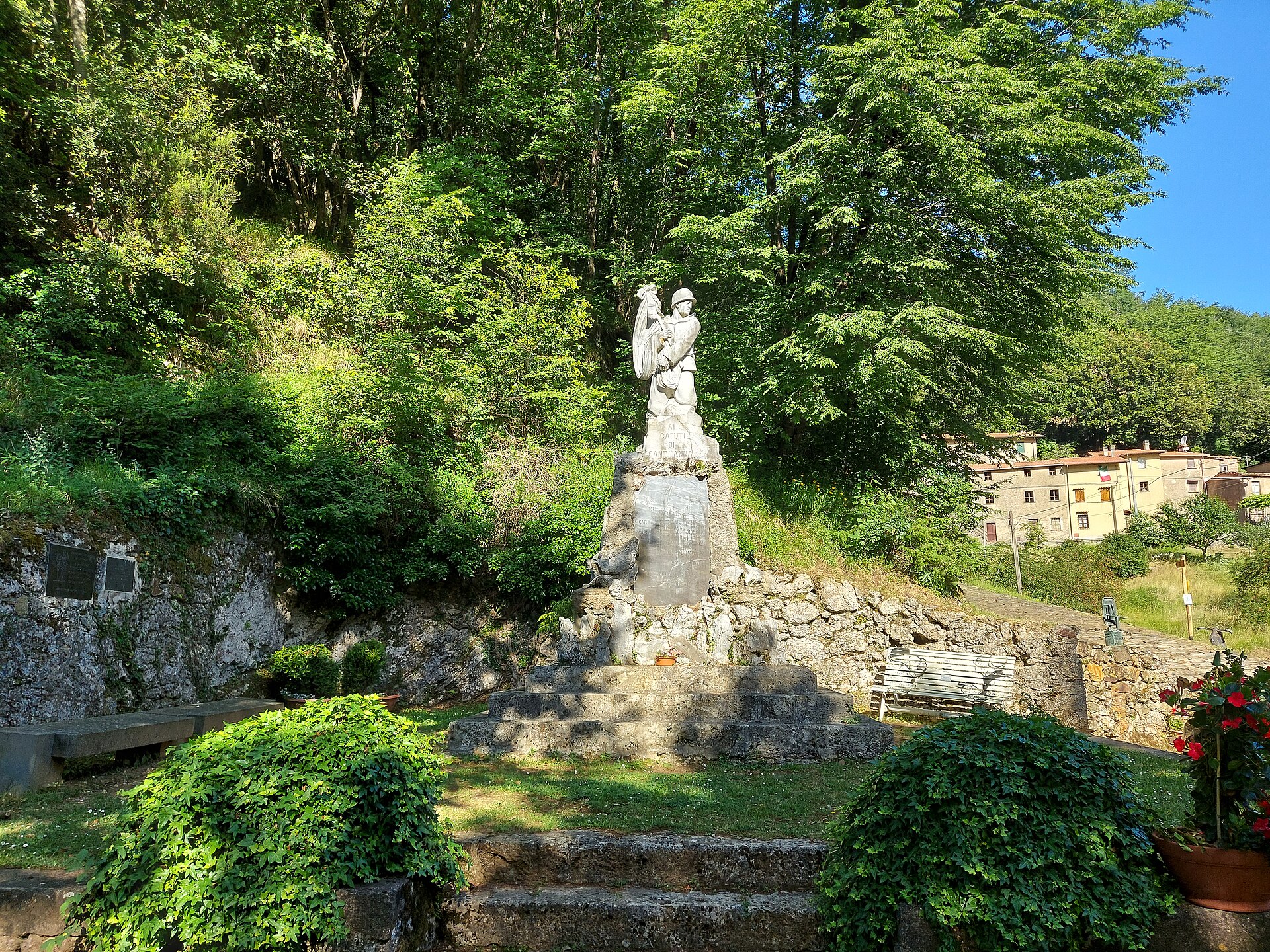
Sant’Anna di Stazzema is a small village in the mountains of Versilia, at about 660 m. It belongs to the comune of Stazzema, in the Province of Lucca. People do not come here for views or food. They come because of what happened on 12 August 1944.
On that day SS troops killed hundreds of civilians, most of them women, children, and the elderly. Since then the village has become a place of memory. It has a museum, a Via Crucis (Way of the Cross) with bronze panels, and an ossuary monument, the Ossario. An Italian law of 2000 created the Parco Nazionale della Pace (National Park of Peace) here. It also holds the European Heritage Label for 2023, announced in April 2024.
Give the visit time. Plan at least half a day, including the walk to the Ossario. Sant’Anna does not sit well between a morning on the beach and an evening aperitivo. Make it the main thing you do that day.
A Place Shaped by Time
A village full of strangers
In 1944 Sant’Anna was not only home to its own families. Hundreds of evacuees had arrived in the village since late 1943.
The German research database NS-Täter in Italien places the killings within an anti-partisan operation that ran from 8 to 12 August 1944. It names the units involved: the II Battalion of SS-Panzer-Grenadier-Regiment 35, SS-Feld-Ersatz-Bataillon 16, and elements of Hochgebirgsjäger-Bataillon 3. It also names Max Simon, Helmut Looß, and Anton Galler among those responsible.
What happened on 12 August 1944
The troops killed hundreds of civilians in and around the village, most of them women, children, and the elderly. The memorial figure is 560. Later research has identified 394 victims by name, 324 of them in Sant’Anna itself. The youngest, Anna Pardini, was 20 days old.
You will meet both numbers here, and they do not contradict each other. 560 is the memorial figure, used officially since 1947. The 394 names come from research by Giuseppe Vezzoni and Lorenzo Alessandrini. Seventy of those victims died elsewhere in the area the troops swept that day.
Italian military prosecutors concluded it was a premeditated act of terror, not a reprisal.
Sixty years to a verdict
For decades nobody stood trial. In 1994 a cabinet holding almost 700 files came to light at the military prosecutor-general’s office in Rome. Italians call it the armadio della vergogna (cabinet of shame). Those files allowed the Sant’Anna case to reopen.
The trial opened at the military court in La Spezia on 20 April 2004. On 22 June 2005 the court sentenced ten former SS members to life imprisonment, in their absence, as prosecutor Marco De Paolis had requested. The military appeal court in Rome upheld the sentences on 21 November 2006. Italy’s highest court made them final on 8 November 2007.
Germany extradited none of the ten. It refused to extradite Gerhard Sommer, one of the convicted officers. Prosecutors in Stuttgart closed their own investigation on 1 October 2012. Enrico Pieri, chairman of the Associazione Martiri di Sant’Anna di Stazzema, challenged that decision before the Higher Regional Court in Karlsruhe, which granted his request. In 2014 the case against Sommer passed to prosecutors in Hamburg. They closed it in 2015, finding him unfit for trial.
Building a place of memory
The village museum was set up in the old elementary school, and President Sandro Pertini inaugurated it in the autumn of 1982. On 19 September 1991, under a regional law, it became the Museo Storico della Resistenza (Historical Museum of the Resistance). Law no. 381 of 11 December 2000 created the Parco Nazionale della Pace. In 2024 the European Commission announced Sant’Anna as one of the sites awarded the European Heritage Label for 2023.
What to See and Do
A visit here is a walk, not a checklist. The memorial sites lie on footpaths around the village, so wear proper shoes. Check current opening times and any events on the official site, santannadistazzema.org, before you go.
The church square and the museum
Most visits start on the church square. This is where the first Sentieri di Pace loop begins and ends, and where the anniversary mass is held each 12 August.
The Museo Storico della Resistenza is at Via Coletti 22. It is the place to begin if you want context before you walk. Opening times change, so check before you go.
The Via Crucis and the Ossario
From the village a path climbs to the Ossario, on the Col di Cava, along a Via Crucis of 15 stations. Its 27 bronze panels are by nine artists and were made between 1978 and the early 1990s. Walk it slowly, and stop at the stations.
Sentieri di Pace (Paths of Peace)
A network of waymarked walks called the Sentieri di Pace starts in Sant’Anna. The first loop links the whole memorial: church, Ossario, belvedere (viewpoint), museum, and back to the church. It is the walk we suggest for a first visit.
Walking in: CAI 114 and the Cammino ’44
Sant’Anna lies on the CAI trail CAI 114 (formerly 4), which runs Valdicastello – Sant’Anna – Le Focette – Farnocchia – Culerchia. Signs may show either number; check current trail status with CAI before you go.
The village is also a starting point of the Cammino ’44, a new walk of about 180–190 km in 13 stages, opened in June 2026, linking Pietrasanta and Sant’Anna di Stazzema to Marzabotto. Its route reaches Monte Sole in Emilia-Romagna. Stage details are on the official site, cammino44.it.
The first segment, from Pietrasanta to Sant’Anna, is about 7 km. It passes the Pieve di San Giovanni and Carducci’s birthplace at Valdicastello Carducci, then follows old mine tracks and climbs on CAI 114 (formerly 4). Walking up, rather than driving, is a quiet way to arrive.
The 12 August commemoration
The anniversary usually begins on the evening of 11 August. There is a concert at the Sacrario (memorial), then a silent torchlight procession, the fiaccolata, along the Via Crucis.
On 12 August the day opens with wreath-laying and mass on the church square. A procession then climbs to the Ossario for speeches and an official address by a national figure. Presidents of the Republic have attended; Sergio Mattarella spoke here in 2024. Check each year’s program on santannadistazzema.org.
If you come on the day, you are welcome, but you are a guest at a commemoration. Keep voices low and think before you photograph people.
Eating Like a Local
Be honest with yourself about food here. Sant’Anna is a small village, and we have no guide-listed restaurant to recommend in it. Bring water and something to eat for the walks.
The cooking of these mountains is plain. For the comune of Stazzema, Visit Tuscany lists tordelli, castagnaccio, ciacci with ricotta, ballotti, and chestnuts boiled with fennel seeds. Tordelli, the meat-filled pasta of Versilia, have no codified recipe; versions vary by place and by family. The comune of Stazzema also lies inside the zone of the Lucca DOP olive oil.
For a proper meal, go down to Pietrasanta afterward. Peposo there holds the Chiocciola (snail) in Slow Food’s Osterie d’Italia. La Martinatica and Filippo are listed in the MICHELIN Guide.
Getting There and Getting Around
By train and on foot
The comune of Stazzema has no railway station. The nearest is Pietrasanta, on the Tirrenica coastal line between Genoa and Pisa. From Pietrasanta you can walk up on the first segment of the Cammino ’44, about 7 km, with the climb on CAI 114 (formerly 4). Allow for a steady ascent from the plain to about 660 m.
By car
The village is reached by mountain roads, so allow plenty of time. Plan the route on a map, and check access and parking with the Parco della Pace on santannadistazzema.org before you go.
Weather and timing
Weather in the Apuan Alps changes fast near the sea. The seaward slopes get about 1,500 mm of rain a year. Before a walking day, check Regione Toscana’s alerts at www.cfr.toscana.it, which use green, yellow, orange, and red codes.
If you want to walk the memorial quietly rather than attend the ceremony, choose another day than 11 or 12 August.
Nearby
- Pietrasanta: the workshop town on the plain below, where the Cammino ’44 begins and where you can eat well afterward.
- Alta Versilia: the other mountain villages of the comune of Stazzema, from Levigliani and the Antro del Corchia to Cardoso.
- Camaiore: about 13 km away on foot on the next Cammino ’44 segment, via Farnocchia, the Candalla gorge, and the Badia di San Pietro.
- Seravezza: home to the Palazzo Mediceo, part of the UNESCO site “Medici Villas and Gardens in Tuscany.”
- Versilia and the Apuan Alps: our regional guide to the coast and the marble mountains.
Information is provided in good faith and may change. Always confirm opening hours, prices, and event dates with the official source before you travel.