
Itinerary · 4 days · Versilia
4 Days in Versilia
From the Marble Mountains to Puccini’s Lake
Last updated:
- Duration
- 4 days
- Best season
- spring and autumn
- Budget
- mid-range
- Best for
- couples, solo travelers, and families with older children
- Driving required
- yes for Days 2 and 3; Days 1 and 4 work by train, on foot, and by bike
This route follows the region’s own story. It starts on the marble side, the four comuni a Medici pope gave to Florence in 1513, and ends on the Lucchese coast at Puccini’s lake. Along the way you see sculpture being made, a Medici palace, a memorial village, and the inside of a mountain. Every stop links to our full profile, and our Versilia and the Apuan Alps hub has the background.
From Pisa airport: Pisa is the nearest airport. If you follow this route as written, pick up a car there. Days 2 and 3 climb into mountain villages where we could not confirm bus services. If you prefer to start without a car, the Tirrenica coastal line runs north from Pisa to Pietrasanta. Check connections from the airport on Trenitalia.
From Florence: drive to the coast, or check rail connections to Pietrasanta or Viareggio on Trenitalia.
From Lucca: Lucca ruled Viareggio and Camaiore for centuries, and it is still the natural back door. Walkers can follow the Via Francigena between Lucca and Camaiore. Cyclists can take the Lucca–Massaciuccoli cycle and footpath from Ripafratta to the lake. For trains, check Trenitalia.
By train on the Tirrenica: the coastal Genoa–Pisa line stops at Torre del Lago Puccini, Viareggio, Pietrasanta, and Forte dei Marmi–Seravezza-Querceta. Long-distance trains stop at Viareggio. Pietrasanta is your station for Day 1.
Day 1: Pietrasanta, the Workshop Town
Morning: Start where sculpture begins, at the Museo dei Bozzetti in the former convent of Sant’Agostino. It holds hundreds of models, mostly plaster, left by sculptors who worked in the town’s studios. Parts of the complex have been under restoration, so check the museum site before you go. In March 2025 the museum also opened a display of part of the collection at Palazzo Panichi on Piazza Duomo. Then walk to the Chiesa della Misericordia on Via Mazzini. Fernando Botero painted its two frescoes in 1993, Porta del Paradiso and Porta dell’Inferno. Botero said Hitler is in the Inferno, and Mother Teresa appears in Paradise. Our Pietrasanta profile tells the full story.
Lunch: Peposo holds the Chiocciola in Slow Food’s Osterie d’Italia. The MICHELIN Guide also lists La Martinatica and Filippo in town. Whichever you choose, order tordelli, the meat-filled pasta half-moons of Versilia. Every family and kitchen makes them differently.
Afternoon: See a foundry at work. Fonderia Artistica Versiliese, founded in 1975 on Via Martiri di Sant’Anna, offers foundry tours by appointment through Homo Faber. Book before you travel and check current availability. Afterward, stop in Piazza Matteotti for Botero’s Guerriero, a four-meter bronze from 1992. Usually from about June to September, the comune’s open-air sculpture show fills Piazza del Duomo. If you have time left, drive or cycle down to Marina di Pietrasanta and the pinewood park of Villa La Versiliana.
Dinner: In the Marina di Pietrasanta area, the MICHELIN Guide lists Alex and Vesta Versilia. In summer (usually July and August), pair dinner with an evening at the La Versiliana Festival in the park.
Sleep: Pietrasanta, or Seravezza just inland.
Day 2: Seravezza and Forte dei Marmi, from Quarry to Wharf
Morning: Drive to Seravezza and the Palazzo Mediceo. It was built for Cosimo I de’ Medici in the early 1560s and has been part of the UNESCO site “Medici Villas and Gardens in Tuscany” since 2013. In the cellar, now an antiquarium, restorers found the burial of a traveler dated to AD 790–1000. The museum of work and folk traditions inside is listed as temporarily closed, so check the palace site before you go. Here, too, is the Michelangelo story. He spent much of 1518–1520 opening quarries and a road down to the coast, for a façade that was canceled in 1520 and never built. In 2021, restorers found that his Pietà Bandini is carved from Seravezza marble. Read our Seravezza profile before you come.
Late in the morning, head up the Serra valley through Riomagno to Malbacco. Its best-known pool, the Pozzo della Madonna, sits under a waterfall, and the water is cold even in midsummer. In summer 2025 the comune closed the valley road to daytime through traffic and ran a shuttle from Seravezza. The rules are set again each year, so check the Comune di Seravezza first. The old Via di Michelangelo runs through this landscape. It is a historic road, not a waymarked trail, so follow it only in pieces.
Lunch: We found no guide-listed restaurant in Seravezza. Picnic by the river, or find a local trattoria and compare its tordelli with yesterday’s. Visit Tuscany lists Seravezza first among the towns that serve them on feast days.
Afternoon: Drive down to Forte dei Marmi, the marble wharf that became a resort. Start at the Fortino, completed in 1788 to defend the coast and the marble-shipping beach. It now houses exhibitions and the tourist office. The square around it, Piazza Garibaldi, was the hub of the marble trade. Then walk out along the pier. Marble was loaded from the beach here for centuries; today’s pier was rebuilt in 1955 after the war. Look back at the Apuan Alps, where today’s journey began. The center has electronic traffic gates, so check the traffic page before you drive in.
Dinner: Forte has an unusual cluster of MICHELIN-starred restaurants. Lorenzo, La Magnolia, Lux Lucis, Bistrot, and Sciabola each hold one star. Book well ahead. For something simpler, eat cecina, the chickpea flatbread of Versilia.
Sleep: back in Pietrasanta or Seravezza.
Day 3: Sant’Anna di Stazzema and the Mountain That a Village Owns
Morning: Give the whole morning to Sant’Anna di Stazzema, at about 660 m in the hills. On 12 August 1944 SS troops killed hundreds of civilians, most of them women, children, and the elderly. The memorial figure is 560. Later research has identified 394 victims by name, 324 of them in Sant’Anna itself. Leave early and allow plenty of time on the mountain roads. Plan the route on a map, and check access and parking on santannadistazzema.org before you go.
Begin at the Museo Storico della Resistenza, Via Coletti 22, for context. Then walk the Via Crucis of 15 stations up to the Ossario, slowly. The first Sentieri di Pace loop links the church, the Ossario, a viewpoint, and the museum. Wear proper shoes and plan nothing else for the morning. Strong walkers can arrive on foot instead, on the first stage of the Cammino ’44 from Pietrasanta. It is about 7 km and climbs on CAI 114 (formerly 4); arrange your ride back in advance. Unless you want to attend the commemoration, avoid 11 and 12 August.
Lunch: Sant’Anna has no guide-listed restaurant, so bring food and water. Take a quiet picnic before you move on. The mountain cooking of Stazzema is plain: Visit Tuscany lists tordelli, castagnaccio, ciacci with ricotta, ballotti, and chestnuts boiled with fennel seeds.
Afternoon: Drive on to Levigliani, at about 580 m under Monte Corchia. Again, allow plenty of time on the mountain roads. In 1794, 67 heads of household kept Monte Corchia as shared property, and their heirs still own it. Our profile of Levigliani and Corchia Park explains how the village runs it. From the village, a shuttle takes you to the Antro del Corchia, Italy’s longest known karst system, with more than 50 km of explored passages. The guided route covers about 2 km on walkways and takes about two hours. It is cold all year, so bring a warm layer and rubber-soled shoes. Visits are guided only; book and check times with Corchia Park. If you have energy left, see the Museo della Pietra Piegata and the community museum “Lavorare Liberi.” Older children may prefer the 4×4 marble-quarry visit, which needs advance booking; check age limits on the operator’s page.
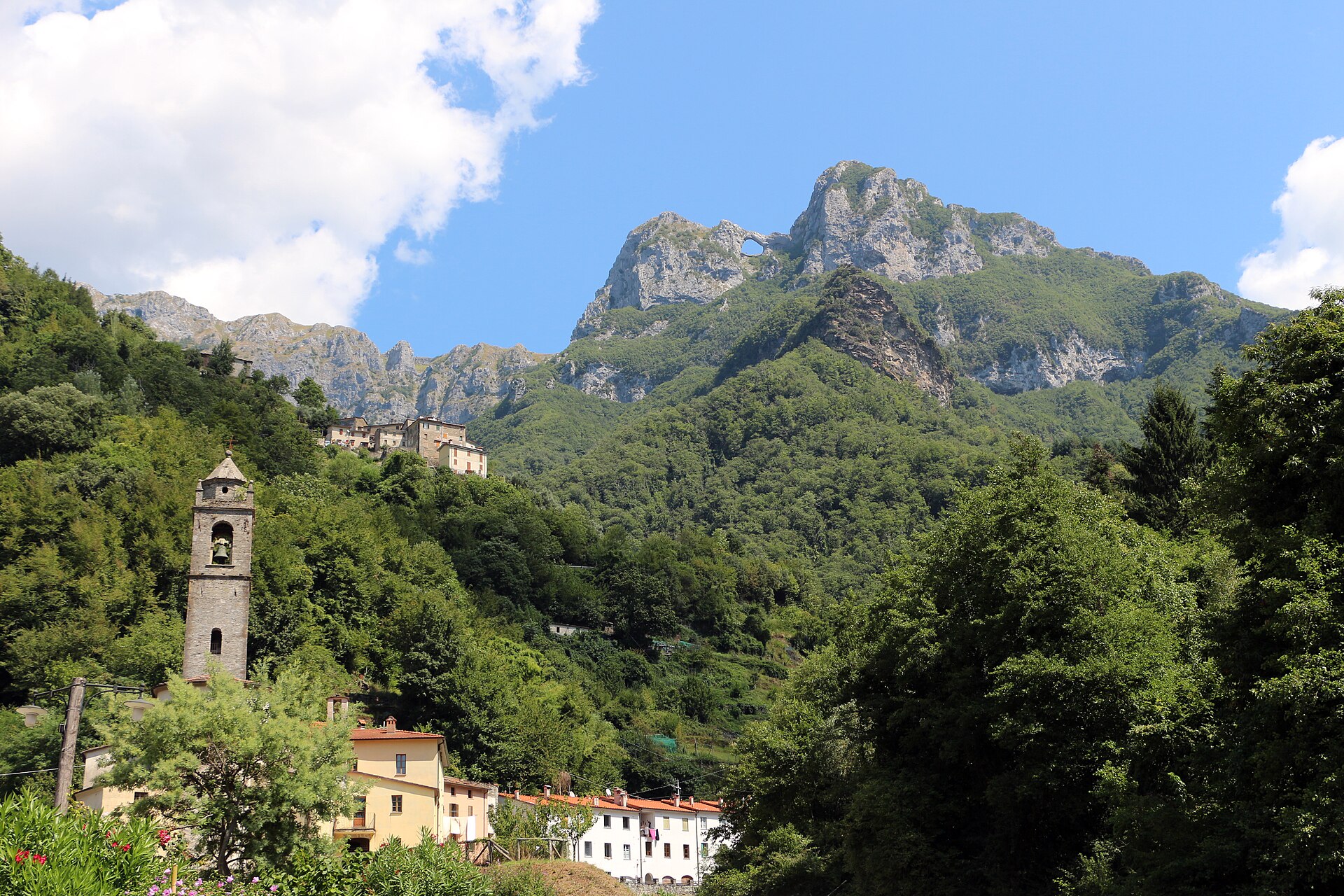
Save Cardoso, Monte Forato, and the Procinto for a separate hiking day. Our Alta Versilia profile covers them, along with the safety advice you will need.
Dinner: Head back down to the plain. If you missed Peposo on Day 1, this is the evening for it.
Sleep: Pietrasanta or Seravezza.
Day 4: Viareggio and Torre del Lago, the Lucchese Coast
Morning: Today you can leave the car. Take the train to Viareggio, Lucca’s old port. On the night of 17–18 October 1917 a fire destroyed most of the wooden seafront. It was first rebuilt quickly, much as before; within a few years Alfredo Belluomini and Galileo Chini gave it the Liberty character you see today. Walk the Passeggiata to the Gran Caffè Margherita, rebuilt in masonry in 1928, where Puccini was a regular. Then visit the Cittadella del Carnevale on Via della Foce, where the float builders work. Its Museo del Carnevale is listed as open all year; check the details before you go. If you prefer painting, choose the GAMC and its works by Lorenzo Viani.
Lunch: Order cacciucco alla viareggina, the local fish stew, lighter and redder than Livorno’s. Buonumore holds the Chiocciola in Slow Food’s Osterie d’Italia and is known for its arselle (tiny clams). The MICHELIN Guide also lists Giardino di Mari, Da Miro alla Lanterna, and MaMe.
Afternoon: Walk or cycle south through the Pineta di Levante, about 6 km of pinewood, to Torre del Lago Puccini. Visit Tuscany’s 12.7 km bike route, “Il lago di Puccini in bicicletta,” starts at Viareggio station; you can return by train with your bike. Or take the train to Torre del Lago Puccini station. At the Villa Museo Puccini, see the rooms where Puccini wrote most of his operas and the fireplace by Galileo Chini. The chapel holds Puccini and his family; treat it as a grave. Check visiting arrangements on the villa’s official site. Boat trips on Lake Massaciuccoli leave from Torre del Lago; ask locally.
Dinner: In Torre del Lago, the MICHELIN Guide lists Da Cecco. Back in Viareggio, Il Piccolo Principe holds two MICHELIN stars, and Romano and Lunasia hold one each. In summer, end with a performance at the Festival Puccini, in the open-air Gran Teatro beside the lake.
Sleep: Viareggio, or Torre del Lago on festival nights.
Practical Tips for This Route
Driving and parking
You need a car for Days 2 and 3. Allow plenty of time on mountain roads, and expect working quarry traffic on some of them. Pietrasanta and Forte dei Marmi restrict traffic in their centers. Check the Pietrasanta ZTL page and Forte’s traffic page before you drive in. For Viareggio, check the comune’s website, especially on Carnival days and festival nights.
What to book ahead
Book the foundry tour, the Corchia Park visits, and any MICHELIN-starred dinner before you travel. Buy festival tickets early in summer. Museums and opening arrangements change, so check every official link the day before.
Seasons and swaps
Spring and autumn suit this route best. In summer, expect crowds and a beach run almost entirely by bathing establishments: in 2022 Legambiente found 98.8% of Pietrasanta’s shore under concession. In Carnival season, usually February, swap the Day 4 morning for a parade weekend. If you are here on Corpus Domini weekend, give a morning to Camaiore and its sawdust carpets; at Lido di Camaiore, the MICHELIN Guide lists Il Merlo. Birdwatchers can add Massarosa and Lake Massaciuccoli for the Roman villa and the LIPU oasis. To understand Viareggio’s boatbuilding, read our profile of Cantiere Del Carlo. It is a working yard that publishes no visiting information, but the Torre Matilde digital museum in town covers shipbuilding.
Mountain weather and safety
The Apuans are among the rainiest areas of the Italian peninsula, and weather changes fast near the sea. Check Regione Toscana’s alerts at www.cfr.toscana.it the night before Days 2 and 3. Do not start a mountain route on an orange or red alert. In an emergency, call 112.
Information is provided in good faith and may change. Always confirm opening hours, prices, and event dates with the official source before you travel.