
Maker · Val d'Orcia
Meet CrocusBrandi
The San Quirico Farm That Brought Saffron Back
Last updated:
- What they make
- saffron sold as whole stigmas (threads), plus saffron biscuits and a grappa-based saffron liqueur
- Region
- Val d'Orcia
- Location
- Vicolo del Vecchietta 5, San Quirico d'Orcia (Province of Siena), inside the Parco della Val d'Orcia
- Generation
- a family of farmers "for many generations," by the farm's own account; saffron since 1995
- Visit possible
- contact the farm (the website does not advertise visits)
A spice the valley forgot
Ask most visitors what the Val d’Orcia produces and you will hear wine, pecorino, and olive oil. Saffron rarely comes up. Yet the Parco della Val d’Orcia (the valley’s natural, artistic, and cultural park) says it was “coltivata diffusamente,” widely grown, here in the Middle Ages. Italy’s national tourism portal goes further: it says historical documents record saffron growing in the valley from the 12th century.
Then it stopped. According to the park, production ended in the 16th century. For roughly four hundred years, the saffron crocus was simply gone from these fields. The park describes the revival as something that happened only “pochi anni fa,” a few years ago.
CrocusBrandi is one of the farms that made that revival happen. It is a family business in San Quirico d’Orcia, the village on the Via Francigena known for its Renaissance garden. Its story is not a marketing tale of unbroken tradition. It is the opposite: a farmer who had to relearn a crop from what little documentation survived.
“By chance, in 1995”
The farm’s website tells the story in the first person. Egisto Brandi writes that he met saffron “casualmente nel 1995,” by chance. Its “characteristics and peculiarities” fascinated him so much that he decided to grow it. He adds that he was encouraged by the fact that, in past centuries, this had been “a zone of great production.”
The Brandis were not newcomers to the land. The site describes them as “agricoltori da molte generazioni,” farmers for many generations, who always looked for the best in whatever they grew. Saffron, though, was new territory for them.
Brandi is frank about how hard it was. “It was not an easy undertaking,” he writes. He had to hunt down “the little documentation that existed” in universities and libraries, with help from professors who had researched the subject. The first attempts failed “because of scarce knowledge.” Today, he says, thanks to his family’s help and encouragement, the Brandis can “proudly” call themselves excellent saffron producers.
It is a modest account, and that is part of its appeal. There is no claim to secret family recipes or medieval ancestors. There is a farmer reading in university libraries, some patient academics, and a first run of failures.
Why saffron is so much work
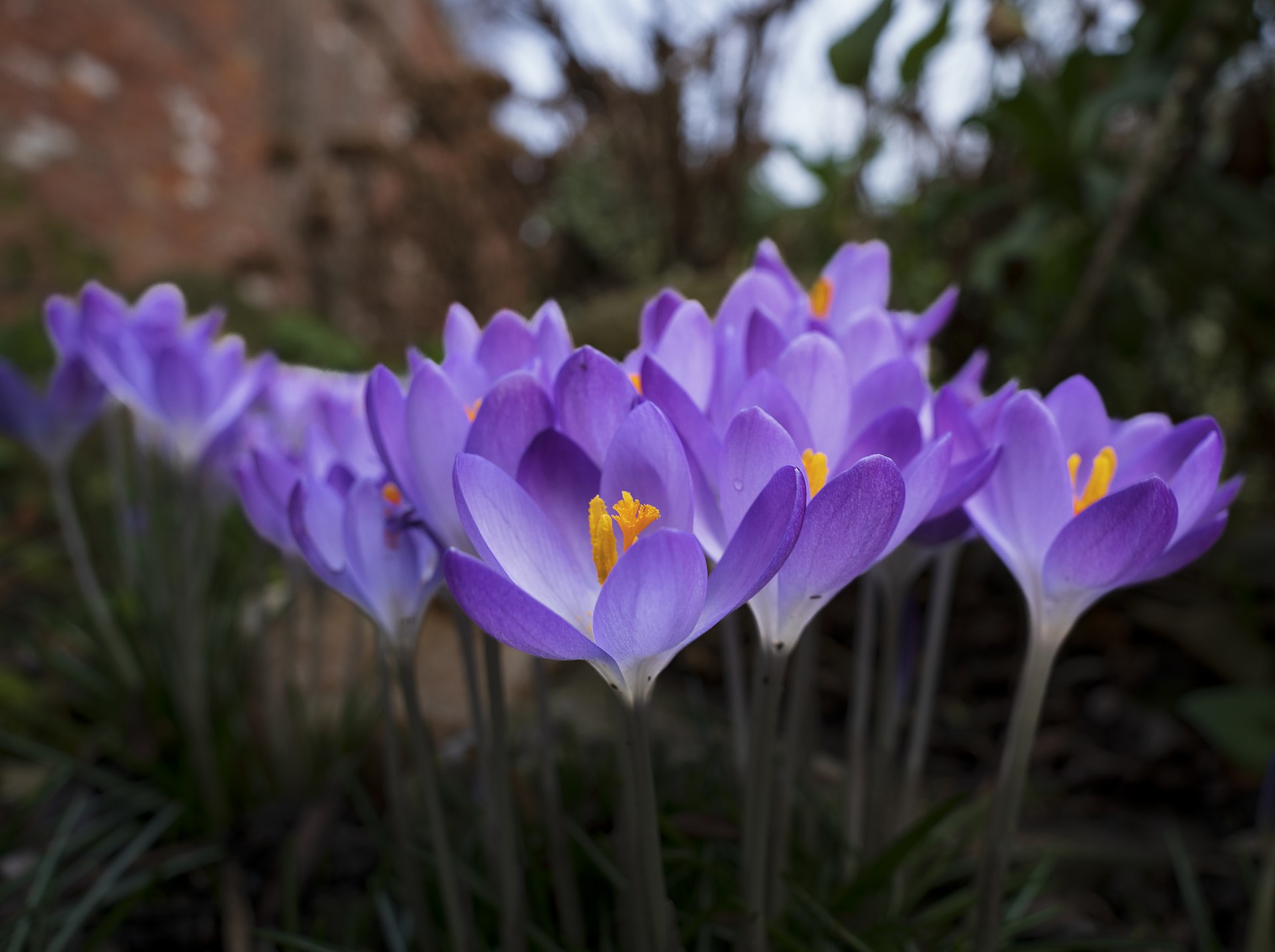
Saffron comes from the stigmas of Crocus sativus, the saffron crocus. These are the red threads at the heart of each purple flower, and they have to be picked out by hand.
CrocusBrandi says every step must be done by hand, from planting the bulbs to picking the flowers. The farm plants its bulbs in August and harvests the flowers in November. The park’s wider rules place flowering and harvest between early October and the end of November, so the exact weeks shift with the season.
The morning rush
The park’s guidelines describe a tight daily rhythm. Flowers are picked by hand before 10 a.m., while they are still closed. The stigmas must then be separated from the flowers within 12 hours. After that comes drying, which turns the fresh threads into the spice.
The farm’s own site explains the delicate part in detail. When separating the stigma, only the red section that emerges from the flower’s calyx carries color. The inner part is white, and the farm treats it as an impurity. Leave it in, the farm says, and the saffron is inferior. Drying needs the same care: CrocusBrandi says the temperature must “never exceed 40 to 45 degrees,” which means someone has to watch it continuously.
What “Zafferano della Val d’Orcia” means
The park has set out what counts as Zafferano della Val d’Orcia (Val d’Orcia saffron). The rules are worth knowing, because they tell you what you are paying for.
First, geography. Production is limited to land inside the park, in the five comuni (municipalities) of San Quirico d’Orcia, Castiglione d’Orcia, Pienza, Radicofani, and Montalcino. Saffron from anywhere else in Tuscany is not Val d’Orcia saffron, however it is labeled in a shop.
Second, form. Once dried, the stigmas turn a characteristic “rosso bordeaux,” a deep burgundy red, and they must be sold whole. No powder. You can see what you are buying.
Third, patience. The dried threads go into hermetically sealed glass jars and must mature for at least eight months, at 15–20 °C and away from light, before they are sold. That means the saffron in a shop in early autumn usually comes from the previous year’s harvest, not the flowers blooming in the fields at that moment.
Why the rules matter to you
In practice, these rules give you three quick checks. Look for whole threads, not powder. Look for a producer in one of the five park comuni. And be skeptical of anyone selling “this week’s” Val d’Orcia saffron in November: under the park’s rules, it should not be on sale yet.
The Products
CrocusBrandi sells its saffron only as stigmas, never ground. The farm says this guarantees the consumer “100% pure” saffron. Its range is labeled “Zafferano Puro della Val d’Orcia” (pure Val d’Orcia saffron).
For home cooks, the farm packs 0.25 g, 0.5 g, and 1 g sizes for shops. The 0.25 g size comes in a small screen-printed vial with a cork stopper and a recipe booklet, and the farm pitches it at people trying saffron threads for the first time. The 1 g pack is presented as a gift. Larger 5 g and 10 g packs are aimed at restaurants; the farm says a 5 g pack makes around 150 portions.
Two products take saffron beyond the risotto pot. The farm’s “monete” (coins) are irregular round saffron biscuits, yellow and meant to recall gold coins. It suggests eating them with vanilla ice cream, a warm crema catalana, or a good Vin Santo. There is also “ZAFF 05,” a liqueur made from grappa and saffron. The farm describes it as amber, very delicate, and low in alcohol at 32%.
What to cook with it
The farm’s website has a long recipe section, with more than thirty dishes. The recipes usually count saffron in stigmas; 24 is a typical amount. The list runs from risotto alla milanese to lamb stew and veal tripe. The most local entry is “pinci al pomodoro, basilico e zafferano,” with tomato, basil, and saffron. Pinci is the Montalcino-area name for pici, the valley’s hand-rolled pasta.
The farm’s news page also mentions a recipe book, De Croco, by Claudia Mancianti. It collects saffron recipes together with the story of the farm and its work on the product.
Visiting CrocusBrandi
CrocusBrandi is a working farm, not a visitor center. Its website does not advertise tours, tastings, or harvest experiences. If you want to buy directly or ask about seeing the fields, contact the farm first through the contact page on its website. Do not just turn up at the address.
The most rewarding time is the flowering in October and November, when the picking is done early in the morning. Keep in mind that these are also the farm’s busiest weeks, so a visit is a favor, not a right.
Making a day of it
Even without a farm visit, San Quirico is a good base for a saffron-themed day. You can see the village’s Collegiata with its carved portals and walk through the Horti Leonini, the 16th-century Medici-era garden. Bagno Vignoni, with its square of hot water, is a frazione (hamlet) of San Quirico, just down the road. Look for saffron dishes on local menus, and buy threads rather than powder in the village shops.
For more on saffron’s place in local food, and on the valley’s other producers, start with our Val d’Orcia hub page, or meet the valley’s olive growers in our profile of the Oleificio Val d’Orcia.
Information is provided in good faith and may change. Always confirm opening hours, prices, and event dates with the official source before you travel.