
Itinerary · 5 days · Val d'Orcia
5 Days in the Val d’Orcia
Along the Francigena
Last updated:
- Duration
- 5 days
- Best season
- Late April to June, or September to October
- Budget
- Mid-range
- Best for
- Couples, solo travelers, and small groups who like history, food, and some walking
- Driving required
- Yes
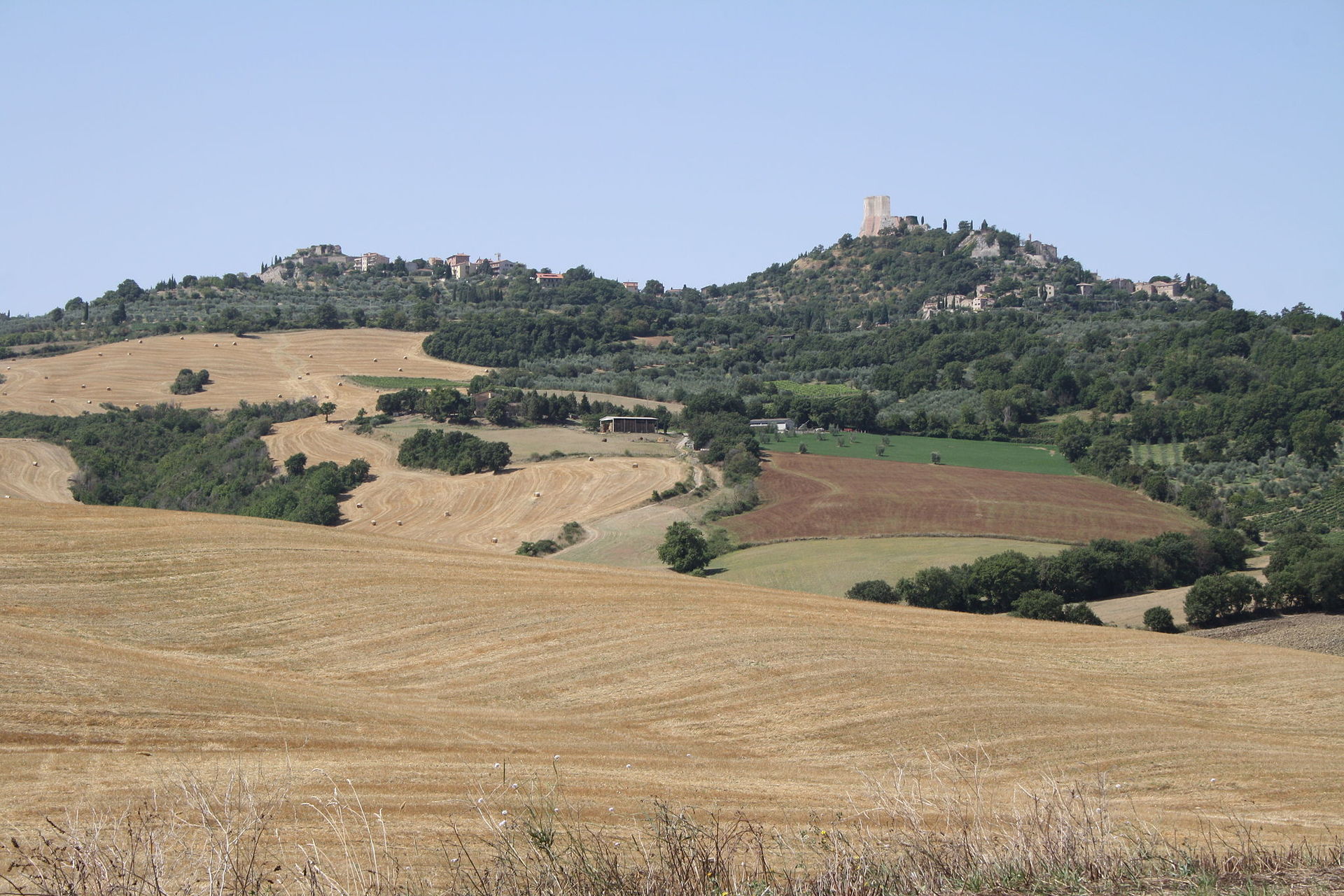
The Via Francigena, the medieval pilgrim road to Rome, is the spine of the Val d’Orcia. It explains why the hilltops carry castles, why a village square is full of hot water, and why a pope built a fortress on a volcanic rock. This route follows that road from north to south, then brings you back to walk a piece of it yourself.
You will need a car. Buses link several villages, but timetables follow the school year, and Monticchiello has no practical service at all.
A word on timing before you start. Some sights, like the Tentennano fortress, open seasonally, roughly April to early November. We give patterns, not hours, and link the official pages. Check them the week you travel.
Choosing your base
Stay in or near San Quirico d’Orcia or Castiglione d’Orcia. San Quirico sits on the Francigena line, and the Regione Toscana’s stage guide recommends a detour to Castiglione. Everything in this plan is within easy reach. San Quirico is on bus line 112 and the start of Francigena stage 36. Castiglione stands higher, at about 540 m, and closer to the Amiata edge. Look for a farm stay (agriturismo) or a small guest house in the mid-range bracket; you will be out all day.
Day 1: San Quirico and a Square of Hot Water
Morning: Start at the Collegiata dei Santi Quirico e Giulitta in San Quirico. It has two carved side portals, and they are worth telling apart. The southern one is attributed to Giovanni Pisano. The other is a porch on two caryatids standing on lions, from the second half of the 13th century, with no artist named. Then walk into the Horti Leonini, a garden laid out around 1580 by Diomede Leoni on land given by Francesco I de’ Medici. The lower part is a geometric Italian garden of box hedges around a statue of Cosimo III. A Roman two-faced Janus head marks where it gives way to a “wild” upper wood of holm oaks. Hours change with the season, so check visitsanquirico.it first.
If your first day falls on the 2nd or 4th Tuesday of the month, San Quirico’s market is on in Via dei Canneti. It is fortnightly, not weekly, whatever you may have read.
Lunch: Find a trattoria in town serving pici, the thick hand-rolled pasta of flour and water that links the valley’s villages. Order it with a simple sauce and a glass of Orcia DOC, the local red.
Afternoon: Drive out to see the Cappella di Vitaleta from the road. Italy’s national tourism portal calls it one of the valley’s most recognizable places, and it was carefully restored in 2021. One correction first: the chapel is not the Gladiator chapel. The same portal says it has never been used as a film location. The famous wheat-field scene was shot on the Terrapille estate near the Pieve di Corsignano, in the comune of Pienza.
Bagno Vignoni at the end of the day
Late afternoon: Head for Bagno Vignoni, where the main square is a thermal pool, 49 m long and 29 m wide. The water once emerged at about 52 °C, and an ancient Roman inscription dedicates it to the nymphs. Under the Loggiato di Santa Caterina is the chapel where Catherine of Siena prayed when she came to the springs.
Then walk down into the Parco dei Mulini. Here hot water ran down a travertine cliff through four mills in a row. Because the spring’s flow was constant, they could grind in summer, when river mills stopped. The millers had to keep chipping off limestone before it hardened on the machinery.
You cannot bathe in the square’s pool. Under municipal ordinance no. 22 of 2010, you can’t bathe anywhere in the Parco dei Mulini either, or leave the paths, or take rocks. If you want to soak, book one of the village’s private spa pools, or save it for Day 4.
Dinner: Eat in Bagno Vignoni or back in San Quirico. Look for a menu built on local pecorino, pici, and seasonal vegetables, and ask for Orcia DOC by the glass.
Sleep: Your base near San Quirico or Castiglione.
Day 2: The Salimbeni Road and the Valley’s Oil
Morning: Drive to Rocca d’Orcia, a hamlet under Rocca a Tentennano. This polygonal keep watched the Via Francigena and served the Salimbeni, Siena’s great banking family, against Siena itself. From here Cocco Salimbeni raided neighboring villages until Siena defeated him in 1418. Catherine of Siena stayed at the fortress in 1377. A footpath of about 300 m leads up to the tower, and the view explains why anyone wanted it.
On the way, or from the paths around, look for Ripa d’Orcia, a castle-hamlet above the river. Siena ceded it to the Salimbeni in 1274 to settle debts. The Piccolomini Carli family has owned it since 1484. It is privately owned, so admire it from the surrounding roads and paths.
Castiglione’s second fortress and a swallow
Late morning: Castiglione d’Orcia‘s center is about a kilometer from Tentennano. Its own fortress, the Rocca Aldobrandesca, crowns the village. One ticket covers both fortresses and the small Sala d’Arte San Giovanni, in a former oratory. The gallery shows five 14th–15th-century Sienese panels. Look for the Madonna and Child by Simone Martini and workshop (1320–25), in which the Child holds a swallow. There are also works by Vecchietta and Giovanni di Paolo.
One thing English guides get wrong: Pietro Lorenzetti’s Madonna and Child is in the parish church, not in the Sala. Check the season on the Fondazione Musei Senesi page before you go.
Lunch: In Castiglione, look for a simple lunch with bread and new oil if you are here in autumn. A plate of local pecorino and cured meats will do on any day.
Afternoon: Visit the Oleificio Val d’Orcia at Loc. La Fonte, Castiglione d’Orcia. It is the valley’s olive growers’ cooperative, with more than half a century of experience by its own account. It offers mill visits and tasting “experiences” and sells online. In late autumn you may see pressing under way. At any time, it shows how the valley’s small growers work together. Check the options on its website and book ahead.
Dinner: Back at your base. After a day of castles, a quiet trattoria with a wood fire and a pici dish is the right answer.
Sleep: Your base.
Day 3: The Pienza Side, from Confraternity to Theater
Today crosses to the eastern side of the valley and ends in a village that tells its own story. It is the best day of the trip if you travel in summer.
Morning: Start at Castelmuzio, our “edge” village. It belongs to the comune of Trequanda and sits outside the UNESCO area, looking over the valley from the clay country. It moved from Pienza to Trequanda in 1833. Its people have long called it simply “the Castle.”
At the gate, a stone on which San Bernardino of Siena is said to have rested is set into the war memorial. The gate keeps its original hinges and machicolations. The Museo d’Arte Sacra occupies the oratory of a religious confraternity, with its adjoining hospice and pharmacy. It holds Sienese-school paintings, including works of the school of Duccio, Niccolò di Segna, and Giovanni di Paolo, and an Etruscan urn. Opening is limited, so contact the Comune di Trequanda before you go.
On the road toward Montisi, stop at the Pieve di Santo Stefano a Cennano. Its present form dates from 1285, as a Latin inscription on the portal records.
Pienza, through its cheese
Lunch: Book lunch at Podere Il Casale, a farm outside Pienza founded in 1991. It has its own dairy, including pecorino aged in pits, a restaurant, and farm and dairy tours. Check the options on podereilcasale.com.
Afternoon: Skip the Renaissance square if you have seen it before, and follow the cheese instead. From the 1960s, Sardinian shepherd families settled on farms left empty by the end of sharecropping. That is why Pienza is a pecorino town. The Caseificio Cugusi, founded in 1962 by Raffaele and Maria Cugusi from Sardinia, runs bookable weekday tastings with an explanation of how the cheese is made. It sits on the Pienza road but inside Montepulciano‘s territory. Book through caseificiocugusi.it.
A note on labels: there is no “Pecorino di Pienza DOP.” The protected cheese is Pecorino Toscano DOP. Pienza’s barrique-aged pecorino is recognized as a regional traditional product. Pienza also has a Friday market, and a farmers’ market on the first Sunday of the month.
Monticchiello at dusk
Late afternoon: End in Monticchiello, a walled village in the comune of Pienza. Walk the lanes inside the walls on foot. Visit the Pieve dei Santi Leonardo e Cristoforo, from the second half of the 1200s, where a 1933 restoration uncovered 14th-century Sienese frescoes. The medieval Cassero tower dominates the village; it is state property and not open to visitors.
Then step into TePoTraTos, the museum of popular theater in an 18th-century granary on Piazza Nuova. It is run by the Teatro Povero, the villagers’ cooperative. Since 1967 they have written and staged a new play about their own lives every summer. It began as a response to the end of sharecropping, in a village with no theater.
Dinner: Eat at one of the cooperative’s two restaurants. Bronzino is open all year. The Taverna di Bronzone, in a historic crypt on Piazza Nuova, opens seasonally around the summer shows and holidays. Book through teatropovero.it.
If you travel between late July and mid-August: Stay for the play. Performances run on summer evenings in Piazza della Commenda. The cooperative offers dinner-and-show packages with its restaurant. Book well ahead through teatropovero.it.
Sleep: Your base. Monticchiello has no practical bus, so plan the drive back.
Day 4: The Amiata Edge and the Pope’s Fortress
Today climbs to the southern rim of the valley, where the ground turns volcanic.
Early morning: Go first to Bagni San Filippo. Just outside the village, a dirt track leads to the Fosso Bianco, a woodland stream fed by hot springs. It has natural pools and white limestone formations with names like “la balena bianca” (the white whale). The water emerges at around 48 °C at the source, according to Visit Tuscany. Arrive early, because the stream is popular.
Access to the stream is free at the time of writing, but the comune has long planned visitor management; check locally before you go. Do not climb, touch, or bathe at the white “whale” formation. The Comune warns that the site is not accessible for people with disabilities.
On the road toward Campiglia, look for the Grotta di San Filippo Benizi, cut into a large block of limestone. Tradition says the Servite friar hid here in 1267 to avoid being elected pope. The village church holds stucco statues of three St Philips: Neri, the Apostle, and Benizi.
Campiglia and its chestnuts
Late morning: Drive up to Campiglia d’Orcia. It belonged to the Visconti, a Sienese family rather than the Milanese dukes, until Siena absorbed it in 1429. In the woods above stands the Visconti-era tower, the Campigliola: about 15 m high, roofless, and privately owned. A local legend has fairies harvesting its wheat on June nights. If you are here on the last Sunday of October, you will find the Festa del Marrone (chestnut festival).
If you drink wine, Cantina Campotondo in Campiglia welcomes visits and tastings. It was founded in 2000 to revive the village’s tradition of peasant mountain wine. Book ahead through cantinacampotondo.it.
Lunch: Up here the food culture is chestnuts. Look for chestnut dishes on the menu, especially in autumn.
Higher still is Vivo d’Orcia, with its Camaldolese past and the spring that supplies Siena. It belongs to Monte Amiata, and our Monte Amiata guide covers the mountain in depth.
Radicofani and La Posta
Afternoon: Drive to Radicofani, the papal border fortress on a volcanic outcrop at 896 m. In 1153 Pope Eugenius III bought Radicofani to control the pilgrim road. From 1154 Adrian IV, the only English pope, built a major fortification here. The Medici later turned it into a bastioned citadel. On 14 September 1735, a man from Piancastagnaio set fire to two powder magazines and destroyed much of it. It was restored between 1989 and 1999.
Radicofani is also linked to Ghino di Tacco, the gentleman-bandit whom Dante and Boccaccio made famous. Treat him as literature and legend, not documented history. The fortress’s opening days change with the season; check the Comune di Radicofani page.
Below the village, see La Posta, begun in 1584 for Grand Duke Ferdinando I de’ Medici to designs by Bernardo Buontalenti. The Parco della Val d’Orcia lists among its guests Casanova, Dickens, Stendhal, and Mozart. Its horse-watering fountain carries a large Medici coat of arms. Radicofani’s market runs on the 2nd and 4th Thursday of the month in Piazza Garibaldi.
Dinner: In Radicofani, or back toward your base. Look for pici, local pecorino, and chestnut dishes in autumn.
Sleep: Your base.
Day 5: On Foot along the Francigena
Morning: Today you walk. Stage 36 of the Via Francigena starts at San Quirico’s Collegiata and runs 33 km to Radicofani, where you stood yesterday. The whole stage is rated “very demanding,” but you only need its first section. From San Quirico the route climbs to Vignoni Alto, then drops down to Bagno Vignoni.
At Vignoni Alto, look for the cassero tower. The Sienese rebuilt it in 1339 with revenue from Montalcino. In 1409 the castle passed to a woman of the Salimbeni family, the wife of the condottiero Attendolo Sforza. The hamlet also has a small Romanesque church. From there you look out over the valley, and then the path descends to the hot-water square you saw on Day 1.
The stage mixes paved roads with unpaved tracks and cart paths. Bring water, sun protection, and proper shoes. According to the Regione Toscana stage page, water and refreshment points are at Bagno Vignoni.
Getting back
Lunch: Eat in Bagno Vignoni. Then walk back the way you came, or take the bus: Autolinee Toscane lines 54A and 52A link Bagno Vignoni with San Quirico. Check the timetable the day before.
Afternoon: Finish with an Orcia DOC tasting. Capitoni, at Podere Sedime near Pienza, is a family farm where Marco Capitoni carries on his father Francesco’s work. Its first bottles under the family label came out in 2001, and it offers cellar visits and tastings; book through capitoni.eu. If you skipped Campotondo yesterday, it is the alternative. Either way you taste a small appellation of family cellars, squeezed between Brunello di Montalcino and Vino Nobile di Montepulciano.
If you want saffron to take home, CrocusBrandi is in San Quirico. The farm does not advertise visits, so contact it before you go.
Dinner: A last dinner in San Quirico. Order pici one more time, and a pecorino you haven’t tried yet.
Sleep: Your base, or move on toward Monte Amiata.
Practical Tips for This Route
Driving and buses
A car is essential for this plan. Autolinee Toscane lines serve most of the Francigena villages: line 112 for San Quirico and Pienza, line 54A for the villages from San Quirico down to Bagni San Filippo, and line FT9 for Radicofani. Timetables change with the school year. Monticchiello has no practical bus.
If you arrive by train, the working stations are Buonconvento, on the Siena–Grosseto line, and Chiusi-Chianciano Terme, on the Florence–Rome line. Torrenieri station has had no regular trains since 1994, whatever older guides say.
What to book ahead
Book the Teatro Povero, if your dates fit, as early as you can. Book Caseificio Cugusi for a weekday. Contact the Oleificio, Capitoni, Campotondo, and Podere Il Casale through their websites. Check the Fondazione Musei Senesi page for Tentennano, the Rocca Aldobrandesca, and the Sala d’Arte.
Hot-spring rules
At Bagno Vignoni, look but don’t bathe, except in the private spa pools. At Bagni San Filippo, follow the rules on site and leave the Balena Bianca alone. Rules can change, so check locally.
Seasons
The best months are late April to June and September to October. Mid-June brings San Quirico’s Festa del Barbarossa, which recalls Barbarossa’s stay in 1155. Late July to mid-August is theater season in Monticchiello. In October and November saffron flowers, and olives are pressed; San Quirico’s Festa dell’Olio follows in early December. Many sights close or shorten their season in winter.
Private places
Ripa d’Orcia and the Campigliola tower are privately owned, and Monticchiello’s Cassero is state property and not open to visitors. Enjoy all three from outside.
Information is provided in good faith and may change. Always confirm opening hours, prices, and event dates with the official source before you travel.