
Town · Lunigiana
Equi Terme
Caves, Hot Springs, and a Canyon Between Two Mountain Ranges
Last updated:
- Region
- Lunigiana
- Province
- Province of Massa-Carrara
- GPS
- 44.1708, 10.1533
- Best season
- Summer (June–September) for canyon trekking and swimming; spring and autumn for caves; thermal springs year-round
- Time needed
- Half day to full day depending on activities
- Difficulty
- moderate
- Known for
- Karst show caves, Neanderthal archaeology, thermal springs (27°C), Stretti di Giaredo canyons, geo-adventure park
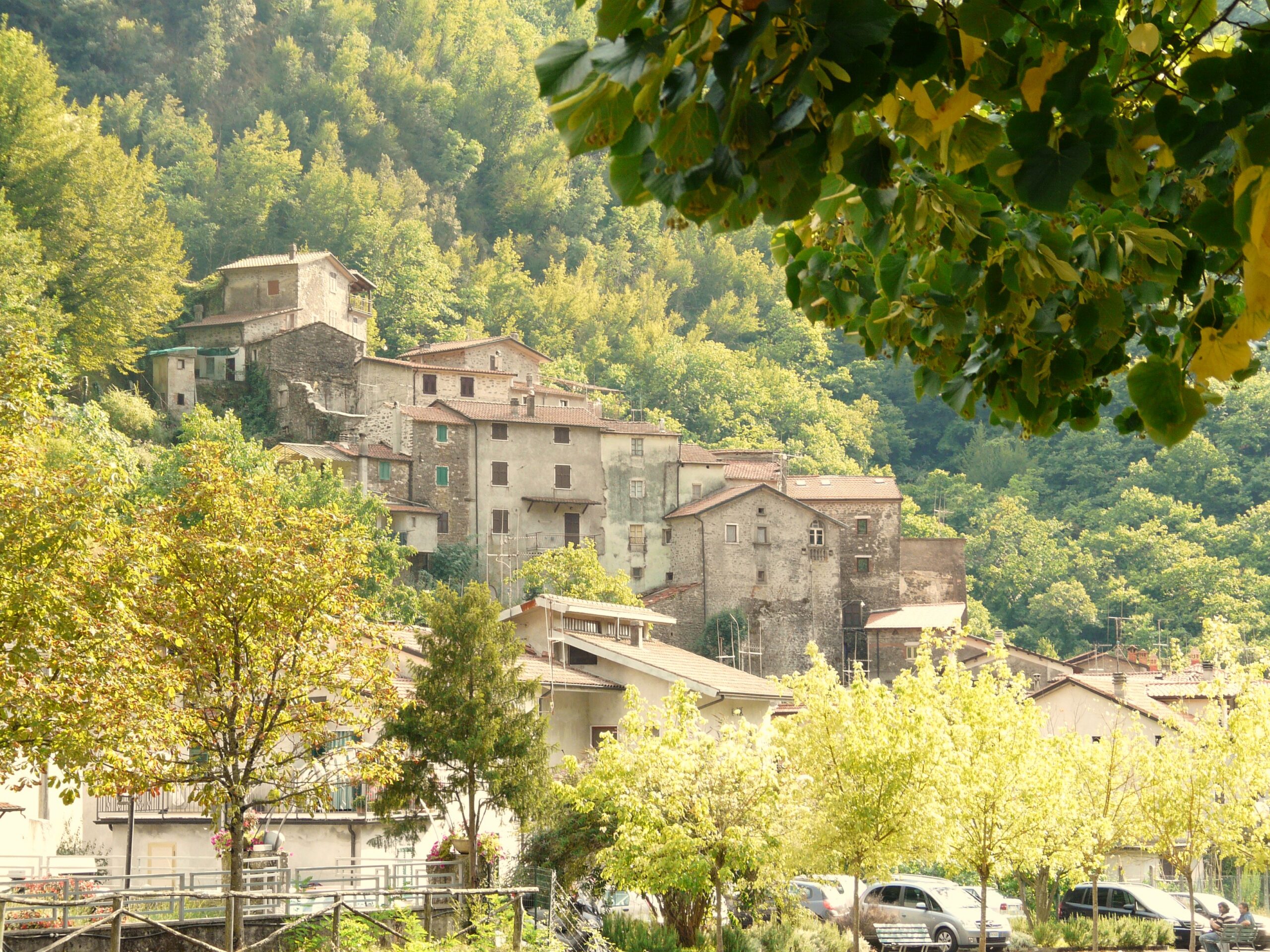
Equi Terme is not a town. It is a hamlet — a frazione of Fivizzano, pinned to the foot of Pizzo d’Uccello in the northern Apuan Alps. What it lacks in size it compensates for in geological concentration. Within walking distance of its stone houses you will find karst caves that Neanderthals used as shelter, sulfurous springs that emerge at around 24°C, and the Solco di Equi, a deep rocky gorge cut into the Apuan limestone.
This is Lunigiana‘s adventure corner — the place where the valley’s deep geological history becomes something you can walk through, swim in, and rappel down. It is also, somewhat improbably, the location of a zipline.
A Place Shaped by Time (and Geology)
The Grotte di Equi (Equi Caves) are a karst cave system developed in the limestone at the junction between the two mountain ranges. The show cave section features the standard spelunking highlights — stalactites, stalagmites, chambers shaped by millennia of water erosion — but what distinguishes Equi from dozens of other Italian show caves is the archaeology. Excavations have uncovered evidence of Neanderthal occupation — stone tools, animal bones, traces of habitation dating to the Middle Paleolithic. The caves were used as shelter not just by Neanderthals but by later populations too — the Tecchia was reused in the Copper Age and again in the Middle Ages.
A separate section of the cave system, the Tecchia, is the primary archaeological site — a rock shelter with stratified deposits covering tens of thousands of years. Traces of cave bear (Ursus spelaeus) have also been found, placing Equi in the context of Pleistocene megafauna.
The thermal springs emerge at between 17°C and 27°C, averaging around 24°C — mild rather than hot, and natural rather than resort-like. The bathing facilities are small and atmospheric, surrounded by forest and stone. This is not a glossy resort: the sulfurous water comes from a mountain spring and flows through a large oval pool and a children’s pool, open in summer. Check the Terme di Equi or Visit Lunigiana websites for current hours and prices.
The Stretti di Giaredo, about an hour’s drive northwest near Pontremoli, make a dramatic day trip from here. It is a canyon carved by the Gordana stream between Pontremoli and Zeri, with multicolored rock walls more than 20 meters high. The canyons are narrow enough in places that you can touch both walls, and the water ranges from ankle-deep to swimming depth depending on the section and the season. This is not a walk-in attraction — it requires guided river trekking organized through Cooperativa Sigeric (wetsuit, helmet, life jacket, and guide included; summer season only, check current prices, and never after heavy rain when flash flooding is a genuine risk). The experience is genuinely spectacular — wading, swimming, and scrambling through a geological corridor that feels prehistoric in the most literal sense.
The Geo-Archeo-Adventure Park adds a modern layer: a 200-meter zipline, climbing, equipped caving trips, and e-bike rental — activities aimed at families and anyone who wants their geology with an adrenaline chaser.
What to See and Do
The Grotte di Equi show cave tour takes approximately 45–60 minutes and is suitable for all ages. The prehistoric Tecchia (rock shelter) is part of the same Geo-Archeo park and can be explored on your own. The caves open daily in summer and at weekends in spring and autumn, and booking online through the Grotte di Equi website is recommended.
The Stretti di Giaredo canyon trek near Pontremoli is worth the drive — book through Cooperativa Sigeric in advance, bring swimwear and shoes that can get wet, note that participants must be able to swim, and allow about five hours for the whole outing. The guided groups are typically small and the guides are knowledgeable about both the geology and the local ecology. This is the single most memorable outdoor experience in Lunigiana.
The thermal springs offer a gentler alternative — a soak in naturally warm water surrounded by mountain scenery. Best combined with either the caves or the canyon trek for contrast.
The park’s zipline and climbing activities work well for families with children who might need something more active than a cave tour.
From Equi Terme, hiking trails lead into the Apuan Alps Regional Park (UNESCO Global Geopark) — serious mountain territory with marble peaks, alpine meadows, and trails that connect through to Carrara and the Garfagnana.
Eating Like a Local
Equi Terme itself has limited dining — this is a hamlet, not a restaurant destination. The nearby town of Fivizzano (about 15 minutes by car) offers the full Lunigianese repertoire. Some agriturismi in the surrounding mountains serve home-cooked meals featuring game, mushrooms (in season), chestnut-flour preparations, and torta d’erbi.
Pack food if you’re planning a full day of outdoor activities — the canyon trek in particular leaves you hungry, and the nearest proper restaurant may require a drive.
Getting There and Getting Around
By car: Equi Terme is reached from the A15 motorway by exiting at Aulla and following the road toward Fivizzano — Equi is signposted before you reach Fivizzano, about 25 minutes from the motorway. The road is mountain-grade: winding, narrow in places, but well-maintained.
By train: The scenic Aulla–Lucca railway has a station at Equi Terme — one of the most atmospheric small stations in Tuscany, if services are running. Check schedules carefully: trains on this non-electrified line are not frequent, and maintenance work sometimes suspends service for weeks at a time.
Parking is available near the caves and the thermal springs. The hamlet itself is tiny — everything is walkable once you’ve arrived.
Timing: A half day covers the caves and thermal springs. A full day lets you add a walk into the Solco di Equi or up the Apuan trails above the village.
Nearby
Fivizzano — The Florence of Lunigiana, with Medici walls and the Verrucola fortress. Fifteen minutes west.
Aulla — Transport hub with connections to Cinque Terre and the coast. Twenty-five minutes southwest.
Apuan Alps Regional Park — Trail access from Equi Terme into the UNESCO Global Geopark, with marble peaks and alpine landscapes.
Cerreto Pass (1,261 m) — The Apennine crossing to Reggio Emilia, with a modest ski station. Accessible via Fivizzano, about 40 minutes east.
Casola in Lunigiana — Gateway to the Apuan Alps and home of the Marocca bread. Twenty minutes south.
Information is provided in good faith and may change. Always confirm opening hours, prices, and event dates with the official source before you travel.