
Town · Lunigiana
Villafranca in Lunigiana
Where the Watermills Remember and the Walls Still Close at Night
Last updated:
- Region
- Lunigiana
- Province
- Province of Massa-Carrara
- GPS
- 44.2966, 9.9567
- Best season
- August (for Filetto Rinascimentale); autumn (for Profumi d'Autunno chestnut festival); spring for the countryside
- Time needed
- Half day for Villafranca + Filetto together
- Difficulty
- easy
- Known for
- Ethnographic Museum in watermills, Filetto walled village, Filetto Rinascimentale medieval festival, stele statues found nearby
Villafranca in Lunigiana is two stories in one municipality. The first is the town itself: roughly 4,700 inhabitants spread along the Magra at the point where the valley broadens and the river slows. It is not picturesque in the way that Bagnone or Fosdinovo are picturesque. It is useful, practical, the kind of place where Lunigiana does its daily business. But within its municipal borders lies an institution that explains this entire region better than any castle or church: the Ethnographic Museum of Lunigiana, housed in an old watermill set against the town walls.
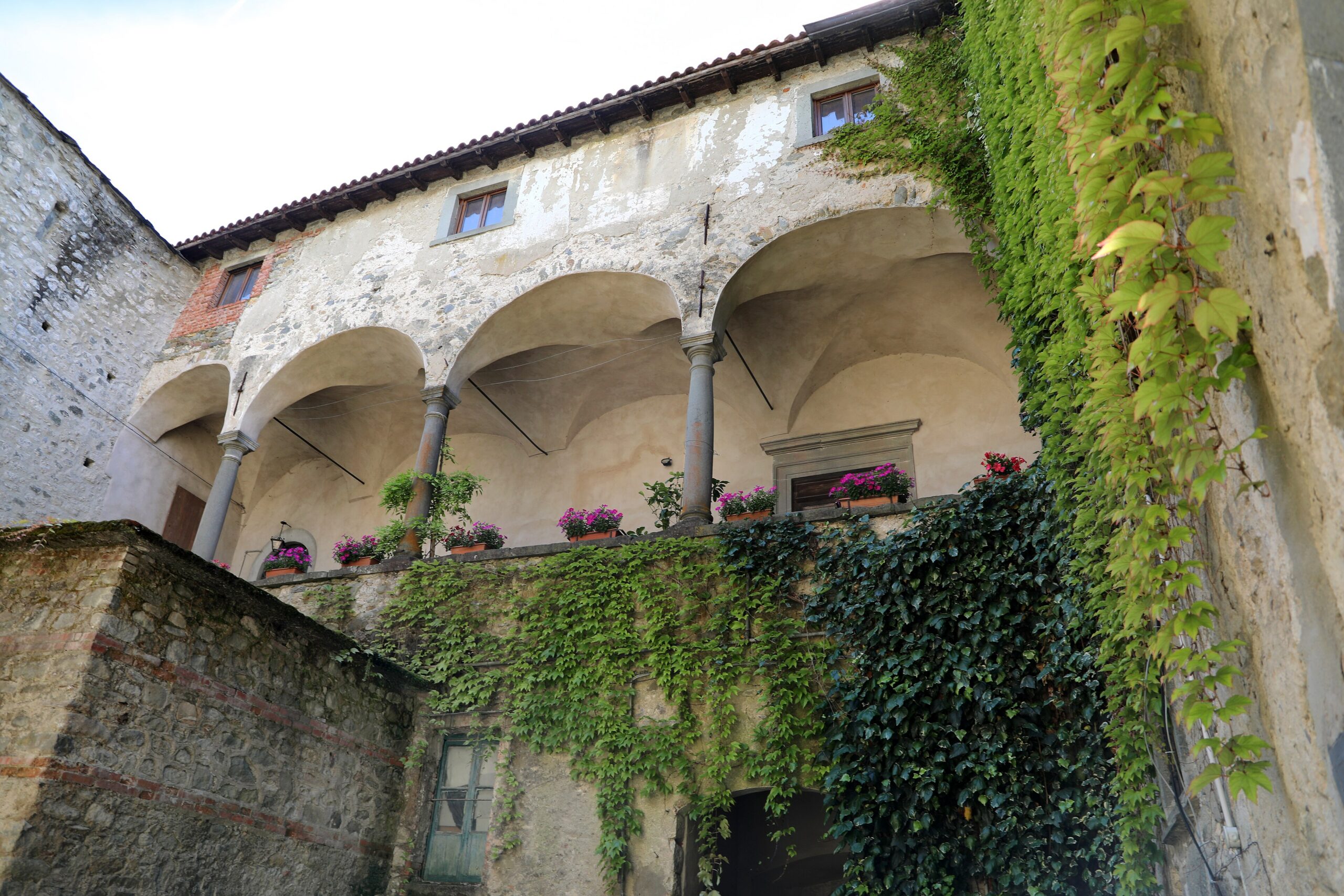
The second story is Filetto, a walled hamlet so perfectly preserved that it functions as both a living village and an annual stage set. For five days every August, Filetto fills with costumed reenactors, falconers, medieval cooks, and torchlight, becoming one of the most atmospheric historical festivals in Tuscany. The rest of the year, it is simply a quiet oval of stone houses inside two monumental gates, unremarkable from the outside and extraordinary within, a village whose layout is traditionally traced to a Byzantine garrison.
A Place Shaped by Time
Villafranca’s strategic value was always about the river crossing. The Malaspina recognized this by building their castle of Malnido on the hill above. It was badly damaged by Allied bombing in World War II and now survives as ruins overlooking the town. The town’s real significance is as a crossroads: the point where north-south traffic along the Magra Valley intersected with east-west routes toward the Apuan mountains and the Ligurian coast.
The Ethnographic Museum (Museo Etnografico della Lunigiana), installed in the restored mill complex, documents the material culture of Lunigiana’s peasant and pastoral life — tools for working chestnut wood, equipment for tending sheep, implements for making cheese and flour, domestic objects from kitchens and bedrooms, and religious artifacts from village churches. It is the kind of museum that rewards attention: not spectacular, not famous, but extraordinarily detailed in its portrait of how people in these mountains lived for centuries. The mill’s original machinery, including its three millstones, is part of the exhibit.
Filetto’s story begins with the Byzantines. The name derives from Greek fulacterion — a fortified garrison — and the village’s oval plan, unusual in Lunigiana, reflects its origins as a military encampment during the 6th–7th century struggle between Byzantines and Lombards for control of the Italian peninsula. The two monumental gates are the most visible surviving architecture, but the plan itself, a central piazza enclosed by a continuous ring of buildings, is the Byzantine inheritance.
The Selva chestnut grove outside Filetto’s walls yielded one of the most significant archaeological finds in Lunigiana: eleven stele statues, suggesting that the area held sacred or ceremonial significance in prehistoric times. Most of Lunigiana’s stele statues are now displayed in museums, above all the Piagnaro Castle museum in Pontremoli, but their origin here connects Filetto to the deepest layer of Lunigiana’s identity.
What to See and Do
The Ethnographic Museum in Villafranca is the priority — plan an hour or more if the subject of rural material culture interests you. The museum occupies an old watermill against the town walls, where the water channels that drove the millstones until the 1950s are still visible in the floor. Call or check the museum’s website for opening times before you go.
Filetto deserves a separate stop. Walk in through either gate, cross the central piazza, and absorb the enclosed quality of the space: this is what a Byzantine fortress town felt like, scaled down to a hamlet. Outside the gates, the chestnut grove where the stele statues were found is accessible on foot.
The Filetto Rinascimentale, held over five days in mid-August, is the main event. For five days, the walled village transforms: costumed characters fill the streets, falconers and duelists perform, artisans demonstrate their crafts by torchlight, and Renaissance dinners based on the recipes of the 15th-century cook Maestro Martino are served in the cloister (reservation required, so book ahead). The atmosphere is enhanced by the architecture: torchlight within an enclosed oval of stone walls creates an immersion that open-air festivals cannot replicate.
In October, Villafranca and the surrounding villages host castagnate (chestnut roasting events) on weekends; check local listings for dates. These are modest, local celebrations — a few stalls, roasted chestnuts, chestnut flour products, local wine — and all the more genuine for it.
Eating Like a Local
Villafranca shares the standard Lunigiana repertoire with a particular emphasis on river-valley cooking — slightly lower and warmer than the mountain towns, with more garden vegetables and less exclusive reliance on chestnuts. Torta d’erbi — the savory wild-herb pie — is especially good here, where the valley floor produces a wider variety of greens. Testaroli and panigacci are standard; the proximity to Podenzana (the panigacci heartland) means this flatbread tradition is particularly strong.
Locanda Gavarini in Villafranca is noted for traditional Lunigianese cooking. The surrounding agriturismi offer home-cooked meals featuring local products.
Getting There and Getting Around
By car: Villafranca is centrally located in the Magra Valley, roughly equidistant between the Pontremoli and Aulla A15 motorway exits (about 15–20 minutes from either). Filetto is a 5-minute drive from Villafranca center, signposted.
By train: The Villafranca-Bagnone station on the Pontremolese line (Parma–La Spezia) serves the town directly. From there, you’ll need wheels to reach Filetto.
Parking is available outside both Villafranca’s center and Filetto’s walls. During the Filetto Rinascimentale, expect to park further away and walk — the event draws significant crowds for a hamlet this size.
Timing: A half day comfortably covers the Ethnographic Museum in Villafranca and a walk through Filetto. During the Rinascimentale, plan an evening — the medieval dinners and torchlit atmosphere are the highlight.
Nearby
Bagnone — The fairy-tale borgo with the Bandiera Arancione, medieval bridge, and river gorge swimming. Fifteen minutes east. Shares a train station.
Filattiera — The Byzantine garrison town with the Pieve di Sorano on the Via Francigena. Ten minutes north.
Pontremoli — The stele museum and cultural capital. Twenty-five minutes north.
Podenzana — The home of panigacci, with La Gavarina d’Oro restaurant and a sagra held on several days through August. Fifteen minutes southwest.
Aulla — Transport hub with Cinque Terre connections. Twenty minutes south.
Information is provided in good faith and may change. Always confirm opening hours, prices, and event dates with the official source before you travel.