
Town · Monte Amiata
Seggiano
Olive Country Under Monte Amiata
Last updated:
- Region
- Monte Amiata
- Province
- Province of Grosseto
- Best season
- Late spring to autumn; October–November for the olive harvest
- Time needed
- Half day; a full day with the Spoerri garden
- Difficulty
- easy
- Known for
- Olivastra Seggianese olives, Seggiano DOP olive oil, Giardino di Daniel Spoerri, Madonna della Carità sanctuary, Montecucco wine
Olive Country on a Chestnut Mountain
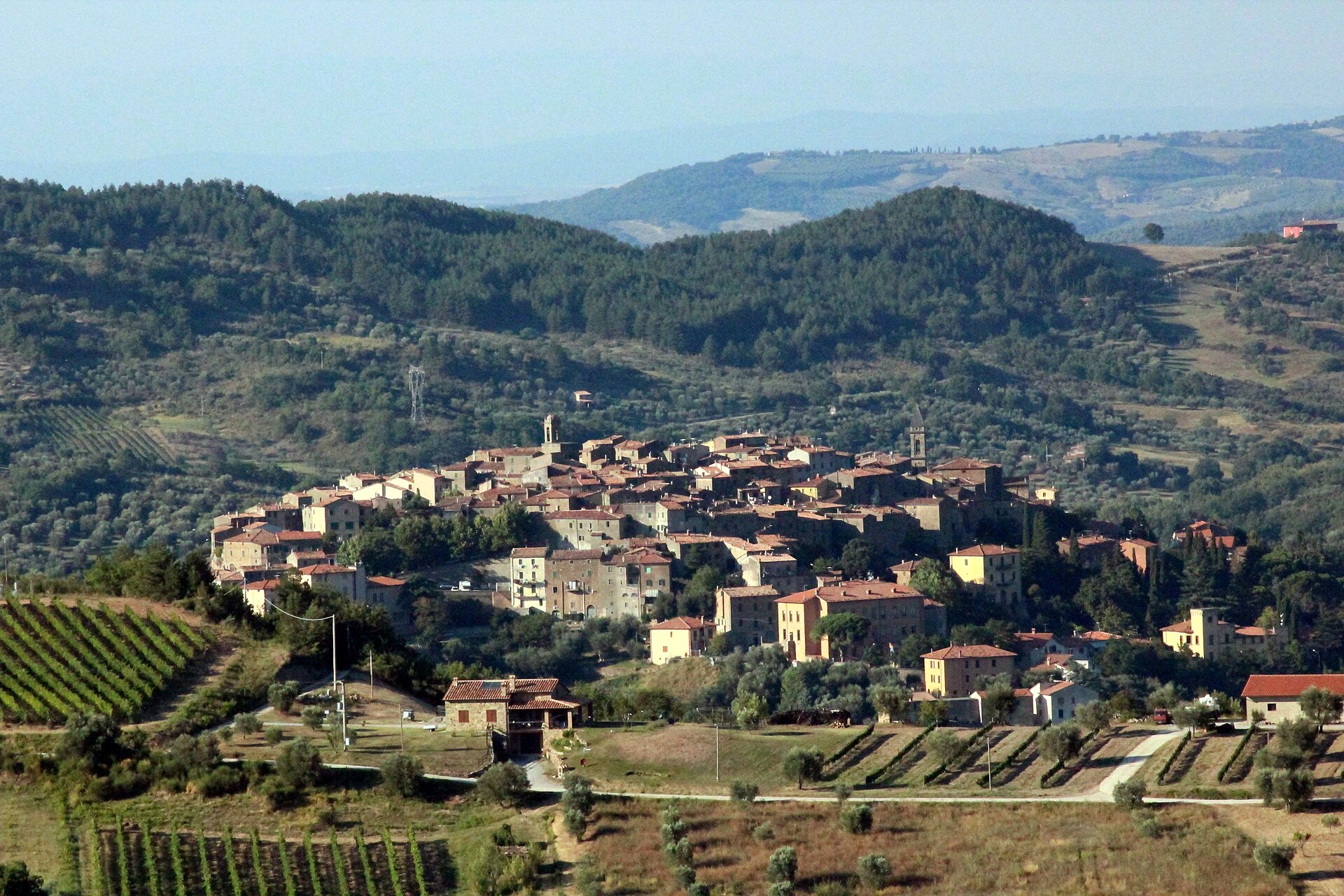
Monte Amiata is known above all for chestnuts. Seggiano is different. At 491 m, on one of the mountain’s last northwestern foothills, it’s the lowest of the Amiata villages we cover, and it’s olive country.
The local olive is the Olivastra Seggianese. It gives its name to a protected oil, Seggiano DOP. At one family farm near the village, centuries-old trees grow at about 450–600 m.
Seggiano also has two surprises. The village has a Renaissance sanctuary built after a famine vow. And near the village, the Swiss artist Daniel Spoerri created a sculpture garden. It now holds more than 110 works.
A Place Shaped by Time
Abbey property
Seggiano was founded in the early 10th century as a possession of the Abbey of San Salvatore. That abbey lies on the other side of the mountain. According to Italian Wikipedia, the Abbey of Sant’Antimo also gained some rights here after the year 1000.
Under Siena
From the 13th century Seggiano was Sienese. Italian Wikipedia names two Sienese families with influence here: the Salimbeni in the 14th century, then the Ugurgieri from the 15th.
The village stayed part of the Republic of Siena until 1555. According to Italian Wikipedia, it then became part of the Grand Duchy of Tuscany.
The walls and the gates
Italian Wikipedia describes walls around the historic center, begun from the 10th century, with three gates: San Gervasio, degli Azzolini, and del Mercato.
A famine and a vow
Late in the 16th century a vow was made to end a period of famine. The result was the sanctuary of the Madonna della Carità (Our Lady of Charity), built between 1588 and 1603.
What to See and Do
The Madonna della Carità
Builders from Lugano, in today’s Switzerland, raised the sanctuary. According to Italian Wikipedia, its defining feature is a tall brick dome set on a square drum over the crossing. Inside, arches divide three naves.
The work had two patrons: the Bishop of Pienza, Francesco Maria Piccolomini, and the Ugurgieri family. Their coats of arms appear on the façade next to Seggiano’s own.
San Bartolomeo and the town churches
The parish church of San Bartolomeo dates from the 13th century and has three naves. According to Italian Wikipedia, it holds works by the Sienese painter Bartolomeo Bulgarini and by the artist known as Ugolino Lorenzetti. The church of the Corpus Domini keeps reliquaries of San Bernardino.
Pescina
The frazione of Pescina lies on the road that climbs toward the summit of Amiata. Its church is San Lorenzo Martire. It makes a natural stop if you’re driving up the mountain from Seggiano.
Castello del Potentino and the Colombaio
Italian Wikipedia also lists the Castello del Potentino, a medieval castle with Renaissance changes. The same source describes the Convento del Colombaio as the first Franciscan house founded in the province of Grosseto.
The Museo dell’Olio
Seggiano tells the story of its oil in the Museo dell’Olio (Oil Museum), opened in 2012. The Comune and the Fondazione Le Radici di Seggiano conceived it as a museum spread across the historic center.
According to the olive oil consortium, its centerpiece is a suspended olive tree recovered from a landslide, fed by aeroponics. The museum also takes in a restored 19th-century oil mill with its original presses.
A third element is the Oratorio di San Rocco, with frescoes of 1490. There’s also an oleoteca (oil tasting room) on the main square. For details, see the museum page.
The Giardino di Daniel Spoerri
The Swiss artist Daniel Spoerri opened his garden here in 1997. It covers about 16 hectares. It holds more than 110 works by about 55–60 artists. The Fondazione Hic Terminus Haeret runs it.
The foundation’s website explains the name. On old maps the site is called “Il Paradiso”, so the garden is a kind of Garden of Eden.
Spoerri died in Vienna on 6 November 2024, aged 94.
The geese of Dies Irae
One installation is often misdescribed. Olivier Estoppey’s Dies Irae (2001–02) is a flock of 160 concrete geese. Three masked drummers, each 3.5 m tall, drive them forward.
You’ll sometimes read that the birds are ducks. They’re geese.
Opening times differ between sources, and the garden is seasonal. Check danielspoerri.org before you go.
Eating Like a Local
The Olivastra Seggianese
The Olivastra Seggianese is the native olive of this slope. According to the consortium, it grows between about 200 and 650 m. It is the basis of Seggiano DOP oil, protected since 2011. The rules require at least 85% Olivastra Seggianese.
The DOP area covers eight comuni: Arcidosso, Castel del Piano, Cinigiano, Roccalbegna, Santa Fiora, Seggiano, Semproniano, and part of Castell’Azzara. The producers’ consortium was set up in 2002, according to its website.
The consortium describes the oil as green with golden-yellow tones. It speaks of herbaceous artichoke notes, with balanced bitterness and pepper.
Olive growing here is old. The consortium dates the first documented plantings to the late Middle Ages. It says the groves expanded under the Grand Duchy and, from the 18th century, with more scientific farming. Today’s oil comes from trees a century old and more.
The consortium quotes the 18th-century naturalist Giorgio Santi. He wrote of “olive groves that nurture olives of extraordinary age and size” on these slopes. See the Consorzio Olio Seggiano DOP.
Meet a producer
For the story of one family’s groves, read our profile of La Casina di Giannetto. The farm is about 2 km from the village.
Its story begins in the 1950s. Teresa came from Calabria as the bride of Aurelio, a Seggiano native. She began by harvesting with her children and, little by little, acquired more trees. The groves lie in the “Conca d’Oro” between Seggiano and Montegiovi.
According to the Innovarurale network, some of the family’s groves were abandoned and are being recovered through “Amiata Oleos”, an integrated project for the olive-oil sector. The oil is 100% Olivastra Seggianese.
The farm is named for Giannetto, a small donkey. The farm takes its name from an old outbuilding that was his stable.
Montecucco wine
Seggiano is also wine country. It is one of seven comuni in the Montecucco area. Montecucco has been a DOC since 30 July 1998, and Montecucco Sangiovese a DOCG since 9 September 2011.
The other six comuni are Arcidosso, Campagnatico, Castel del Piano, Cinigiano, Civitella Paganico, and Roccalbegna. Ask for Montecucco by name when you eat in the area.
The oil and wine maps overlap. Five comuni sit in both the Seggiano DOP and the Montecucco areas: Arcidosso, Castel del Piano, Cinigiano, Roccalbegna, and Seggiano itself. And 2011 was a double year here. The oil gained its DOP, and Montecucco Sangiovese its DOCG.
Chestnuts and mushrooms
Chestnuts matter here too. Castagna del Monte Amiata IGP has been registered since 2000; the varieties are Marrone, Bastarda Rossa, and Cecio. If you want to pick mushrooms, you need a paid regional permit. The daily limit is 3 kg per person. See the Regione Toscana rules.
Getting There and Getting Around
By car
A car is realistically needed. Seggiano lies on the northwestern side of the mountain, above the Orcia valley. It’s a short drive from Castel del Piano. The frazione of Pescina lies on the road toward the summit.
By train and bus
The Siena–Grosseto railway stops at Buonconvento. From there you’d need onward transport. Autolinee Toscane runs the local buses; check routes on at-bus.it.
When to come
Time your visit to what you want to see. The Spoerri garden is seasonal; its foundation describes it as open from May through November. For the olive harvest, come in autumn. At La Casina di Giannetto, for example, That’s Amiata puts the harvest at about 20 October to 20 November.
In the garden, plan on walking. The works are spread over about 16 hectares, so wear good shoes and bring water in summer.
Where to stay
Abbadia and Santa Fiora have the widest choice of places to stay on the mountain. Our 4 days on Monte Amiata itinerary shows how to combine Seggiano with its neighbors.
Nearby
- Castel del Piano: Seggiano’s neighbor, with its 8 September Palio and the road up to the Prato delle Macinaie.
- Arcidosso: the castle town of David Lazzaretti and Merigar West.
- Santa Fiora: the Sforza town at the springs of the Fiora, with Andrea della Robbia terracottas.
- Castiglione d’Orcia: the Val d’Orcia side of the mountain, with its fortress.
- Bagno Vignoni: the Val d’Orcia spa village with its thermal-water square.
Information is provided in good faith and may change. Always confirm opening hours, prices, and event dates with the official source before you travel.